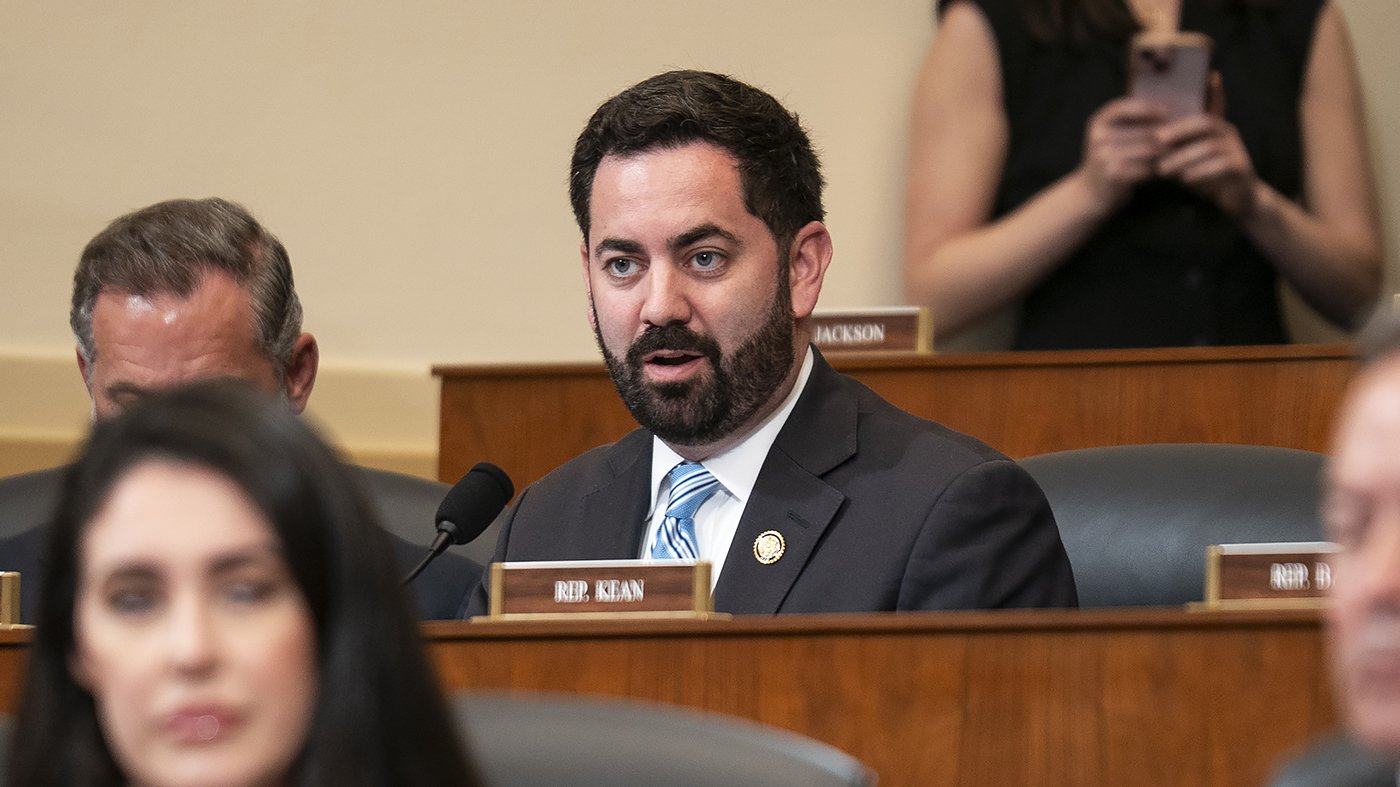
Representative Mike Lawler (R-N.Y.) declared on Sunday that the singular plausible objective for deploying American ground forces into Iran would be to seize the nation's stockpiles of enriched uranium. The congressman's remarks come amid escalating tensions and internal Washington debate over military authorization.
Appearing on NBC's 'Meet the Press,' Lawler framed the issue around a fundamental question of purpose. "Moving forward, with respect to any troops on the ground, the question is: For what purpose?" he told host Kristen Welker. "I think the only purpose that I could see would be to get the enriched uranium."

Call for Congressional Oversight
Lawler stressed that any potential operation targeting Iran's nuclear materials would require thorough consultation with lawmakers. "That is something that does need to be discussed with Congress in a classified setting," he continued. "Congress would need to be briefed on that particular matter."
His comments follow reports that the Trump administration has contemplated a mission to send U.S. personnel deep into Iranian territory to confiscate highly enriched uranium. Such an operation, analysts warn, could span several days and expose American forces to significant risk from Iranian short-range missiles and drone attacks.
Trump's Escalating Rhetoric
The policy discussion unfolds against a backdrop of increasingly bellicose rhetoric from former President Donald Trump. On Sunday, Trump targeted Iran over the strategic Strait of Hormuz, a vital global shipping chokepoint. In a Truth Social post, he threatened to strike Iranian infrastructure, demanding Tehran "open the F---in' Strait, you crazy bastards."
He added, "Tuesday will be Power Plant Day, and Bridge Day, all wrapped up in one, in Iran. There will be nothing like it!!!" This followed a previous threat to rain "all hell" down on Iran if it did not reopen the strait by a U.S.-imposed deadline. This stance appears at odds with some within his own party, as figures like Rep. Mike Turner have publicly downplayed the necessity of a ground invasion to resolve the Hormuz standoff.
The War Powers Debate Intensifies
A central political conflict in Washington, largely dividing along partisan lines, concerns whether President Trump must seek formal congressional approval to continue military operations against Iran. The issue gains urgency as the conflict approaches key statutory deadlines.
Lawler indicated he would support a war powers resolution should hostilities extend beyond a 60-to-90-day window. "As this moves forward, if it goes beyond the 60 to 90 day window, then yes, Congress will need to take necessary action," he stated. "And I would support that." This position highlights the ongoing fractures within the Republican conference on matters of national security and executive authority.
Recent polling reveals widespread public discontent with the ongoing conflict and fears of further escalation, a political reality that may influence congressional calculations as the midterm election cycle approaches. The administration's refusal to rule out ground operations remains a flashpoint, as detailed in reports that Trump refuses to exclude a ground invasion option in the Iran standoff.
Warnings about the risks of an expanded conflict are not limited to Democrats. Prominent Trump ally Steve Bannon has warned conservative activists about the potential for a ground invasion targeting Iran's Kharg Island facility. Similarly, Representative Matt Gaetz (R-Fla.) has publicly cautioned the former president against an Iran ground invasion, citing severe economic and security risks.
The debate over Iran strategy underscores broader tensions within the GOP about America's global military posture and the balance of power between Congress and the presidency, conflicts that will likely persist as the party looks toward a post-Trump political future.