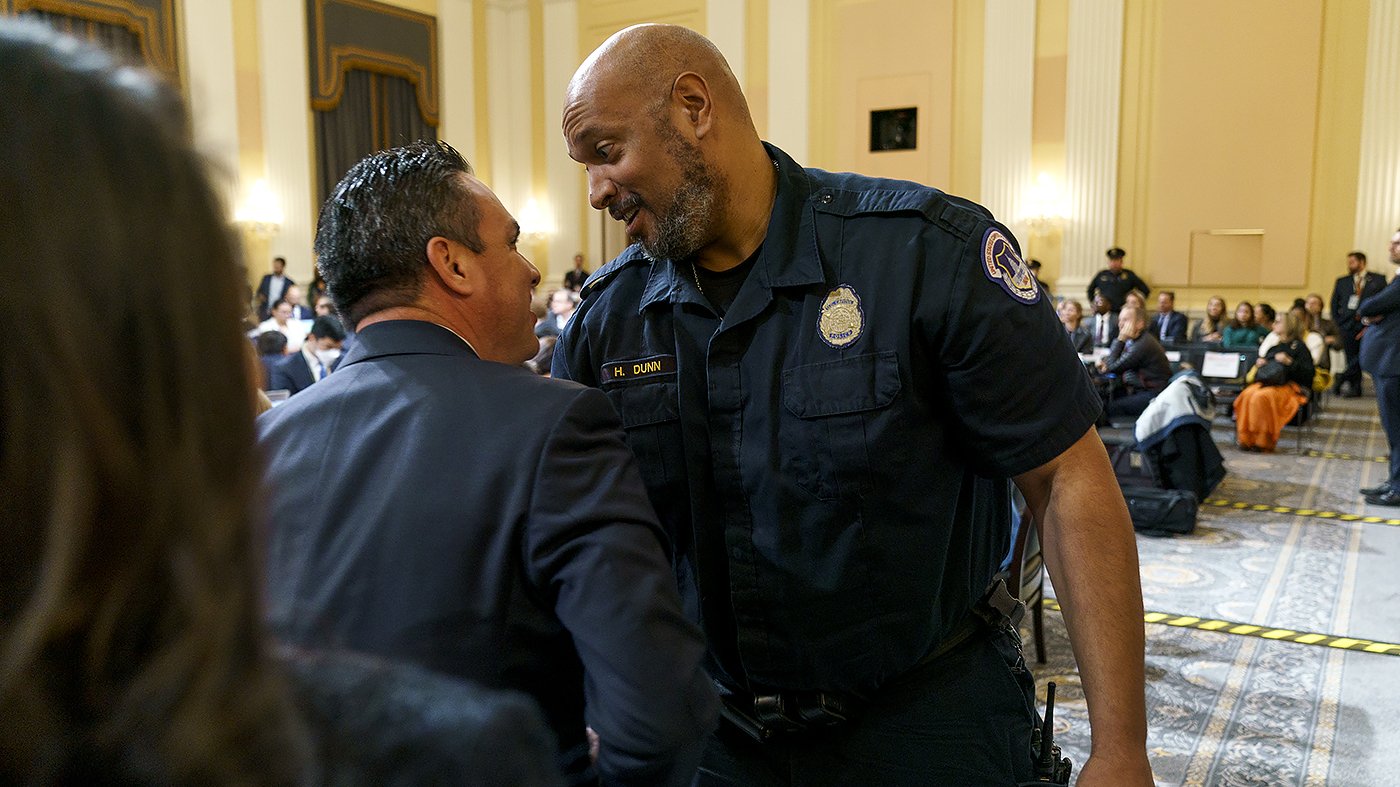
Former U.S. Capitol Police Officer Harry Dunn told CNN on Wednesday that President Donald Trump's newly created $1.776 billion compensation fund effectively puts January 6 rioters on a paid retainer, ready to be called upon for political violence ahead of the next election. Dunn, who was injured defending the Capitol on Jan. 6, 2021, argued the fund incentivizes future attacks.
"This payment is going to serve as a retainer. People have retainers for their lawyers. So when they need them, they're available," Dunn said on AC360. "Donald Trump is putting a retainer on a mob, on a militia that's already showed the violence that they're willing to enact on his behalf. And he's incentivizing it, too."
Dunn and D.C. Metropolitan Police Officer Daniel Hodges filed a lawsuit Wednesday to block the Department of Justice from dispersing the funds. The two officers, both injured during the Capitol breach, called the fund "the most brazen act of presidential corruption this century" in their complaint.
The lawsuit argues that the fund sends a dangerous message: "those who enact violence in President Trump's name will not just avoid punishment, they will be rewarded with riches." It adds that the fund increases the risk of vigilante violence that Dunn and Hodges already face, including death threats.
The $1.776 billion fund stems from a settlement between Trump, his sons, and the IRS over the leak of Trump's tax returns. While Trump and his sons receive no direct payout, they get a formal apology, and the IRS agreed not to audit Trump's previous filings. The fund is meant to settle claims against the government, but critics say it's a thinly veiled reward for political allies.
Members of Congress have questioned the legality of the fund, and the lawsuit is likely to escalate the political battle. Dunn warned that the fund could lead to future instability, telling anchor Anderson Cooper: "I don't believe that in 2029, Donald Trump is going to leave office peacefully. Why? Because he doesn't have a track record of doing it."
Dunn's comments come amid broader scrutiny of Trump's use of executive power. The president has faced criticism for backing candidates in key races, as seen in his endorsement of Ken Paxton in the Texas Senate runoff, which some analysts say could backfire. Meanwhile, Trump's strategy on Iran has been described as a series of delays and empty threats, raising questions about his foreign policy approach.
The lawsuit also highlights the ongoing fallout from January 6, as Trump continues to wield influence over the GOP. Critics argue that the fund, which the administration calls an "anti-weaponization" measure, is actually a slush fund for political violence. As one protest sign projected on the DOJ building read: "Trump's Slush Fund."
For Dunn and Hodges, the fight is personal. "The Fund's mere existence sends a clear and chilling message," the complaint reads. "It encourages those who are harassing Dunn and Hodges, and sending them death threats, to up the ante." The case could set a precedent for how the courts handle compensation funds tied to political violence.