In a striking contrast of justice, Charles Littlejohn is serving five years in federal prison for leaking President Trump's tax returns, while nearly 1,600 individuals charged in the January 6, 2021 Capitol attack are poised to receive taxpayer-funded payouts. The same Justice Department that prosecuted Littlejohn is now facilitating a settlement that critics call an unprecedented political slush fund.
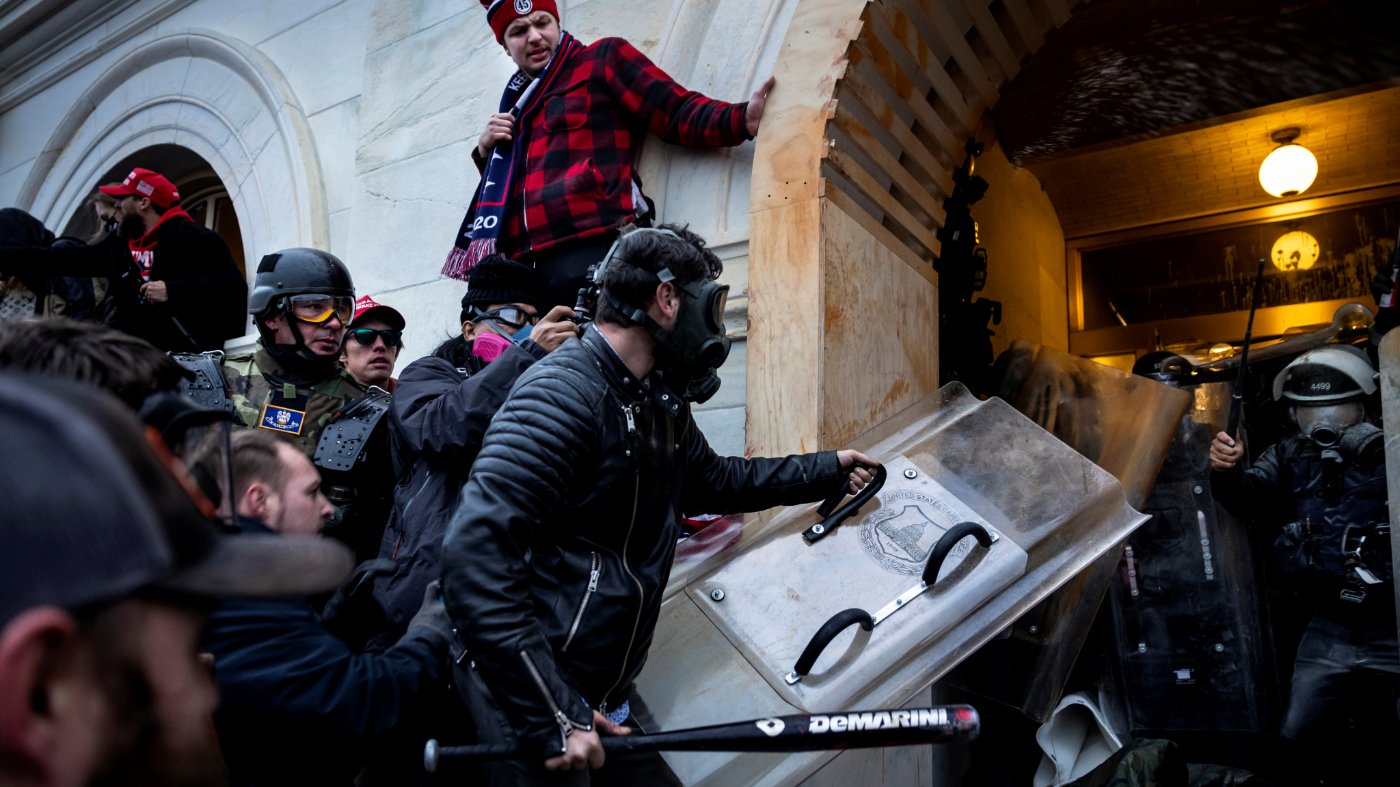
According to ABC News, Trump's Justice Department is moving to drop the $10 billion lawsuit he filed against the IRS in January. In exchange, the government will create a $1.7 billion fund—managed by five Trump appointees with no transparency—to compensate those involved in the insurrection. The first checks are expected to go to the 1,600 people charged in the storming of the U.S. Capitol.

Rep. Jamie Raskin (D-Md.) condemned the deal as a “$1,700,000,000 fraud on the American taxpayer.” On ABC’s “This Week,” he called it a “political slush fund” and “unconstitutional,” citing Section 4 of the 14th Amendment, which bars the government from paying debt incurred in aid of insurrection. Sen. Elizabeth Warren (D-Mass.) labeled it “an insane level of corruption, even for Trump.” Two Capitol Police officers who defended the grounds on Jan. 6 have filed a lawsuit to block the fund.
The settlement stems from Trump's lawsuit against the IRS, which he filed with no expectation of public scrutiny. “Nobody would care,” Trump told reporters, claiming the money would go to “numerous very good charities.” Now, his own appointees are settling with him for $1.7 billion of taxpayer money, deciding which allies receive the cash. This is not a court case—it is a tip jar with a presidential seal.
The human cost is staggering. With $1.7 billion, the government could cap insulin at $35 a month for every Medicare beneficiary twice over, buy three months of groceries for a million families, or replace every lead pipe in Jackson, Miss., Flint, Mich., and Newark, N.J. Instead, it may cut checks of up to $1 million each to individuals who pleaded guilty to assaulting police officers with flagpoles. Meanwhile, gas hit $4.55 a gallon this week, ground beef crossed $6 a pound, and healthcare premiums and national debt continue to climb.
The hypocrisy is glaring. If an ordinary citizen sued the IRS for $10 billion, settled with themselves for $1.7 billion, and handed the money to friends, they would face a federal prison sentence. It's illegal for you but allowed for them. The system does not correct itself; it eats whoever is closest to the door.
Some Republicans are uneasy. Speaker Mike Johnson (R-La.) told HuffPost in January that the payouts didn't “sound appropriate.” A clean three-page bill—the Judgment Fund Integrity Act—could bar any settlement involving the president, vice president, or Cabinet officer without independent counsel and a recorded congressional vote. But so far, no action has been taken.
For everyday Americans, the question is simple: Do you support a $1.7 billion private fund controlled by the president, paying the people who attacked the Capitol with your tax dollars? If so, make your representatives say it on the record. One man went to prison for telling the truth. The people who stormed the Capitol are about to get paid for it. Every parent who told a child that cheating has consequences just became a liar.
This story echoes broader issues of justice and accountability, from the pipeline to prison driven by childhood trauma to the unlearned lessons of prison riots. It also highlights the wrongful imprisonments fueled by AI facial recognition—all part of a system that often punishes the truthful while rewarding the powerful.