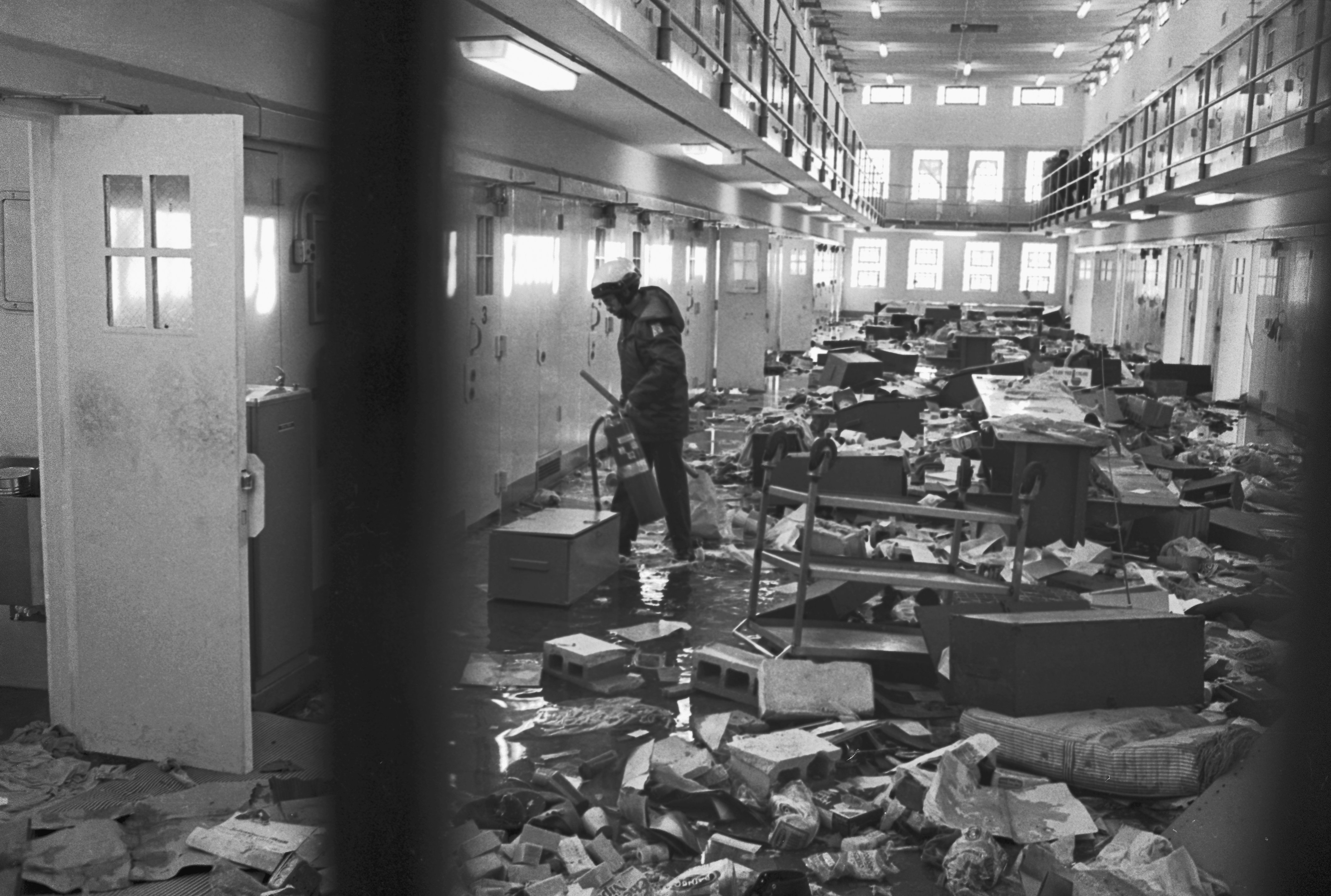
In February 1980, the Penitentiary of New Mexico, near Santa Fe, erupted in a riot that left 33 inmates dead and over 200 injured. No staff were killed, but officers were assaulted and taken hostage. Investigations pointed to a familiar mix: overcrowding, poor conditions, loss of meaningful programs, failed classification systems, and a shortage of trained personnel.
More than four decades later, it's tempting to view Santa Fe as a relic of a bygone era. That would be a mistake. The pressures that built toward that crisis haven't disappeared—in many systems, they've quietly returned. History doesn't just show what happens when systems collapse; it shows what happens when early warnings are ignored.

After Santa Fe, reviews made one thing clear: when correctional systems lose operational control, violence isn't an exception—it's the result. Staffing shortages weaken supervision. Classification systems buckle under strain. Tension accumulates until something gives. These weren't political failures; they were failures of design, culture, and governance.
The fiscal cost was staggering. New Mexico advanced an emergency corrections package of roughly $82 million—over $300 million today, adjusted for inflation. That doesn't include millions more in litigation, legal defense, and nearly two decades of federal oversight.
Today's correctional challenges are often incremental, not dramatic. Chronic staffing shortages become routine. Forced overtime replaces stability. Lockdowns interrupt operations. Education, treatment, and vocational programs are trimmed to keep posts covered. Even before COVID, correctional programming was understaffed and under-resourced. Federal oversight has shown that staffing shortfalls reduce access to drug treatment and education, and can cancel programs entirely. The pandemic didn't break a strong system—it exposed a fragile one.
Programming isn't an accessory to corrections; it's a safety tool. Decades of research show that evidence-based programs—like correctional education and cognitive behavioral interventions—reduce recidivism and future victimization. Facilities that maintain consistent programming tend to be safer for staff and incarcerated individuals. When programs disappear, idle time grows and control erodes. That pattern should sound familiar.
I write this as a career security professional who has served as a warden and led facilities through both stability and crisis. One lesson has remained constant: safety, accountability, and rehabilitation are not competing goals. Sustainable order depends on all three. Today's correctional leaders face intense scrutiny, chronic staffing shortages, aging infrastructure, and shifting expectations. Many are constrained by governance structures that limit flexibility and discourage experimentation. Supporting them means giving predictable operating conditions, adequate staffing, and the authority to test and scale what works.
If lawmakers want different outcomes, they need to do more than add line items. Practical steps are available now. First, stabilize staffing and safety as non-negotiables. Listen to correctional officers, address fatigue and burnout, and treat officer wellness as a core safety issue. Stable staffing, manageable overtime, and meaningful support improve decision-making and strengthen unit-level control. Second, modernize programming through tested innovation. Legislatures can authorize limited-duration pilots for evidence-based treatment, education, and reentry services, then expand what works. Third, align incentives with outcomes. Officers and staff should be recognized not just for compliance, but for safer units, reduced incidents, and successful reentry preparation.
Constant churn and reincarceration are extraordinarily expensive. Front-end investments in safety, staffing, and effective programming pay off when people return to their communities, support their families, and contribute—rather than cycle back into custody. The Santa Fe riot wasn't inevitable. It was the predictable outcome of systems that ignored the warnings. We have a choice: learn the lesson now, or pay the price later.
For more on how system failures can have devastating consequences, see the case of AI facial recognition leading to wrongful imprisonment. Meanwhile, other reform efforts, like foster care reform highlighted by Melania Trump, show that targeted policy changes can make a difference.