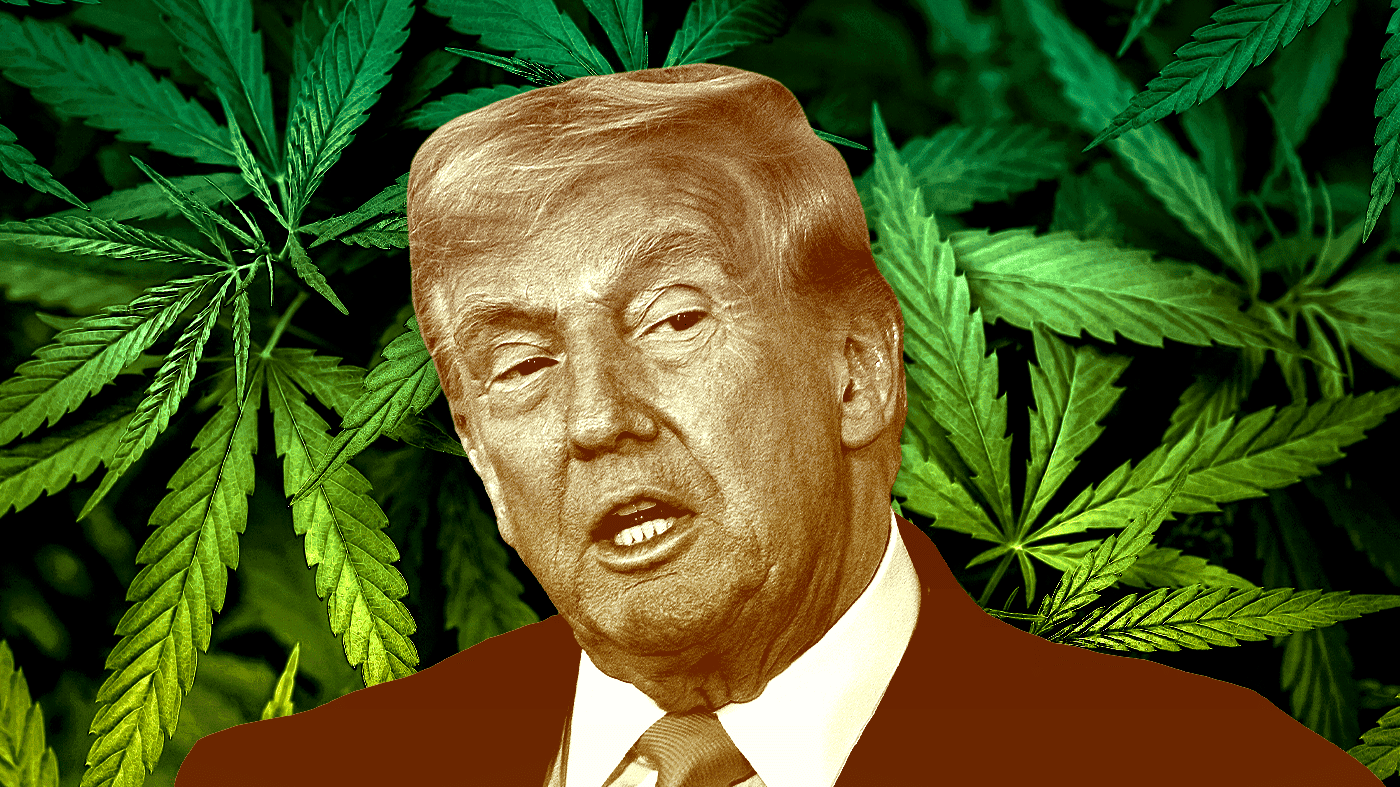
President Trump’s recent executive actions on marijuana and psychedelics represent a dramatic departure from traditional Republican drug policy, moving the party away from the “just say no” era and Richard Nixon’s war on drugs. The orders, which include fast-tracking FDA reviews of psychedelic medicines and reclassifying medical marijuana, have sparked debate among conservative lawmakers and advocates alike.
“Regardless of what one may think of the president … he seems to be someone who is open to innovation and is not imprisoned by dogmatic viewpoints,” said Bryan Hubbard, CEO of Americans for Ibogaine, a group promoting the psychoactive compound for addiction treatment. Last week, Trump signed an executive order directing the FDA to prioritize studies on psychedelics like psilocybin and MDMA for treating PTSD and depression, joking to a group that included podcaster Joe Rogan, “Can I have some please?”
The order also allocated $50 million to support state-level initiatives, while acting Attorney General Todd Blanche ordered the reclassification of state-licensed medical marijuana as a less dangerous substance. Blanche said the Justice Department “is delivering on President Trump’s promise to expand Americans’ access to medical treatment options.” However, the moves are largely symbolic: psychedelics remain illegal, and marijuana is still a Schedule I drug under federal law.
The shift reflects changing public attitudes and the influence of the “Make America Healthy Again” movement, which has pushed for health freedom and drug experimentation. Veterans have played a key role, with figures like Rep. Morgan Luttrell (R-Texas) and his brother Marcus, both retired Navy SEALs, standing behind Trump at the signing ceremony. The Luttrells, along with Reps. Jack Bergman (R-Mich.) and Lou Correa (D-Calif.), lead the Congressional Psychedelics Advancing Therapies Caucus, advocating for rigorous clinical research.
“The warfighter messengers around psychedelics are able to eventually reverse the stigma that has long been associated with the countercultural left,” Hubbard said. “They have been able to demonstrate, hey, this it’s real, it’s legitimate, and it’s to be taken seriously.” Denise Gitsham, a Republican strategist and former George W. Bush aide, noted that the administration “wants to actually deliver results for veterans and those who suffer from PTSD.”
The issue gained traction through Trump’s unconventional allies, including Elon Musk, Rogan, and Health and Human Services Secretary Robert F. Kennedy Jr., who made easing access to psychedelics a priority. Trump said Rogan texted him about ibogaine research, prompting a quick reply: “Sounds great. Do you want FDA approval? Let’s do it.” While Trump signed an order to reschedule marijuana last year, progress stalled until he publicly pressed the issue during the psychedelic event. “I think he wants to follow through on not only what RFK Jr. promised in his campaign about psychedelics, but also what he thinks is right,” Gitsham said. “And I think there’s definitely a political element to it too.”
Adam Rosenberg, chair of the National Cannabis Industry Association, said he wasn’t surprised by Trump’s shift. “My hope and hypothesis was that cannabis would serve as an icebreaker in helping our lawmakers recognize that the approach to these entheogenic plants and fungi has failed to this point,” he said. Under President Biden, agencies studied psychedelics but the FDA rejected an application for ecstasy-assisted therapy for PTSD, and marijuana rescheduling was left unfinished. “With the Biden administration, there was an extra layer of political cautiousness that … doesn’t really exist with the Trump administration,” one advocate noted. The Trump orders, while limited in immediate impact, signal a new chapter in GOP drug policy.