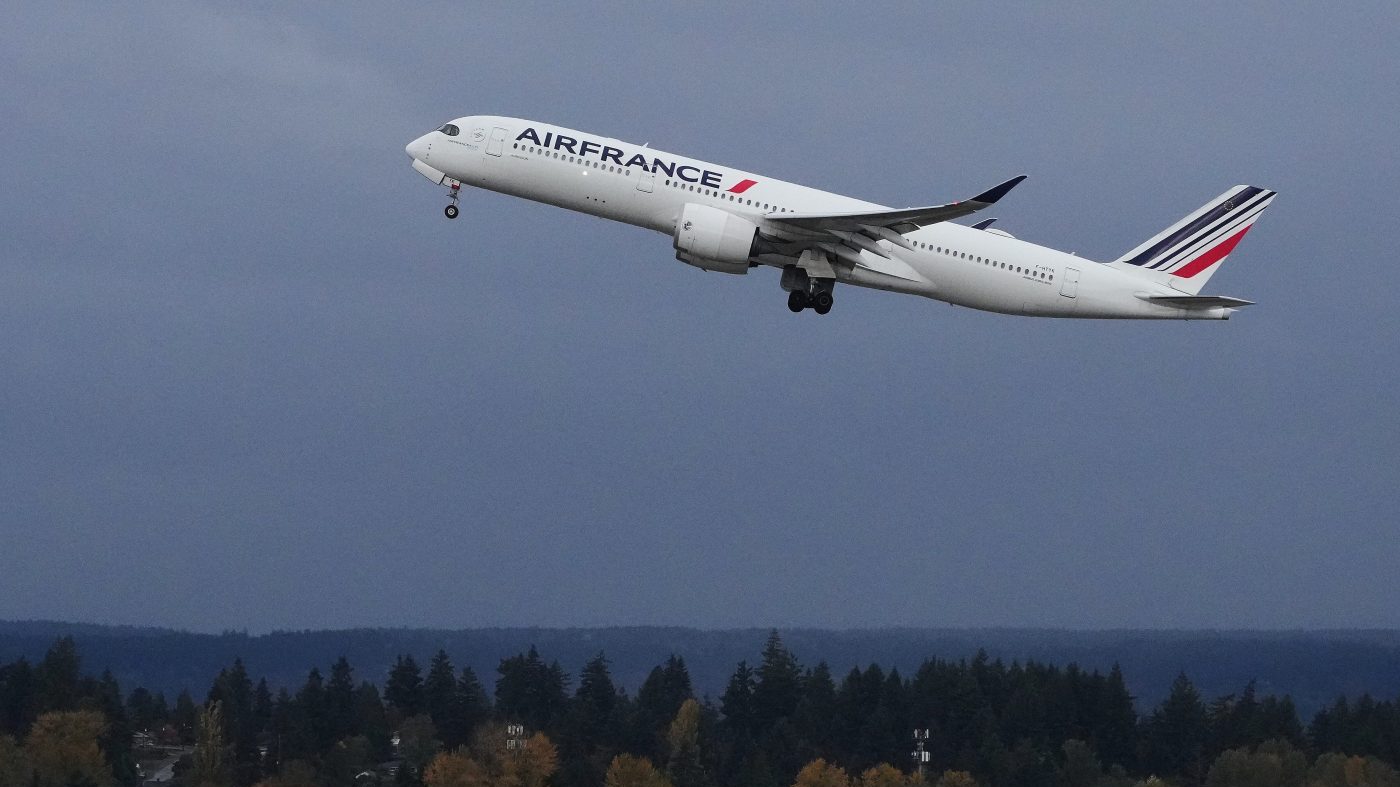
U.S. Customs and Border Protection (CBP) confirmed Thursday that a Detroit-bound flight was forced to land in Montreal after a passenger from the Democratic Republic of Congo (DRC) boarded “in error,” violating new travel restrictions imposed by the Centers for Disease Control and Prevention (CDC) aimed at containing the Ebola outbreak.
The incident occurred Wednesday on Air France Flight 378, which departed from Paris. According to a CBP spokesperson, the traveler from the DRC should not have been on the plane due to entry restrictions designed to “reduce the risk of the Ebola virus.” The spokesperson stated that CBP “took decisive action and prohibited the flight carrying that traveler from landing at Detroit Metropolitan Wayne County Airport, and instead, diverted to Montreal, Canada.”

CDC Travel Ban in Effect
The CDC issued an order on Monday barring entry to travelers who have been in Uganda, the DRC, or South Sudan within the past 21 days. The restriction is effective for 30 days. The DRC passenger’s presence on the flight triggered the diversion, as the airline failed to prevent boarding. An Air France spokesperson confirmed the diversion “at the request of U.S. authorities” and noted that “there was no medical emergency on board. The passenger was disembarked with his luggage, and the plane was able to depart for Detroit.”
The airline added that “like all airlines, Air France is required to comply with the entry requirements of the countries it serves.” The incident comes as the U.S. tightens screening procedures for flights from affected regions. On Thursday, CBP and the Department of Homeland Security (DHS) announced that all flights carrying individuals who have been in the three affected countries in the last three weeks must land at Washington-Dulles International Airport. DHS Secretary Markwayne Mullin submitted a notice to the Federal Register explaining that Dulles is “where the U.S. government is focusing public health resources to implement enhanced public health measures.”
Ebola Outbreak Worsens
The World Health Organization (WHO) has declared the Ebola outbreak a “public health emergency of international concern.” WHO Director General Tedros Ghebreyesus reported 30 confirmed cases, over 500 suspected cases, and 130 suspected deaths. The rare Ebola variant, known as Bundibugyo, has surged in eastern Congo, with local responders lacking protection, as detailed in a recent report.
The CDC invoked Title 42 authority to implement the travel ban, a move that has drawn both support and criticism. The Trump administration’s rapid response contrasts with earlier critiques from figures like Senator Marco Rubio, who questioned the WHO’s handling of the crisis. The WHO director pushed back on Rubio’s criticism in a separate statement.
Implications for Travel and Public Health
The diversion highlights the challenges of enforcing travel restrictions during a public health emergency. CBP emphasized it is “taking the necessary measures to protect public health and reduce the risk of Ebola disease introduction into the United States.” The U.S. ban on travelers from the three African nations is part of a broader effort to contain the virus, which has already spread across borders.
As the situation evolves, airlines face increased scrutiny to ensure compliance with entry requirements. The incident also underscores the potential for disruptions as global health authorities race to contain the outbreak. The WHO’s declaration of a global emergency, alongside the CDC’s travel ban, marks an aggressive U.S. posture in the face of a rare and dangerous virus.