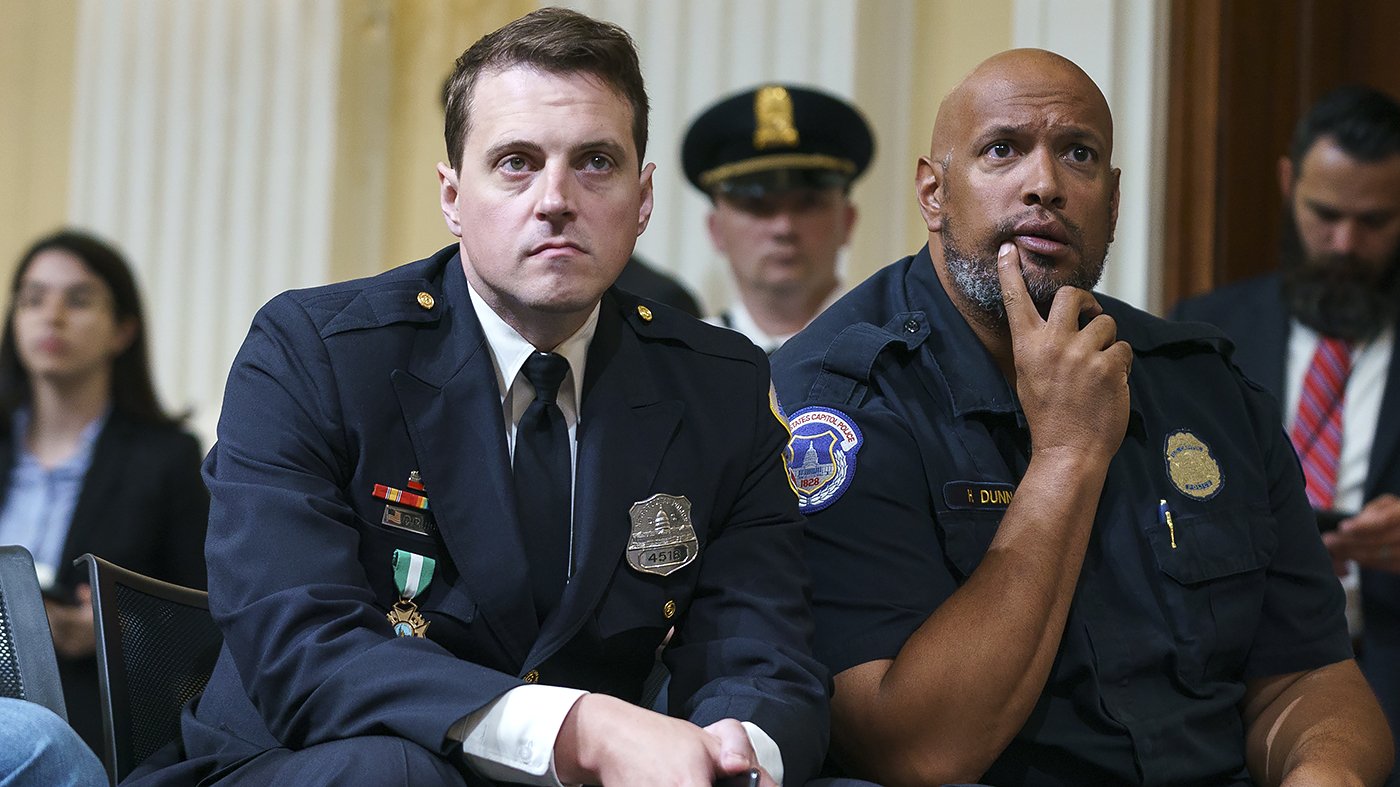
Two police officers who defended the Capitol during the January 6, 2021, attack filed a lawsuit Wednesday seeking to block President Donald Trump's nearly $1.8 billion fund, which they argue is designed to reward the very rioters who assaulted them. Former U.S. Capitol Police Officer Harry Dunn and D.C. Metropolitan Police Officer Daniel Hodges allege that the so-called “anti-weaponization fund” will be used to pay out individuals who stormed the Capitol, including members of extremist groups like the Proud Boys.
The lawsuit, filed in federal court, calls the fund “the most brazen act of presidential corruption this century.” Dunn and Hodges say they have faced relentless death threats since the attack, and now fear the fund will directly empower their tormentors. “The Anti-Weaponization Fund will both compensate and empower the very people making those threats,” the 29-page complaint states. “Militias like the Proud Boys will use money from the Fund to arm and equip themselves. The Fund will grant their past acts of violence legal imprimatur.”
According to the complaint, the fund signals to potential perpetrators that violence in Trump’s name will be rewarded, not punished. “And, most chillingly, the Fund will signal to past and potential future perpetrators of violence against Dunn and Hodges that they need not fear prosecution; to the contrary, they should expect to be rewarded,” the document continues.
The fund originates from a settlement Trump secured after suing the Internal Revenue Service for $10 billion. It is intended to issue payouts and “formal apologies” to individuals who claim they were wronged by the government—a category the officers argue will include January 6 defendants. The lawsuit alleges Trump first floated the idea of compensating rioters in 2025, and other administration officials have echoed that sentiment.
More than 1,500 people were prosecuted in the aftermath of the Capitol attack, with serious convictions for assaulting law enforcement and seditious conspiracy. On his first day back in office, Trump pardoned nearly all of them and commuted the sentences of leaders from the Proud Boys and Oath Keepers. The Justice Department has since moved to vacate the sedition convictions of those group leaders. For context on related developments, see how Trump ally Caputo became the first to tap the $1.78 billion fund.
Dunn and Hodges are represented by the Public Integrity Project, an anti-corruption legal group founded by former January 6 prosecutor Brendan Ballou, who resigned after Trump’s pardons. The lawsuit warns that the fund’s existence alone encourages further violence. “The Fund’s mere existence sends a clear and chilling message: those who enact violence in President Trump’s name will not just avoid punishment, they will be rewarded with riches,” the complaint reads. “That message, by itself, substantially increases the already sizeable risk of vigilante violence Dunn and Hodges face on a near-daily basis. And it encourages those who are harassing Dunn and Hodges, and sending them death threats, to up the ante.”
The case highlights ongoing tensions over the January 6 aftermath and Trump’s efforts to reframe the attack. Critics, including commentator Charlamagne, have blasted the IRS settlement as “blatant corruption,” as reported in this analysis of the $1.8 billion deal. The lawsuit seeks to halt disbursements from the fund and prevent what the officers describe as a dangerous precedent.
Legal experts say the case could test the limits of presidential power and the definition of “weaponization” of government. Meanwhile, Dunn and Hodges continue to receive threats, underscoring the volatile political climate. The fund, if allowed to proceed, could reshape the narrative around January 6 and embolden those who participated in the attack. For more on the broader political landscape, see Trump's push to abolish the filibuster and fire the Senate parliamentarian.