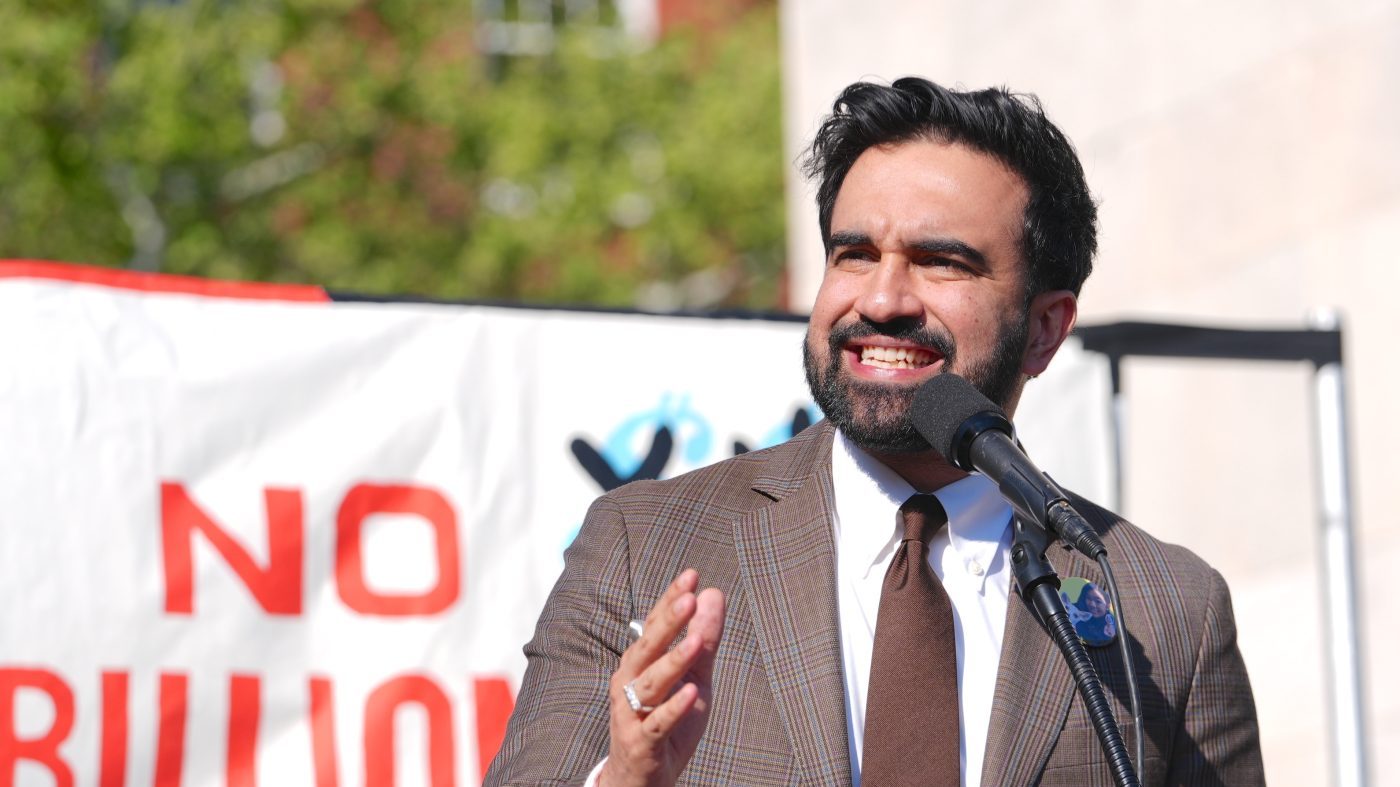
New York City Mayor Zohran Mamdani (D) escalated a public exchange with Amazon founder Jeff Bezos on Wednesday, rejecting the billionaire’s assertion that higher taxes on the wealthy would do little to support public school teachers in Queens. The clash underscores a deepening rift between progressive policymakers and the world’s fourth-richest individual, who holds a net worth exceeding $270 billion.
Bezos, during an interview with CNBC’s Andrew Ross Sorkin, argued that doubling his tax payments would not solve systemic issues. “You can double the taxes I pay, and it’s not going to help that teacher in Queens. I promise you,” he said. He also called on politicians to stop “picking a villain and pointing fingers” and instead focus on making the tax code more equitable, suggesting that nurses in Queens should be exempt from taxes entirely.
Mamdani countered swiftly on the social platform X, writing, “I know a few teachers in Queens who would beg to differ.” The mayor, who has recently closed a $12 billion city deficit while boosting school funding by $122 million, has made taxing the ultra-wealthy a cornerstone of his fiscal agenda.
A broader tax debate
The back-and-forth comes as Mamdani pushes for a “pied-à-terre” tax on second homes in New York City valued at over $5 million. Bezos, who owns multiple properties in the city, declined to criticize the proposal, calling it “a fine thing for New York to do” and framing it as a legitimate policy debate. However, he reiterated that such measures should not devolve into personal attacks.
Bezos also took the opportunity to praise President Trump’s performance during his second term, despite the president’s declining approval ratings. “Trump has lots of good ideas,” Bezos said. “He’s been right about a lot of things. You have to give him credit where credit is due.” This aligns with Bezos’s recent praise of Trump’s maturity in office, though it risks alienating Democrats who view the Trump agenda as a threat to social programs.
Political stakes
For Mamdani, the confrontation is a chance to solidify his progressive credentials ahead of a potential re-election bid. His budget moves have already drawn scrutiny, with some questioning the accuracy of his deficit claims. Yet, by taking on one of the world’s richest men, he is tapping into a populist vein that resonates with many New Yorkers.
Bezos, meanwhile, continues to navigate a complex public image—part tech mogul, part media owner, and now a frequent target of left-leaning politicians. His defense of Trump, coupled with his dismissive stance on tax hikes, could further strain his relationship with the Biden administration and Democratic leaders.
The debate is unlikely to fade. As Mamdani’s team prepares for the next budget cycle, the question of who should pay—and how much—remains central to New York’s political landscape. For now, the mayor has made clear that he sees teachers in Queens as more than a rhetorical device.