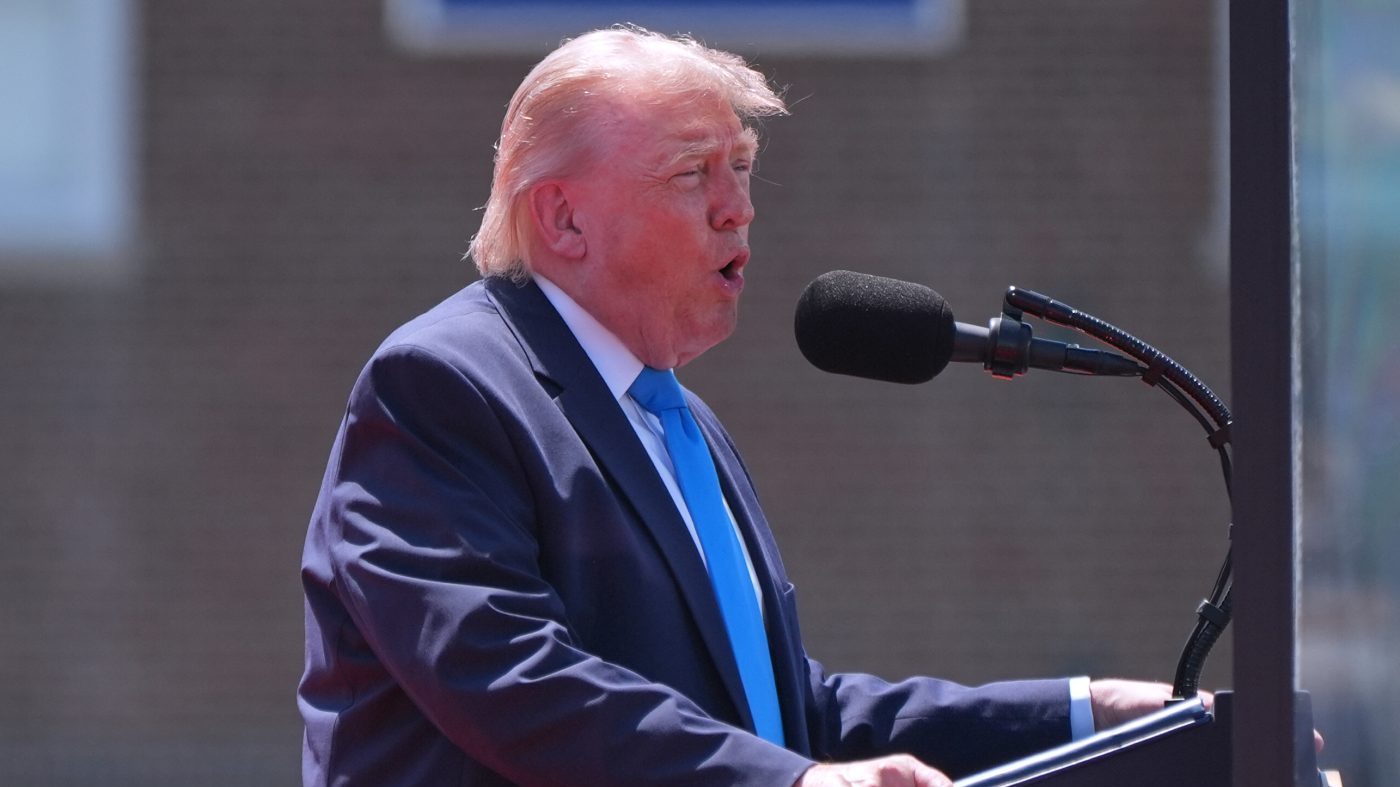
President Donald Trump on Wednesday told reporters the United States will not escalate military action against Cuba, hours after the Justice Department indicted former Cuban President Raúl Castro on murder charges. Speaking at the White House, Trump said the administration has Cuba “on our mind” but ruled out further confrontation.
“There won’t be escalation,” Trump said. “I don’t think there needs to be. Look, the place is falling apart.” The president’s remarks come amid recent threats to invade or take military action against the island, including a prior warning from Trump that the U.S. could use force.
Earlier Wednesday, Acting Attorney General Todd Blanche traveled to Miami to announce the indictment in conjunction with a ceremony honoring the victims of Brothers to the Rescue, a Cuban exile group. Four men were killed in 1996 when their planes—searching for Cubans attempting to flee the island—were shot down by the Cuban military under Castro’s command. The charges, filed on Cuba’s independence day, represent the first U.S. criminal case against a former foreign head of state in decades.
Trump called the indictment “very important” and “a very big moment for people, not only Cuban Americans, but people who came from Cuba, that want to go back to Cuba, see their family in Cuba.” The president’s comments underscored the political weight of the case, which targets Castro for his role in the deaths of U.S. citizens during a time of heightened tensions between Washington and Havana.
The legal action follows a secretive trip to Cuba last week by CIA Director John Ratcliffe, who met with Cuban officials. The CIA said Ratcliffe traveled to “personally deliver President Trump’s message that the United States is prepared to seriously engage on economic and security issues, but only if Cuba makes fundamental changes.” That diplomatic outreach contrasts with the aggressive posture of the indictment and Trump’s earlier threats, signaling a two-track approach.
Trump’s decision to rule out escalation may reflect a strategic calculation. With the administration already facing growing domestic political challenges and a potential conflict with Iran, opening a new front in Cuba could stretch U.S. military resources and further erode public support. The president’s dismissive assessment of Cuba’s condition—“the place is falling apart”—suggests he sees the regime as weakened enough to avoid direct confrontation.
The indictment and Trump’s comments come as the administration continues to pressure the Cuban government through sanctions and diplomatic isolation. However, the mixed signals—indictment, CIA visit, and simultaneous de-escalation—have left some analysts questioning the coherence of U.S. policy. The White House has not clarified whether the charges against Castro are part of a broader strategy or a standalone symbolic move.
For Cuban Americans and exiles, the indictment is a long-sought reckoning for the 1996 killings. But Trump’s insistence that no escalation is needed may temper expectations for further U.S. action. As the legal process unfolds, the political fallout could resonate in Florida, a key swing state with a large Cuban-American population that has historically favored tough policies toward Havana.