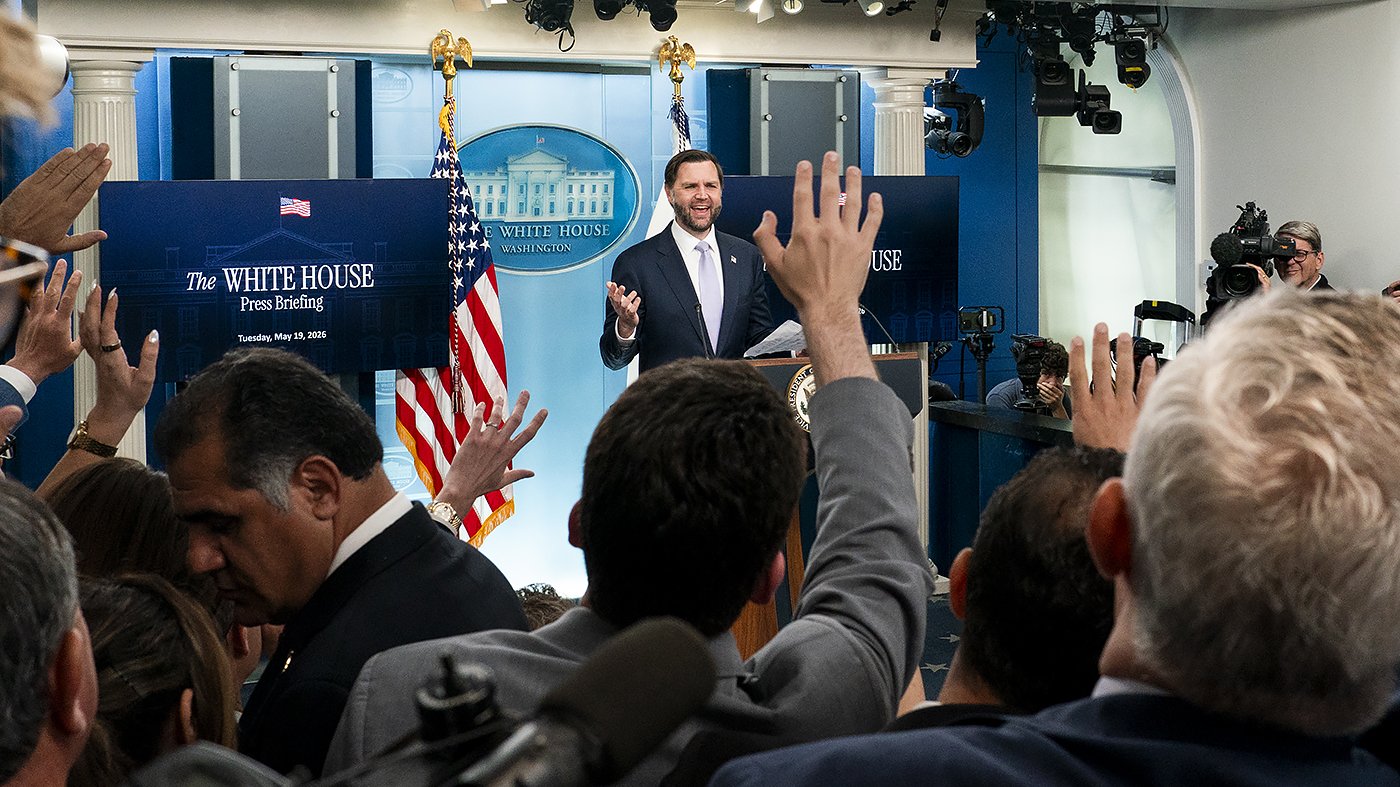
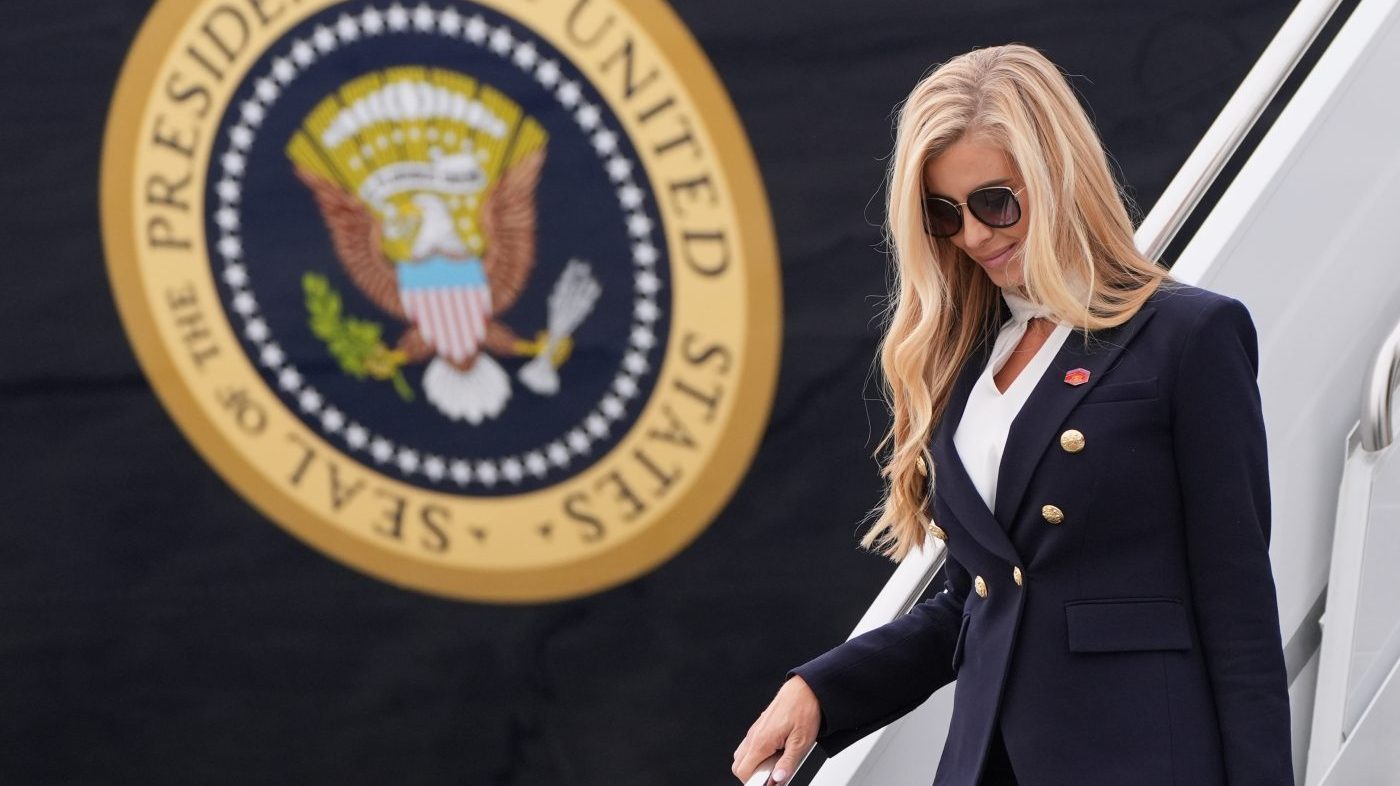
Vice President JD Vance stepped into the White House briefing room Tuesday with a noticeably calmer demeanor than Secretary of State Marco Rubio’s boisterous appearance last week. Vance, who took over for press secretary Karoline Leavitt during her maternity leave, aimed to manage a room full of eager reporters with a mix of humor and occasional sharp retorts.
Vance used a seating chart to decide whom to call on, sometimes pointing randomly and other times studying the document intently. He joked about his “cheat sheet,” saying it helped him know “who to call on and most importantly who not to call on,” drawing a few chuckles. At one point, he had to ask reporters to stop shouting over each other when he acknowledged someone.
The vice president covered a wide range of topics, including Iran, artificial intelligence, and a new $1 billion “anti-weaponization fund” from the Justice Department designed to compensate individuals who claim they were unfairly targeted under the Biden administration. He also addressed questions about President Trump’s decision to halt a planned attack on Iran, saying the administration was acting in good faith. “Why did I go to Islamabad, Pakistan? … We wanted to show a sign of good faith,” Vance said, referencing his recent Iran negotiations.
On the compensation fund, Vance clarified that it is not intended for those convicted of attacking Capitol Police on January 6. “We’re not trying to give money to anybody who attacked a police officer,” he said. “We’re trying to compensate people where the book was thrown at them, they were mistreated by the legal system.” When pressed, he added that each case would be reviewed individually.
Vance also briefly entered attack mode, criticizing a reporter for a lengthy question on Trump’s stock trading ethics. “Come on, man. Have a little bit of objectivity in the way that you ask these questions because there were a lot of things in that speech masquerading as a question that didn’t actually get asked,” he said.
The briefing came on a busy day at the White House, with Trump giving reporters an impromptu tour of a construction site and endorsing state Attorney General Ken Paxton over incumbent Senator John Cornyn in the Texas Senate primary. Vance also deflected questions about his own 2028 presidential prospects, saying, “I’m a vice president. I really like my job and I’m going to try to do as good of a job as I can.”
Rubio, meanwhile, has been capitalizing on his own briefing moment, releasing a polished video of his response to a question about “hope for America.” He has also gained international exposure, traveling with Trump to China and handling questions on Iran amid a fragile ceasefire. Vance, by contrast, has focused on domestic events, including a fundraiser in Kansas City and remarks at a manufacturing facility.
Both Vance and Rubio are seen as key contenders for the 2028 Republican nomination, but Tuesday’s briefing highlighted Vance’s more restrained style. He fielded questions on Iran’s nuclear ambitions, arguing that preventing Tehran from obtaining a weapon is crucial to avoid giving it “economic leverage.” “We want to keep the number of countries that have nuclear weapons small,” Vance said.