President Donald Trump is escalating his push for Republicans to attach the Safeguard American Voter Eligibility (SAVE America) Act to critical legislation, injecting fresh turmoil into an already fraught legislative stretch on Capitol Hill. The move risks derailing bipartisan efforts on housing and surveillance bills that GOP leaders are struggling to advance.
Republican leaders in both chambers are juggling a bipartisan housing package, a long-term renewal of the Foreign Intelligence Surveillance Act's (FISA) warrantless surveillance powers under Section 702, and a party-line immigration funding bill. Each faces internal GOP divisions, bicameral disagreements, or procedural hurdles, and Trump's latest demand only compounds the pressure on Senate Majority Leader John Thune (R-S.D.) and House Speaker Mike Johnson (R-La.).
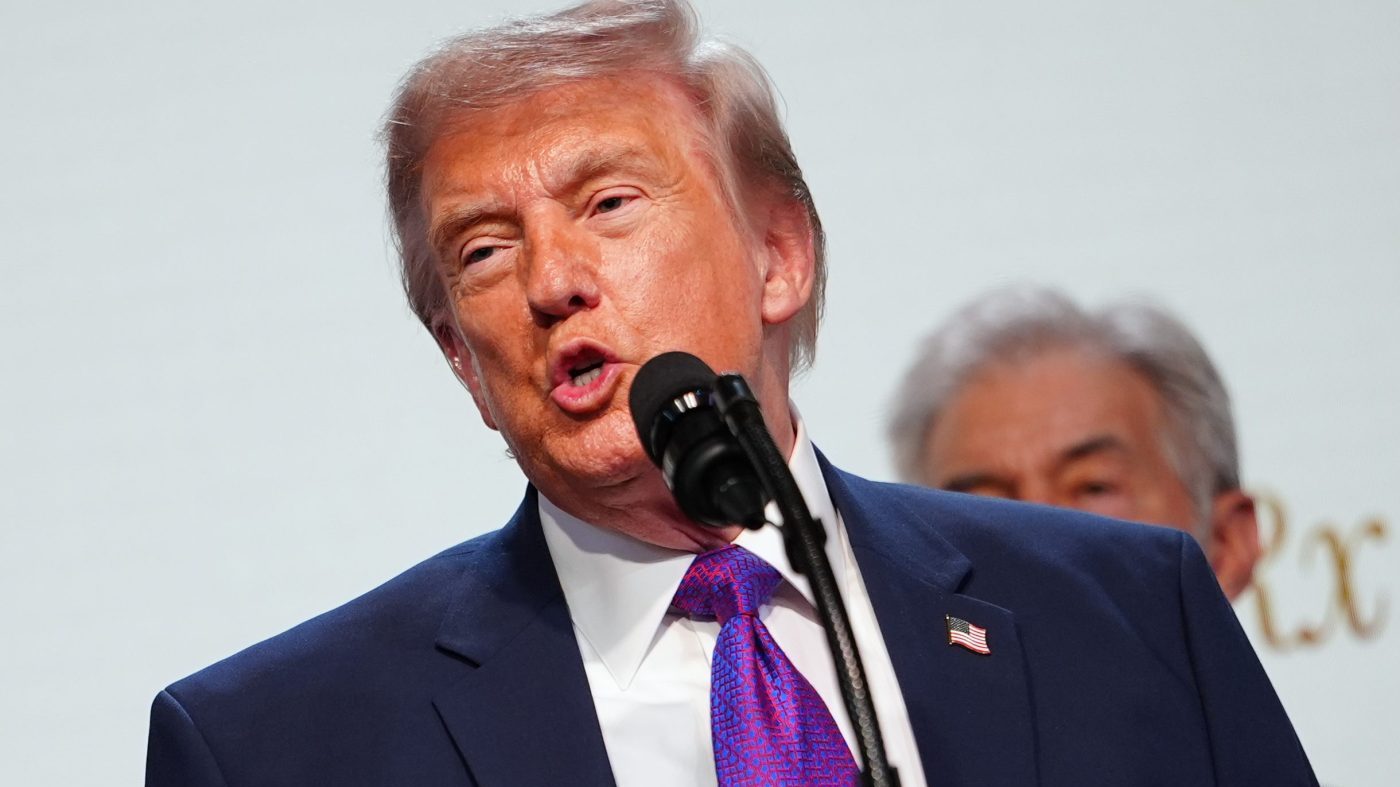
In a Truth Social post Saturday, Trump urged Republicans to attach the SAVE America Act—which requires proof of citizenship for voter registration and photo ID to cast a ballot—to either the housing bill or the FISA reauthorization. The measure has stalled in the Senate amid Democratic opposition. Trump wrote, “Voter I.D., and Proof of Citizenship, must be approved, NOW. Crooked Mail-In Voting must be stopped!!! PUT IT ALL IN THE HOUSING AND FISA BILLS. MAKE AMERICA GREAT AGAIN!!!”
The president has long pushed for the bill, telling House Republicans at a Florida retreat in March that it “will guarantee the midterms. If you don’t get it, big trouble.” His latest call comes as the 2026 midterm cycle heats up, with Republicans eager to notch legislative wins and sharpen their election security messaging. Yet it also arrives amid a notable shift: GOP lawmakers appear more willing to resist Trump’s demands, even as they watch his retribution campaigns against defectors—such as Trump targeting Rep. Thomas Massie in Kentucky and Sen. Bill Cassidy's loss in Louisiana sending a stark warning to Senate Republicans.
Conservatives in both chambers have championed the SAVE America Act, forcing weeks of Senate floor debate earlier this year and threatening to block House bills. But attaching the voting measure to the housing or FISA bills would likely doom them, since both need Democratic support to pass. House GOP leaders plan to use suspension of the rules—a fast-track process requiring a two-thirds supermajority—to pass an amended version of the Senate housing bill this week. Adding the SAVE America Act would kill that path, as Democrats would oppose the voting provisions. Even under regular order, Johnson may lack enough Republican votes for passage.
In the Senate, most legislation requires 60 votes to overcome a filibuster, meaning a housing package with the SAVE America Act would be dead on arrival. Similarly, any long-term FISA Section 702 renewal needs bipartisan support. Johnson already faces pushback from House Freedom Caucus members and privacy hawks who want a ban on central bank digital currencies and a warrant requirement for Section 702. Congress has passed two short-term extensions via unanimous consent, with the latest expiring in mid-June.
Some Republicans are seizing on Trump’s call for momentum. Sen. Rick Scott (R-Fla.) responded on X, agreeing and adding, “that is why we need to get rid of the filibuster.” Sen. Mike Lee (R-Utah), a leading proponent, has urged Thune to resume debate, writing Monday, “Voter fraud happens. We must pass the SAVE America Act.” Rep. Anna Paulina Luna (R-Fla.), who has threatened to oppose Senate-passed bills until Thune acts, told Fox News she will work to attach the SAVE America Act to either the housing or FISA measure. She said, “Democrats, Republicans, independents, they all want it, and yet you have people in the Senate like John Thune saying that they can’t remove the filibuster or even embrace the talking filibuster, which is a workaround, and that’s simply unacceptable.”
Trump and conservatives have pushed Thune to use a “talking filibuster,” forcing Democrats to speak continuously to delay the bill; if they cede the floor, Republicans could pass it with 51 votes. Thune has resisted, calling it “much more complicated and risky than people are assuming,” and has acknowledged lacking votes to eliminate the filibuster entirely. The standoff underscores the growing tension between Trump’s demands and the realities of governing a narrowly divided Congress.