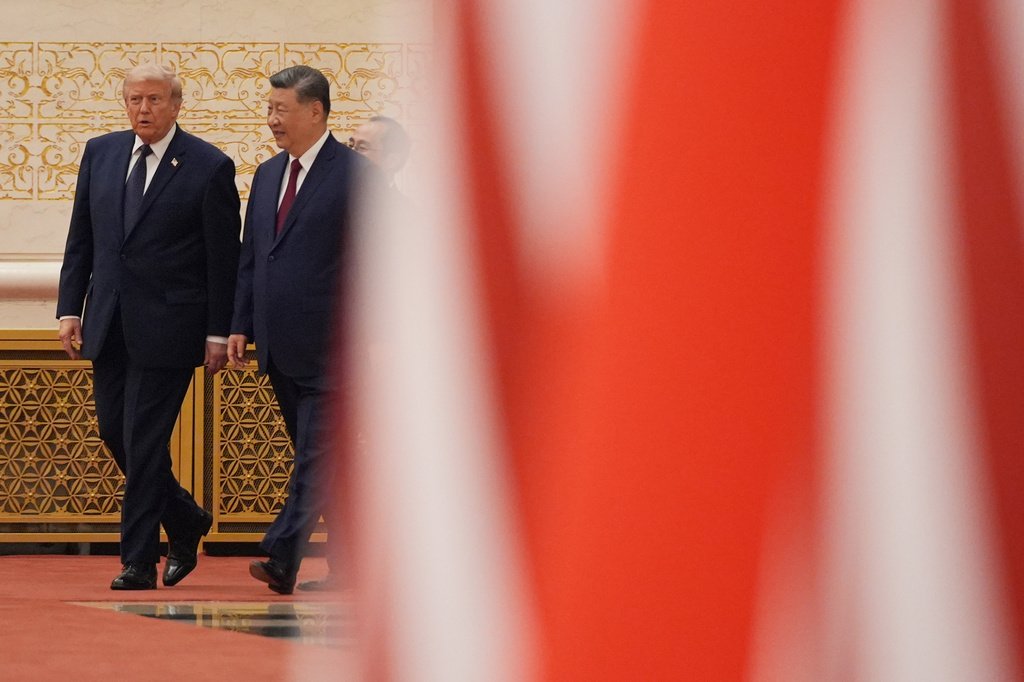
President Trump and Chinese President Xi Jinping emerged from their recent summit using similar language about a “constructive” relationship built on “strategic stability.” But that rhetorical alignment should not be mistaken for a shift in Beijing's actions, according to a new analysis from the Foundation for Defense of Democracies.
“When it comes to China, there can be no stability without accountability,” writes Max Meizlish, a research fellow at the group's Center on Economic and Financial Power. His piece, published Monday, argues that Trump should resist any move to unwind sanctions on Chinese firms that facilitate Iranian oil sales. Instead, Washington should use its economic leverage to compel real changes in Chinese behavior on Iran's weapons programs and military intimidation of Taiwan.
Meizlish points to China's brittle economy—stressed by a troubled housing sector, bad bank loans, and high youth unemployment—as a moment of maximum leverage for the United States. “Chinese financial institutions that facilitate Iranian sanctions evasion are more exposed to U.S. economic statecraft now than at any other time in recent memory,” he writes. He recommends using tools like Section 311 of the Patriot Act to cut off dollar access to banks and even entire jurisdictions, rather than granting relief for vague promises.
The analysis specifically warns against trusting Xi's reported commitment not to provide military equipment to Iran. It notes that Xi made a similar pledge in 2015 not to militarize disputed South China Sea islands, only to later construct and militarize bases across the region. New reports suggest China may have already supplied shoulder-fired missiles to Tehran, and other Chinese firms are planning additional arms shipments. “Xi's word on Iran therefore needs to be tested, not trusted,” Meizlish writes.
Even if direct arms transfers are avoided, a major loophole remains: dual-use goods. China is a dominant supplier of precursor chemicals and components that feed Iran's missile and drone programs—weapons used against U.S. forces, Israel, and Gulf Arab partners. Closing that supply chain, Meizlish argues, requires more pressure, not sanctions relief. This dynamic echoes the broader challenge of holding Beijing accountable, a theme that also runs through ongoing Senate GOP debates over immigration and compensation funds that test the limits of executive leverage.
The same logic applies to Taiwan. Meizlish criticizes Xi's warning that missteps could risk “clashes and even conflicts,” calling it an inversion of reality. “China—not America and not Taiwan—is the aggressor,” he writes, noting Beijing's military intimidation, diplomatic isolation efforts, and probing of U.S. resolve. Treating Chinese coercion as a problem to be managed through American restraint risks confusing prudence with capitulation. The White House should proactively announce which Chinese state institutions—major state-owned banks and firms in strategic sectors—could face sanctions if Beijing moves on Taiwan, and should support legislation like the STAND with Taiwan Act to mandate such actions. This approach echoes the kind of leverage politics seen in Senator Cassidy's push for congressional approval of Trump's anti-weaponization fund.
President Trump has long understood that Chinese trade manipulation—state-backed dumping, industrial subsidies, forced technology transfer, and intellectual-property theft—requires accountability. “Beijing pushes until Washington pushes back,” Meizlish writes. The same principle applies to Iran and Taiwan. If Beijing can frame every American response as destabilizing, it will turn “stability” into a veto over U.S. policy. That is the trap Trump must avoid. Stability without accountability is an illusion—and a costly one, as the administration weighs its next moves on AI testing orders and other innovation priorities.