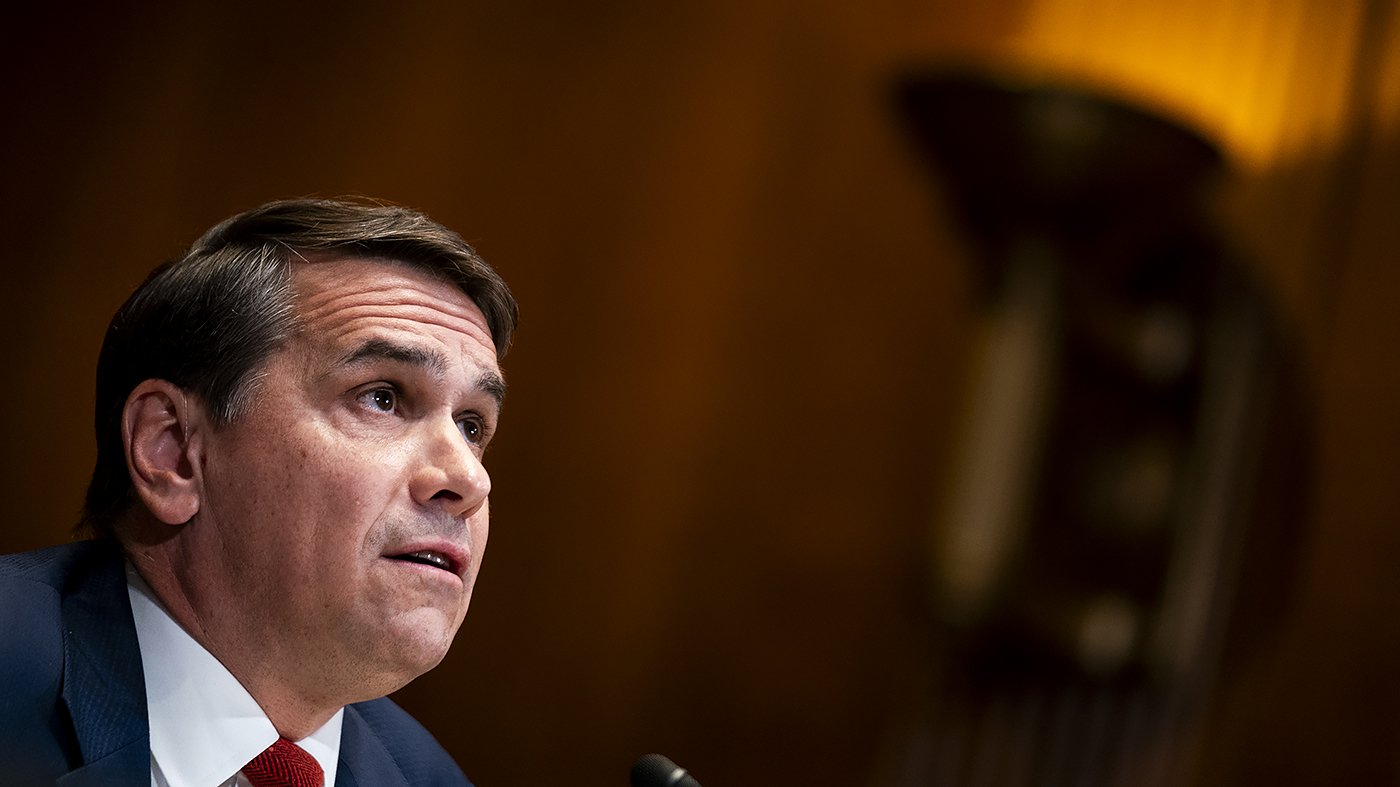
Acting Attorney General Todd Blanche on Wednesday forcefully defended the Department of Justice's new $1.776 billion anti-weaponization fund, pushing back against bipartisan criticism by arguing that individuals who assault police officers routinely receive taxpayer money through civil settlements.
During a CNN interview, correspondent Paula Reid pressed Blanche on whether he would support using the fund to compensate people convicted of assaulting police officers during the January 6, 2021, Capitol attack. Blanche responded, "People that hurt police get money all the time," citing existing settlement processes for rights violations.
Blanche elaborated that individuals who believe their rights were violated can apply for funds, sue, file claims, or go to court, and in some cases, the government settles those cases. He emphasized that while assaulting a federal officer is prosecutable, that is "a completely different question" from whether someone can apply for a claim.
The fund, announced Monday as part of a settlement in President Trump's now-withdrawn lawsuit against the IRS over leaked tax returns, is designed to provide formal apologies and monetary relief to those who prove they were wrongfully targeted by the federal government. The DOJ says there are no partisan requirements to file a claim.
Lawmakers from both parties have criticized the fund. Democrats are particularly concerned that January 6 rioters could receive payouts, and two Capitol Police officers have filed a lawsuit to block it. Republican Representative Brian Fitzpatrick has also demanded answers and pledged to block the fund, while Senator Bill Cassidy insists Congress must approve it.
Blanche pointed to the Obama-era Keepseagle v. Vilsack settlement as precedent, where the USDA created a $760 million fund to address discrimination claims by Native American farmers. To qualify, claimants had to be Native American and prove they farmed or attempted to farm between 1981 and 1999 and faced discriminatory loan treatment.
The DOJ also noted that city, county, and state governments have awarded over $4 billion in police misconduct settlements, citing data from the Legal Defense Fund's Thurgood Marshall Institute. Blanche argued this shows that people who harm police already access taxpayer-funded compensation through established legal channels.
However, Blanche declined to specify who might be eligible for the new fund, saying, "We can talk about hypotheticals until we're blue in the face, but that really would not be fruitful." MyPillow CEO Mike Lindell has already signaled interest in seeking a payout.
The fund's creation comes as the DOJ faces skepticism from Senate Republicans, and Blanche has been working to reassure them. Meanwhile, Trump ally Corey Caputo has become the first person to tap the fund, and the DOJ is also pursuing other high-profile actions, including an indictment of Raúl Castro for the 1996 downing of exile planes.