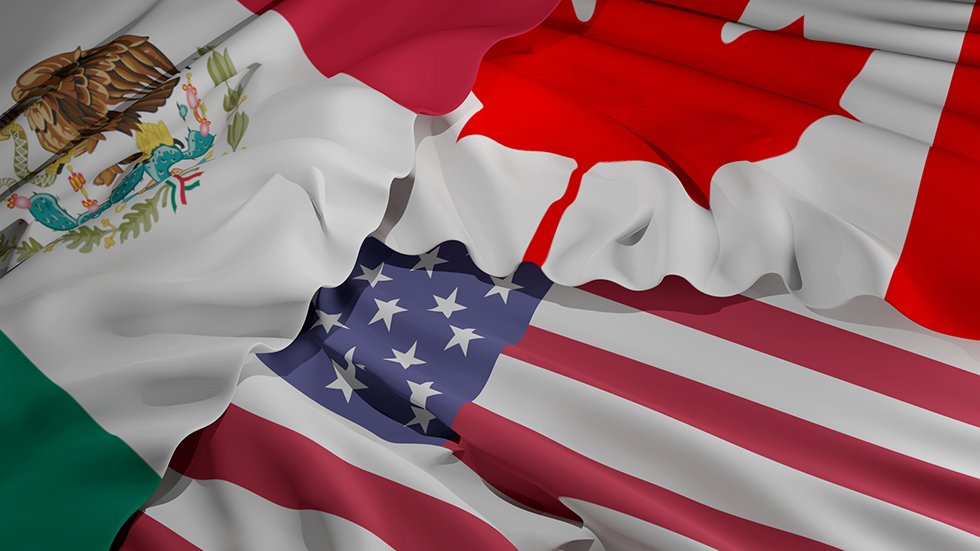
When President Trump signed the U.S.-Mexico-Canada Agreement in 2018, it was hailed as a reset for North American trade. But as the pact's first mandatory review arrives this July, the progress it promised is in jeopardy—largely because Canada has refused to negotiate on outstanding disputes, according to Rep. Claudia Tenney (R-NY).
The USMCA includes a unique joint review mechanism, requiring the three nations to reassess the agreement every six years. That deadline is July 1, and while Mexico has engaged constructively, Tenney says Canada has stayed away from the table entirely.
“The U.S. and Canada share a strong bond, from military partnerships to tourism,” Tenney wrote in an op-ed for The World Signal. “But when it comes to trade, several key issues remain unresolved.”
The most contentious issue is Canada's treatment of American dairy farmers. Under USMCA, new tariff-rate quotas were created exclusively for U.S. dairy producers. Yet Canada has allocated those quotas to entities that refuse to use them, blocking retailers and wholesalers who want to sell cheaper, high-quality American dairy. Tenney noted that U.S. Trade Representative Jamieson Greer told her during a House Ways and Means Committee hearing that despite repeated requests, Canada has made no commitments to fix the problem.
Other grievances include Canada's ban on imported bulk fruits and vegetables in certain package sizes without a ministerial exemption—a restriction Tenney called economically senseless—along with limits on U.S. seed exports, the Online Streaming Act that imposes new requirements on U.S. streaming services, and restrictions on turkey farmers. On all these issues, she said, Canadian officials have failed to engage meaningfully.
Instead of resolving disputes, nearly every Canadian province except Alberta and Saskatchewan has banned the sale of American beer, wine, and spirits. Greer told Tenney that Canada and China are the only two countries to have retaliated economically against the U.S. in the past year. “That's kind of the company they're running in,” he said.
Tenney, who represents New York's 24th District and sits on the Ways and Means Committee, stressed her personal ties to Canada—she attended curling school, showed horses at Toronto's Royal Agricultural Winter Fair, and is a lifelong hockey fan. But she argued that friendship requires honest conversations. “I frequently meet with Canadian officials happy to list their grievances, but they grow quiet when asked to address ours,” she wrote.
With tensions escalating, the Pentagon recently suspended the joint defense board with Canada, signaling a broader deterioration in bilateral relations. Tenney warned that billions in mutual economic benefits and cultural exchanges could be needlessly lost.
“The time for political games and grandstanding is over,” she said. “Canada must come to the table in good faith, drop its retaliatory actions, and engage seriously on trade issues.”