In a move reminiscent of Ronald Reagan's famous debate line, President Trump has found himself locked in a familiar pattern with Iran. On Monday, he announced via social media that a planned military strike was off the table, citing “serious negotiations” for a peace deal. But critics say this is just the latest chapter in a story of empty threats and strategic missteps.
The conflict, now in its 83rd day, has seen Trump oscillate between aggressive rhetoric and diplomatic overtures. After 38 days of what was called Operation Epic Fury, the administration has spent 45 days in what some call a “forever cease-fire,” chasing a deal that seems ever elusive.
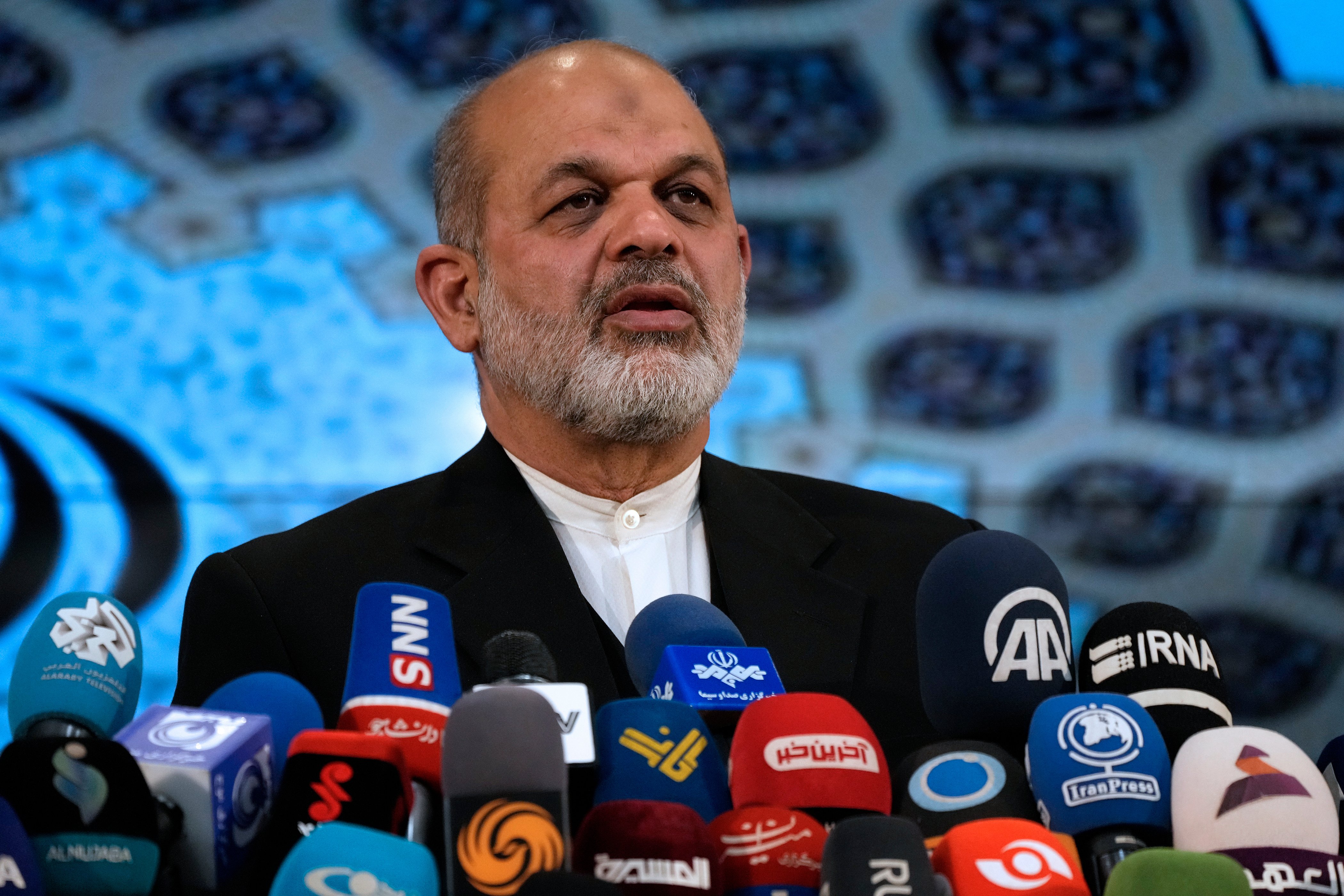
According to analysts, the real power in these negotiations lies with Iran’s Islamic Revolutionary Guard Corps (IRGC) commander Ahmad Vahidi. Trump, they argue, has given Tehran the lead in a carefully choreographed dance. “Trump talks tough, but his actions show he’s willing to back down,” said one former intelligence officer. On Fox News, Trump boasted, “They’re finished. Now they can make a deal or they get annihilated. I don’t want to do that.” That caveat, “I don’t want to do that,” is exactly what Vahidi exploits, knowing the president will relent at the last minute.
Trump’s social media posts have been equally bellicose. On Truth Social, he warned, “For Iran, the Clock is Ticking, and they better get moving, FAST, or there won’t be anything left of them.” Yet, he leaves the door open, and Tehran walks through it. As one analyst noted, “Vahidi is not worried about Trump’s threats. He simply dangles a counterproposal at the 11th hour, and the White House stands down.”
This pattern has left the administration in a reactive posture. Trump has repeatedly claimed that “Iran has been completely crushed,” despite evidence to the contrary, and that Tehran is “begging for a deal.” Iran denies this. The president’s approach, critics say, is akin to the game show “Let’s Make a Deal” rather than a coherent strategy. He threatens a “big hit” within days if no deal is reached, but such a singular strike would only prolong the standoff. The real problem, they argue, is the IRGC itself, and the solution requires regime change.
The stakes extend beyond nuclear weapons. Israel, which went to war alongside the U.S. over Iran, has national security concerns that include ballistic missiles, drones, and IRGC support for proxies like Hamas and Hezbollah. Any deal that leaves the IRGC in power would be a problem for Israel, Gulf states, and Iranian citizens for decades. As Iranian lawmaker Ali Khezrian recently warned the UAE, the U.S. will eventually leave, and Iran will “put them through hell.”
This may explain why leaders from Qatar, Saudi Arabia, and the UAE have urged Trump to hold off on military action for a deal. But for Iranian civilians, the prospect of Basij paramilitary forces cracking down on dissent offers little comfort. As the INTREP360 Intelligence Report notes, only regime change can resolve the crisis.