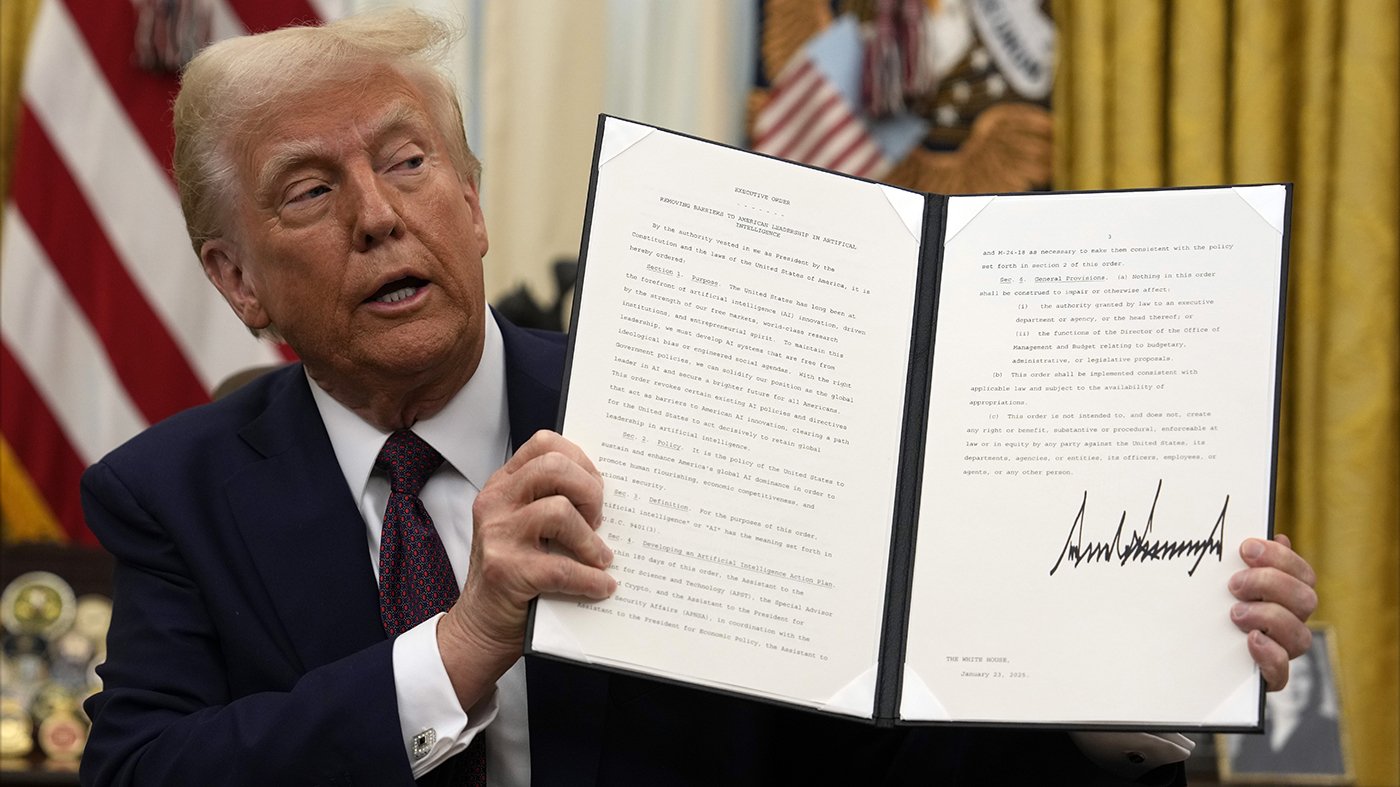
President Trump abruptly postponed the signing of a long-awaited executive order that would have established a voluntary testing process for artificial intelligence models, telling reporters he “didn’t like certain aspects of it” and worried it could undermine America’s competitive edge.
The White House informed tech executives invited to the ceremony just hours before it was scheduled Thursday afternoon that the event was canceled, according to two sources familiar with the matter. Trump later confirmed the decision, saying, “I postponed it.”
“I think it gets in the way of … we’re leading China, we’re leading everybody, and I don’t want to do anything that’s gonna get in the way of that lead,” Trump told reporters. He added that he believed the order “could’ve been a blocker” to the country’s AI development.
Voluntary Framework Stalled
The proposed executive order was expected to outline a process for AI companies to voluntarily submit their models for government testing before public release. The move followed weeks of speculation about how the administration would handle emerging cybersecurity AI tools, including Anthropic’s Mythos, the company’s most advanced model to date.
According to Anthropic, Mythos can identify decades-old security vulnerabilities in software, online infrastructure, and web browsers, distinguishing it from most consumer-facing AI systems. The model’s release had shaken the administration’s traditionally hands-off approach, prompting internal discussions about greater government oversight of new model rollouts.
Trump’s latest remarks, however, signal that even a voluntary testing regime is seen as a potential drag on innovation. “AI is causing tremendous good and it’s also bringing in a lot of jobs,” he said. “Tremendous number of jobs.”
The decision comes as the administration faces pressure from both industry advocates and national security hawks. Some lawmakers have pushed for more aggressive federal involvement in AI safety, while others, like Representative Ashley Hinson of Iowa, have emphasized the importance of aligning with Trump’s pro-business agenda in her Senate run.
Meanwhile, the president has also moved to roll back Biden-era refrigerant regulations as part of a broader effort to reduce grocery costs, underscoring his focus on economic populism over regulatory constraints.
Critics argue that postponing voluntary testing leaves the U.S. vulnerable to AI-related risks, especially as China accelerates its own AI development. But Trump’s team appears convinced that any new federal requirements, even optional ones, could slow the pace of American innovation and job creation.
The White House has not announced a new date for the signing, and it remains unclear whether the executive order will be revised or shelved entirely. For now, the administration’s stance reflects a delicate balancing act between fostering technological leadership and addressing growing concerns about AI safety and security.