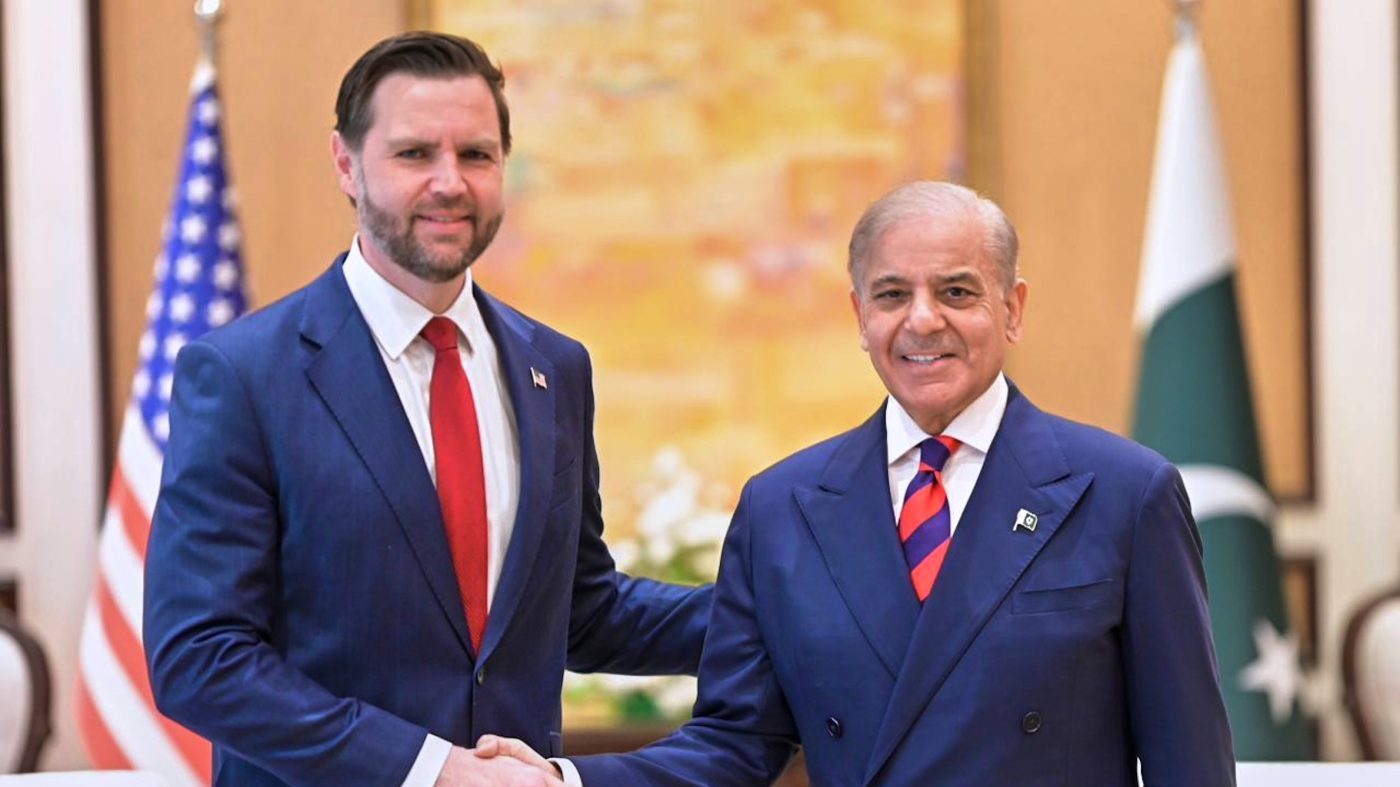
Vice President JD Vance arrived in Islamabad Saturday morning to spearhead direct negotiations with Iran, a diplomatic effort hosted and mediated by Pakistan. The talks commence under the shadow of a deteriorating temporary ceasefire, announced by President Trump just days earlier, which now appears on the brink of failure.
The American delegation, which includes Special Envoy Steve Witkoff and senior political adviser Jared Kushner, met with a Pakistani mediation team led by Prime Minister Shehbaz Sharif. The Iranian delegation was conducting separate, parallel discussions with other mediators in the capital. All meetings were closed to the press.
These negotiations follow a joint U.S.-Israeli military operation in Iran over a month ago, after which Trump declared a two-week pause in strikes. Before departing for Pakistan, Vance struck a cautiously optimistic tone, telling reporters he anticipated a "positive" process. He framed the U.S. position as one of conditional openness, stating, "If the Iranians are willing to negotiate in good faith, we're certainly willing to extend the open hand. If they're going to try to play us, they're going to find that the negotiating team is not that receptive."
Trump's Ambivalent Stance and Regional Tensions
President Trump, however, projected ambivalence about the talks' prospects. In a Saturday phone call with NewsNation, when asked if he was hopeful, the President replied, "Whatever, otherwise we'll reset. We're ready to go." This comment underscores the administration's stated readiness to resume military operations if diplomacy fails, a theme echoed in recent warnings from the White House.
The ceasefire has been jeopardized by several flashpoints. A major point of contention is Lebanon, where recent Israeli strikes prompted Iran to threaten withdrawal from the agreement. The U.S. and Israel maintain Lebanon was not covered by the ceasefire, a position contested by both Iran and Pakistani mediators. Following pressure from Trump, Israeli Prime Minister Benjamin Netanyahu indicated a new openness to negotiations with Lebanon.
Energy and the Strait of Hormuz as Leverage
Simultaneously, the conflict has severely disrupted global energy markets. Iranian counterstrikes had effectively closed the Strait of Hormuz, a critical oil chokepoint. After the ceasefire, Tehran announced it would begin charging tolls for passage—a move Trump condemned, warning Iran to "better stop now." Intriguingly, the President also suggested the administration was considering a "joint venture" with Iran on the fees, highlighting the complex economic dimensions of the standoff.
In a post on Truth Social Saturday, Trump touted American energy dominance, claiming "massive numbers" of empty tankers were headed to U.S. ports. "We have more oil than the next two largest oil economies combined—and higher quality," he wrote, in what analysts see as an attempt to project strength and mitigate market fears. The administration's approach to the Hormuz closure has become a central pressure point in the negotiations.
The high-stakes meeting in Islamabad represents a critical test for the Vance-led diplomatic initiative. With the ceasefire buckling, the talks aim to prevent a rapid return to open conflict. The involvement of Pakistan as a mediator adds a significant regional dimension, though previous assessments, like those from former officials who warned Iran might perceive U.S. weakness, loom over the proceedings.
As the closed-door discussions continue, the international community watches to see if a path toward de-escalation can be forged, or if the parties are merely pausing before a more intense phase of military and economic confrontation. The outcome will have immediate ramifications for Middle Eastern stability and global energy security.