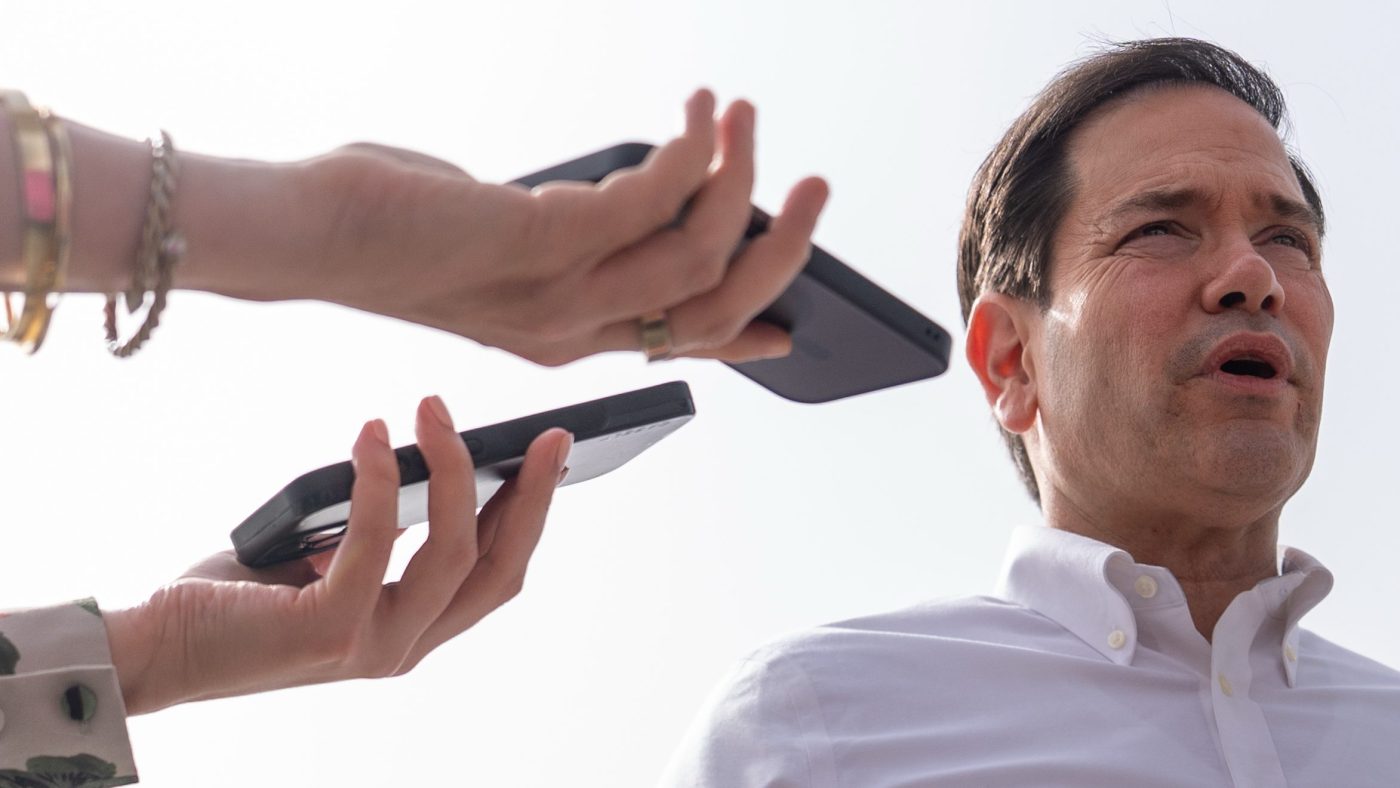
Secretary of State Marco Rubio on Tuesday poured cold water on hopes for an imminent end to the nearly three-month conflict with Iran, stating that finalizing a deal could require “a few more days.” The remarks came just days after President Donald Trump signaled that an agreement was largely in place, underscoring the fragility of the negotiations.
Speaking to reporters at Jaipur International Airport in India, Rubio acknowledged ongoing discussions in Qatar but stressed the complexity of the talks. “There was some talks going on in Qatar today, so we’ll see if we can make progress on — I think it’s a lot of talking back and forth going on about specific language in the initial document,” he said. He added that Trump is committed to securing a favorable outcome: “He’s going to make a good deal or no deal, so on that everyone should be assured. But that may take a little while, I mean, a few more days.”
Trump’s Saturday announcement that a deal to permanently end hostilities was “largely negotiated” had sparked optimism, particularly regarding the reopening of the Strait of Hormuz. The waterway has seen heavily restricted shipping since the conflict erupted in late February, with only a limited number of vessels safely transiting it over the past 12 weeks, causing turmoil in global oil markets. State and local leaders are exploring ways to shield Americans from the resulting energy price spikes.
The president did not explicitly address Iran’s nuclear program in his initial statement, but the Associated Press reported that the current proposal includes a 60-day window for further negotiations on that front. Trump later posted on Truth Social that enriched uranium would be either turned over to the United States for destruction or destroyed in place with international oversight. “The Enriched Uranium (Nuclear Dust!) will either be immediately turned over to the United States to be brought home and destroyed or, preferably, in conjunction and coordination with the Islamic Republic of Iran, destroyed in place,” he wrote on Monday.
Senior Trump administration officials have consistently framed the war as a mission to prevent Iran from acquiring a nuclear weapon, labeling the country an “imminent threat” to the U.S., a justification that has drawn skepticism from some quarters. Meanwhile, the Fars News Agency, affiliated with the Islamic Revolutionary Guard Corps (IRGC), reported that the unfreezing of billions of dollars in Iranian assets remains a major sticking point, according to Reuters.
The fragile ceasefire enacted in early April came under renewed strain on Monday after U.S. forces conducted what officials described as “defensive strikes” in southern Iran, targeting missile launch sites and Iranian boats attempting to lay mines in the Strait of Hormuz. In response, Iran’s new Supreme Leader Ayatollah Mojtaba Khamenei warned of potential retaliation against U.S. bases in the region. “The hands of time do not turn backward, and the nations and lands of the region will no longer serve as shields for American bases,” Khamenei said on Tuesday.
Rubio’s cautious timeline and the renewed hostilities highlight the volatile path to any resolution. Earlier reports from Rubio had cited modest progress but warned the conflict would end ‘one way or another’. As talks continue, the global community watches for signs of a breakthrough or further escalation.