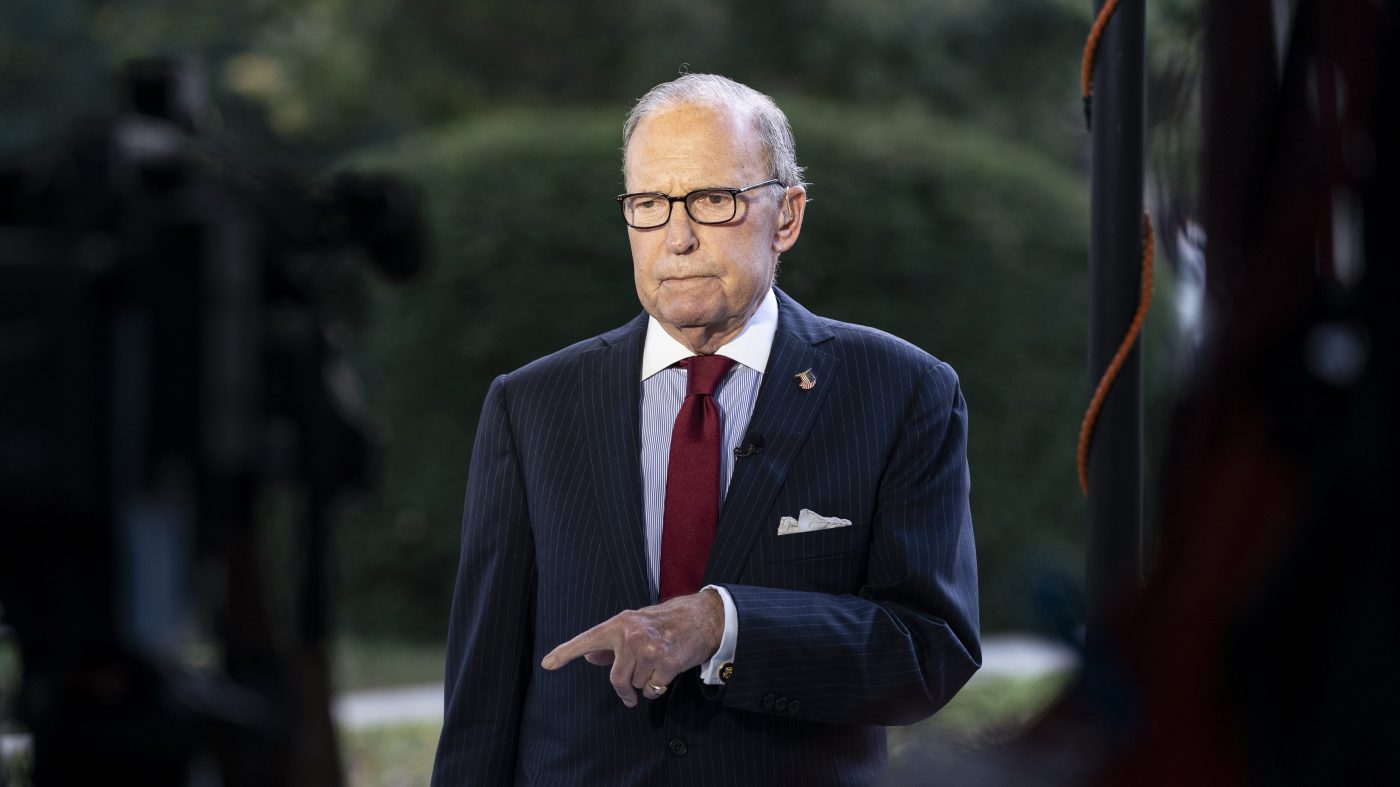
Fox Business host and former White House economic adviser Larry Kudlow on Wednesday sharply criticized the pace at which the United States entered an interim memorandum of understanding (MOU) with Iran, warning that Tehran was allowed to benefit financially without delivering on its commitments.
“Well, it just seemed to me we were really pulling that trigger too fast,” Kudlow said on his eponymous program. “We were letting them sell 50 or 60 million barrels, according to some of the oil traders I talk to. That raises a lot of money. … But for what? What performance have they done?”
The MOU—a temporary peace arrangement reopening the Strait of Hormuz, lifting sanctions on Iran, and unfreezing Iranian assets—was designed as a stepping stone toward a final deal to end the conflict that erupted on February 28. Kudlow described the agreement as “performance-based,” but argued Iran had failed to meet even its most basic obligations.
“I mean, it’s very clear now they are breaking the entire MOU, and certainly the easiest and most straightforward, that being open up the Strait of Hormuz or freedom of navigation,” he continued. “So, I like performance-based, I like incentives a lot, but they did not do anything to earn the money.”
President Trump echoed that sentiment during a NATO summit in Ankara, Turkey, declaring the MOU effectively dead. “There’s something wrong with them,” Trump told reporters. “They’re cuckoo. As far as I’m concerned, it’s over.” As Trump declared the Iran interim deal dead, the administration signaled a major shift away from diplomatic engagement.
The collapse of the MOU follows a sharp escalation in hostilities. On Tuesday, attacks on three oil-carrying vessels in the Strait of Hormuz prompted U.S. Central Command to launch nearly 90 strikes on Iranian defense sites between Wednesday and early Thursday. Iran retaliated with strikes targeting U.S. bases in Kuwait and Bahrain, both of which were intercepted.
Ebrahim Rezaei, a spokesperson for the Iranian Parliament’s national security and foreign policy committee, warned against any renewed U.S. attempt to seize Kharg Island, which handles roughly 90 percent of Iran’s crude oil exports. “Trump has once again spoken of occupying Kharg Island,” Rezaei wrote on the social platform X. “Come on, we’re waiting for you and we promise that not even a single American soldier will return alive.”
The rapid deterioration of the MOU underscores the fragility of the peace process. Critics argue the administration’s rush to ink the deal without verifiable Iranian concessions handed Tehran a financial lifeline just as it faced maximum pressure. The unfolding crisis also threatens global energy markets, given the Strait of Hormuz’s role as a chokepoint for oil shipments.