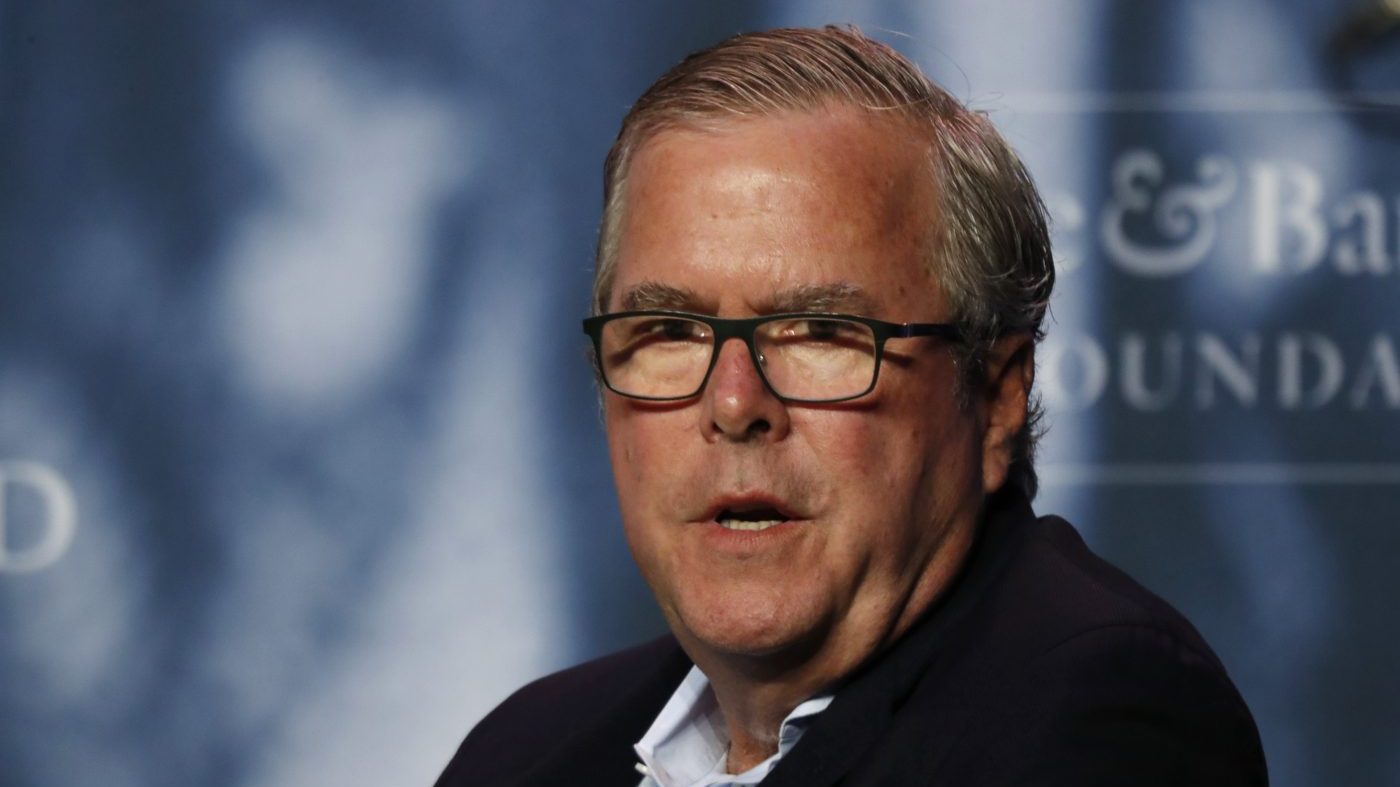
Former Florida Governor Jeb Bush sounded the alarm Wednesday over what he described as a growing security threat: hundreds of Iranian drones reportedly deployed in Cuba. Speaking at a United Against Nuclear Iran event, where he serves as chairman, Bush said the unmanned aircraft represent a direct challenge to US and allied interests.
“Iran has been a consistent threat to the united security interests of our country, certainly of Israel,” Bush said. “And now, we see that it’s not just Israel and the United States, but the Gulf region as well. I also want to point out that the press reports that there are 300 of these [drones] in Cuba.”

He acknowledged that the US has defensive capabilities but warned that “drones organize in clusters and can get through the defense capabilities, as we’ve seen in the Middle East as well.” The former governor, a longtime hardliner on Cuba policy, argued that Iran has long exploited ties with Havana and Caracas to destabilize the region. “I think it’s important to recognize that Iran has consistently been working with Cuba, Venezuela prior to the departure of Maduro from the regime, creating instability in not just in Cuba, but certainly in the region,” he said, referring to deposed Venezuelan President Nicolás Maduro.
Bush praised the current administration’s posture toward Tehran, saying “we’re on the verge of creating a much more peaceable world by standing up against this aggression.” His comments come amid a broader push by the Trump administration to pressure Cuba’s regime through an energy blockade that has triggered widespread blackouts and street protests on the island.
Florida Republican Representative Carlos Gimenez joined Bush to underscore the drones’ destructive potential. “This particular model, there is about over 100 pounds of explosives,” Gimenez said. “That’s a pretty big bang. That’s why they call them kamikaze drones — they crash into their target and they explode.” He added that the drones have “a range of about 2,500 kilometers, which from Cuba can reach all the way to New York.”
In May, Axios reported that Cuba had acquired more than 300 military drones and that intelligence assessments discussed possible attacks on the US naval base at Guantanamo Bay or Key West. An unnamed senior US official described the buildup as a “growing threat.” Defense Secretary Pete Hegseth, during a visit to Guantanamo Bay last month, warned that US forces were “postured for any possible contingency.”
The developments have revived fears among Florida’s Cuban exile community, where Bush has long been a respected voice. In 2014, he told The New York Times that “the idea of unilaterally changing our policy in return for nothing, I think, would yield nothing.” His stance echoes that of Senator Marco Rubio, who has consistently opposed engagement with Havana without concrete reforms.
Cuban President Miguel Díaz-Canel has warned against any US military intervention, saying an attack would lead to a “bloodbath with incalculable consequences.” Meanwhile, the administration’s blockade has cut off fuel supplies, causing Cubans to endure sweeping blackouts and take to the streets in protest. As the standoff escalates, the presence of Iranian drones in the Caribbean adds a new dimension to an already volatile geopolitical flashpoint.
For more on regional security concerns, see Florida lawmakers pushing for legislative clarity on immigration status. And for context on drone threats at major events, read about the FBI's seizure of over 600 drones at World Cup venues.