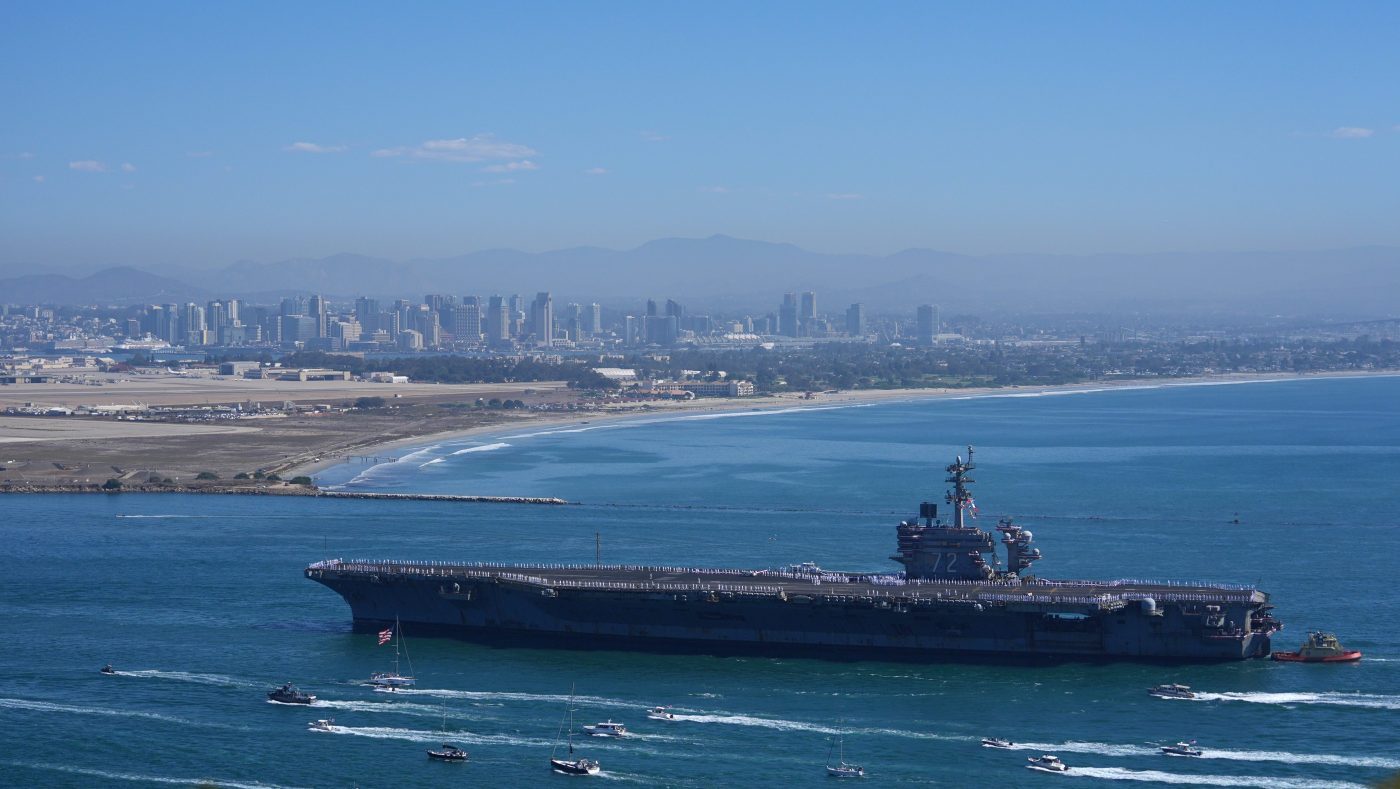
The Pentagon's recent decision to quietly drop the prefix “Indo” from the name of its main regional command may be one of the most consequential bureaucratic moves of the Trump administration. Officially, the newly renamed U.S. Pacific Command retains the same geographic reach—from the U.S. West Coast to India’s western border. But in geopolitics, names carry weight. They signal priorities, shape alliances, and reveal how a government sees the world.
The “Indo-Pacific” concept was never just about geography. It was a grand strategic framework recognizing that global power had shifted, linking the Pacific and Indian Oceans into a single theater of competition. The world’s busiest shipping lanes, fastest-growing economies, and most dangerous military flashpoints had become intertwined. Japan’s late Prime Minister Shinzo Abe first articulated this vision, arguing that the two seas formed a “confluence” requiring a coalition of maritime democracies to uphold a rules-based order. His “Free and Open Indo-Pacific” aimed not to isolate China but to prevent any single power from dominating Asia.
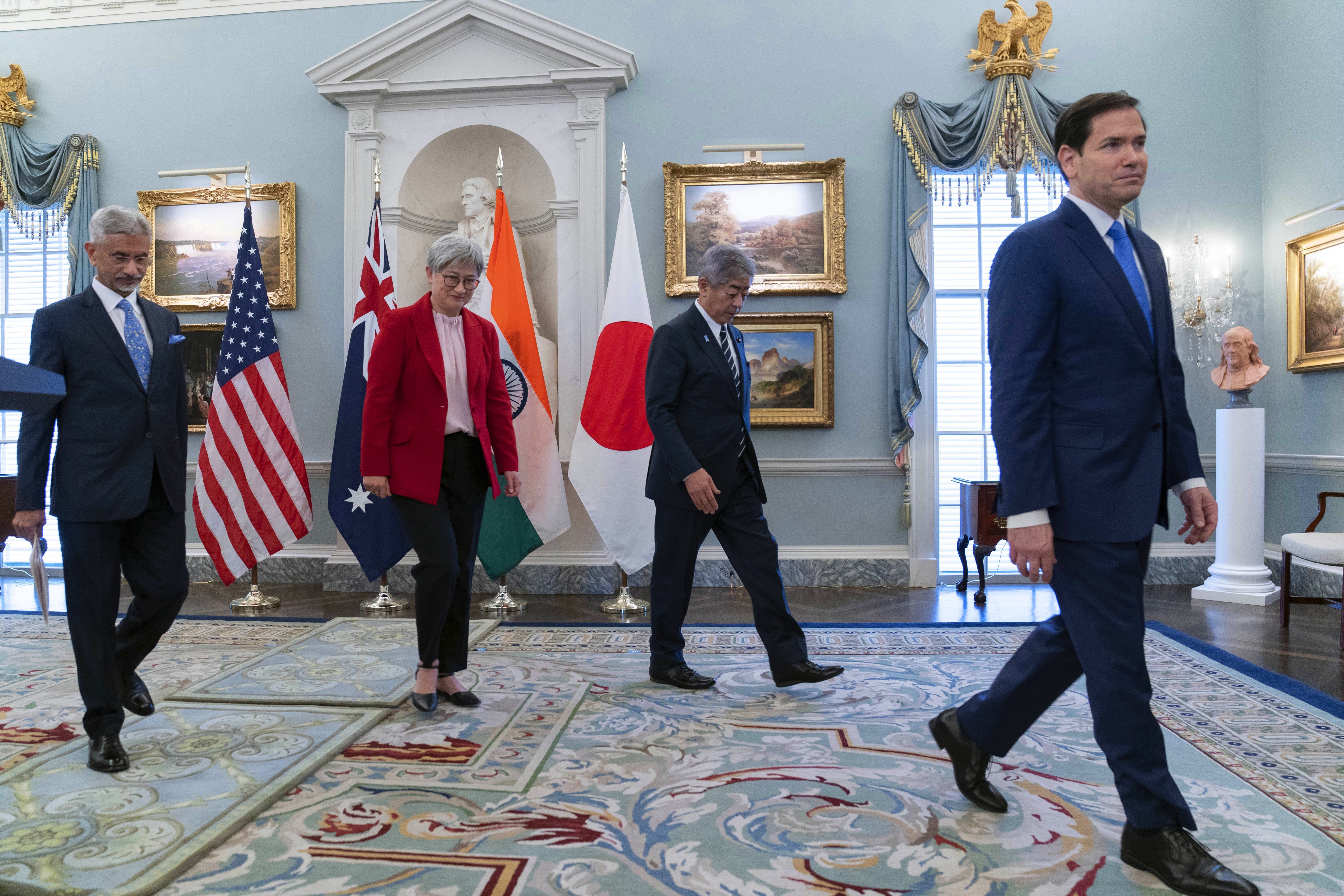
The U.S. adopted that vision as its own. During Trump’s first term, the Indo-Pacific became the organizing principle of American strategy toward Beijing. The Quad—comprising the U.S., India, Japan, and Australia—was revived. China was formally designated America’s principal strategic competitor. India gained outsized importance, positioned on China’s western flank, while Japan anchored the east. Together, they formed the bookends of a balancing coalition across two oceans. President Joe Biden largely preserved that framework, even as wars in Ukraine and the Middle East diverted attention and resources. The underlying assumption remained: China, not Russia, is the defining geopolitical challenge of the 21st century.
Today, that assumption looks shaky. The Pentagon’s name change is just one indicator of a broader shift. Trump has softened his approach to China, emphasizing deal-making over strategic competition. His administration has downgraded the Quad’s prominence, and his repeated references to a U.S.-China “G2” suggest a different vision—one that prioritizes direct understandings with Beijing over coalition-building. This marks a sharp departure from the original Indo-Pacific strategy, which rested on the proposition that the U.S. could prevent Chinese hegemony only by strengthening capable allies.
For America’s allies, the distinction is enormous. Japan, Australia, and India took on greater strategic risks because they believed Washington was committed to maintaining a favorable balance of power in Asia. They invested politically and militarily in that shared vision. But if Washington increasingly treats Beijing not as a challenger to be balanced but as a co-manager of global order, those assumptions unravel. The Quad itself illustrates the problem: no leaders’ summit has been held since 2024, and its agenda has drifted toward noncontroversial cooperation on supply chains and maritime awareness. If Washington seeks accommodation with Beijing, what is the Quad meant to deter?
Alliances seldom collapse dramatically; they decay quietly. That is the danger facing the Quad today. The Indo-Pacific strategy recognized a geopolitical reality that remains unchanged: the U.S. cannot preserve a stable Asian balance of power alone. It needs strong partners across both ends of the continent. Japan remains indispensable to East Asian security. India, with its size and military capabilities astride the Indian Ocean, is the only Asian power capable of imposing significant strategic constraints on China from the west. Australia acts as a vital southern anchor. No bilateral understanding between Washington and Beijing can substitute for that wider strategic geometry.
China must be pleased with the quiet dismantling of the Indo-Pacific concept. Beijing has long viewed it as a containment strategy linking China’s ambitions to a coalition of democracies from the western Pacific to the Indian Ocean. Eliminating “Indo” narrows that horizon, symbolically moving Washington closer to Beijing’s preferred conception of Asia as a Pacific theater dominated by U.S.-China relations. The Pentagon’s name change may seem trivial, but it reflects a deeper strategic drift that could reshape the region for years to come.
For more on how these shifts affect global alliances, see our analysis of Trump's Ukraine Patriot license and its strategic implications. Meanwhile, the recent Chinese submarine missile test underscores the rising stakes in the Pacific.