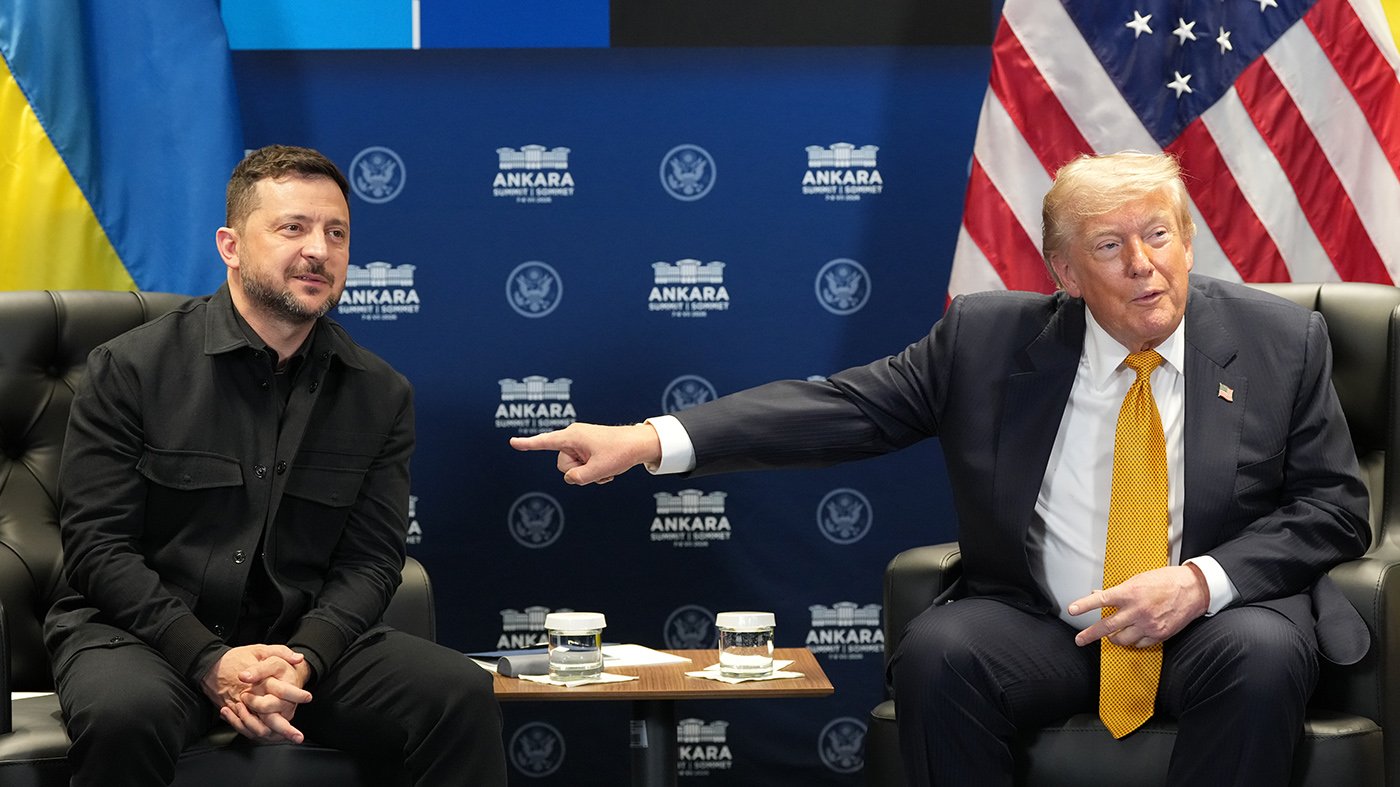
President Donald Trump and Ukrainian President Volodymyr Zelensky met on the sidelines of the NATO summit in Turkey on Wednesday, signaling a notable warming in a relationship that has often been strained. Trump announced the United States will purchase Ukrainian drones and, more critically, authorized Ukraine to co-produce Patriot interceptor missiles—a move that could significantly bolster Kyiv's air defense capabilities in the coming years.
The meeting marked a sharp departure from the contentious Oval Office encounter between the two leaders in February 2025. Speaking to reporters, Trump acknowledged the shift: “We’ve actually developed a good relationship. It’s hard to believe, right? From the Oval Office to now, I think we’ve developed a very good relationship.”
Trump, who has previously criticized U.S. aid to Ukraine and pressured Zelensky to cede territory to Russia, appeared to endorse Ukraine’s strategy of taking the war to Russian soil. “It’s an escalation, but it’s also an escalation that could help lead to an end,” Trump said, tacitly approving Ukraine’s strikes deep inside Russia.
The decision to allow co-production of Patriot interceptors addresses a long-standing Ukrainian request. Zelensky has lobbied for years to obtain a license to manufacture the missiles, which are critical for defending against Russian ballistic missile attacks. Trump quipped, “We’re going to give a license to you to make Patriots. That’s pretty cool, right? This way you can’t complain that we’re not giving them enough.” He added that he still needed to inform the manufacturer, Lockheed Martin, but said “that’ll work out all right.”
Lockheed Martin already faces a massive global backlog for Patriot orders, and the Pentagon determines priority. The timeline for Ukraine to establish its own production remains unclear, but the announcement represents a turning point for Kyiv, which has expanded its domestic defense industry from drones to cruise missiles.
The thaw came amid broader concerns among NATO allies that Trump’s animosity toward the alliance and his deference to Russian President Vladimir Putin could undermine support for Ukraine. Luke Coffey, a senior fellow at the Hudson Institute, said the summit exceeded expectations: “Many suspected that Ukraine would remain in the background because it could be a divisive issue within the alliance. Instead, several impactful and concrete announcements were made that will have an effect on the battlefield.”
Ukrainian Ambassador to the U.S. Olga Stefanishyna welcomed the developments, urging “turning these positive signals into concrete decisions.” She said the Patriot license reflects “a shared understanding that Ukraine must have the means to protect its people and critical infrastructure,” and called it a step toward strengthening “the future security of the entire transatlantic community.”
The announcement drew bipartisan support. Senator Jeanne Shaheen (D-N.H.) urged Trump to “seal the deal” on drone purchases. A bipartisan delegation that met with Zelensky—including Senators Dick Durbin (D-Ill.), Mike Rounds (R-S.D.), Lindsey Graham (R-S.C.), Chris Coons (D-Del.), and Representative Mike Turner (R-Ohio)—issued a statement saying, “Putin is at his weakest position in years and real sustained pressure can finally bring this war to a close.”
Putin faces mounting pressure at home, with attacks on Russian energy infrastructure, a contracting economy under sanctions, and rising war costs. Trump last spoke with Putin on July 4 and claimed the Russian leader is seeking a deal. “We have a lot of pressure on President Putin,” Trump said Wednesday. “I don’t think he likes what’s going on. I don’t think he’s thrilled with what’s happening. There’s a lot of pressure on President Putin to get it done.”
The meeting also occurred against the backdrop of escalating U.S. military action against Iran, which has drained Patriot interceptor stockpiles. Trump acknowledged the U.S. does not have “many” interceptors left, a point highlighted in recent coverage of Trump's NATO summit and aggressive Iran rhetoric.