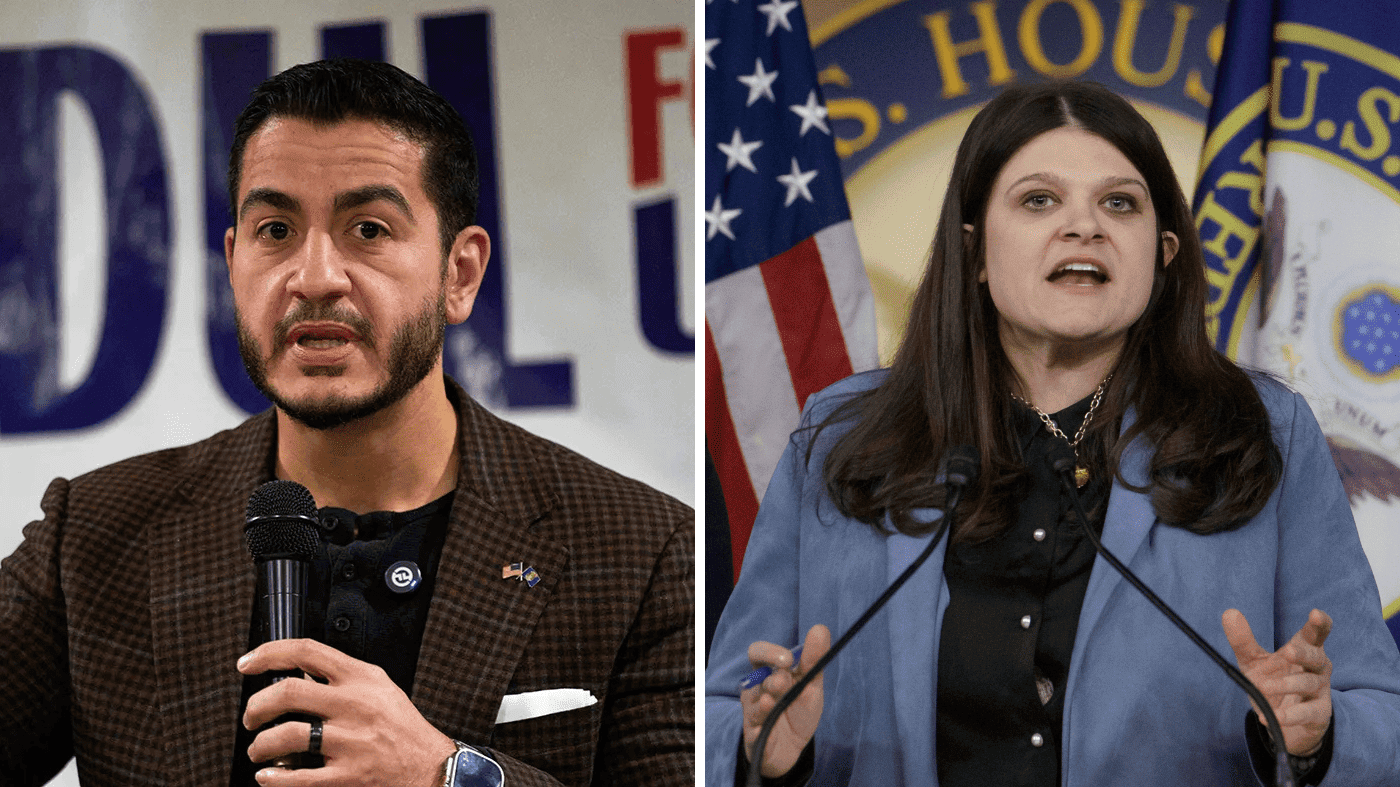
Michigan's Democratic Senate primary turned increasingly contentious Tuesday night as Rep. Haley Stevens and former Wayne County health director Abdul El-Sayed faced off in their first debate since state Sen. Mallory McMorrow suspended her campaign over the weekend. The hour-long exchange, hosted by Nexstar's WOOD TV8, highlighted deepening divisions within the party over Israel, corporate influence, and the direction of the Democratic agenda ahead of the Aug. 4 primary.
With McMorrow's exit, the race has become a proxy battle between the party's centrist establishment, which backs Stevens, and the progressive anti-establishment wing rallying behind El-Sayed. The winner will face former Rep. Mike Rogers, the GOP's presumptive nominee, in a contest rated a toss-up by the Cook Political Report—a race Democrats view as critical to holding retiring Sen. Gary Peters's seat.
Personal Attacks Fly Early
Stevens opened the debate with a pointed jab at El-Sayed, portraying herself as the hardworking alternative to what she called a celebrity candidate. “I'm the only person running for United States Senate in Michigan who is not a millionaire. I am not trying to sell a book or a podcast,” she said. “Unlike my opponent, I'm not running at the first mic or camera I see.” El-Sayed, an epidemiologist and former gubernatorial candidate, has authored three books and hosted the podcast “America Dissected.” He countered by painting Stevens as a tool of special interests, noting that the super PAC of the American Israel Public Affairs Committee (AIPAC) has spent over $10 million to attack him and boost her campaign.
Israel and Outside Spending Dominate
The sharpest divisions emerged over U.S. aid to Israel and the war in Gaza—a particularly potent issue in Michigan, home to the 2024 Uncommitted Movement. El-Sayed argued that the U.S. should halt further military assistance to Israel, accusing the country of genocide against Palestinians. “If Congresswoman Stevens makes it or Mike Rogers wins, either way, Israel will win,” he said. “AIPAC is perfectly fine with either of my two opponents, because they know they will have a comfortable, reliable vote in the U.S.A.” Stevens defended her record and pressed El-Sayed on his own finances, demanding he release his disclosure paperwork. “Abdul, you talk about getting money out of politics and putting money in people's pockets, but who is putting money in yours?” she asked.
The clash over outside spending resonates beyond Michigan, echoing similar factional fights in other Democratic primaries this cycle. In Maine, for instance, a rape allegation against a candidate has deepened the party's internal rift, while elsewhere Sen. Joe Manchin has blamed a “void of leadership” for socialist primary wins.
Jockeying for McMorrow's Voters
Both candidates are scrambling for support from voters who previously backed McMorrow, who did not endorse either rival upon exiting the race. Polling aggregates from Decision Desk HQ showed El-Sayed leading Stevens by roughly 7 points at the end of June, as McMorrow's numbers slipped. The narrowing field has intensified the pressure on each candidate to consolidate the party's base while appealing to independents ahead of the general election.
Stevens touted endorsements from Senate Minority Leader Chuck Schumer, former Sen. Debbie Stabenow, and former Gov. Jennifer Granholm as evidence of her electability. El-Sayed, backed by progressive figures like Sen. Bernie Sanders and Rep. Alexandria Ocasio-Cortez, argued that only an outsider can break the grip of corporate money in Washington. “We also don't need politicians bought off by corporations,” he said. “You've seen ad after ad after ad. Not one of those ads was brought to you by the congresswoman's campaign. All of them brought to you by corporate PACs and AIPAC.”
The debate underscored how the Michigan primary has become a bellwether for the broader struggle between the party's establishment and its progressive wing—a dynamic that will shape not only the Senate race but also the future of Democratic politics heading into the fall.