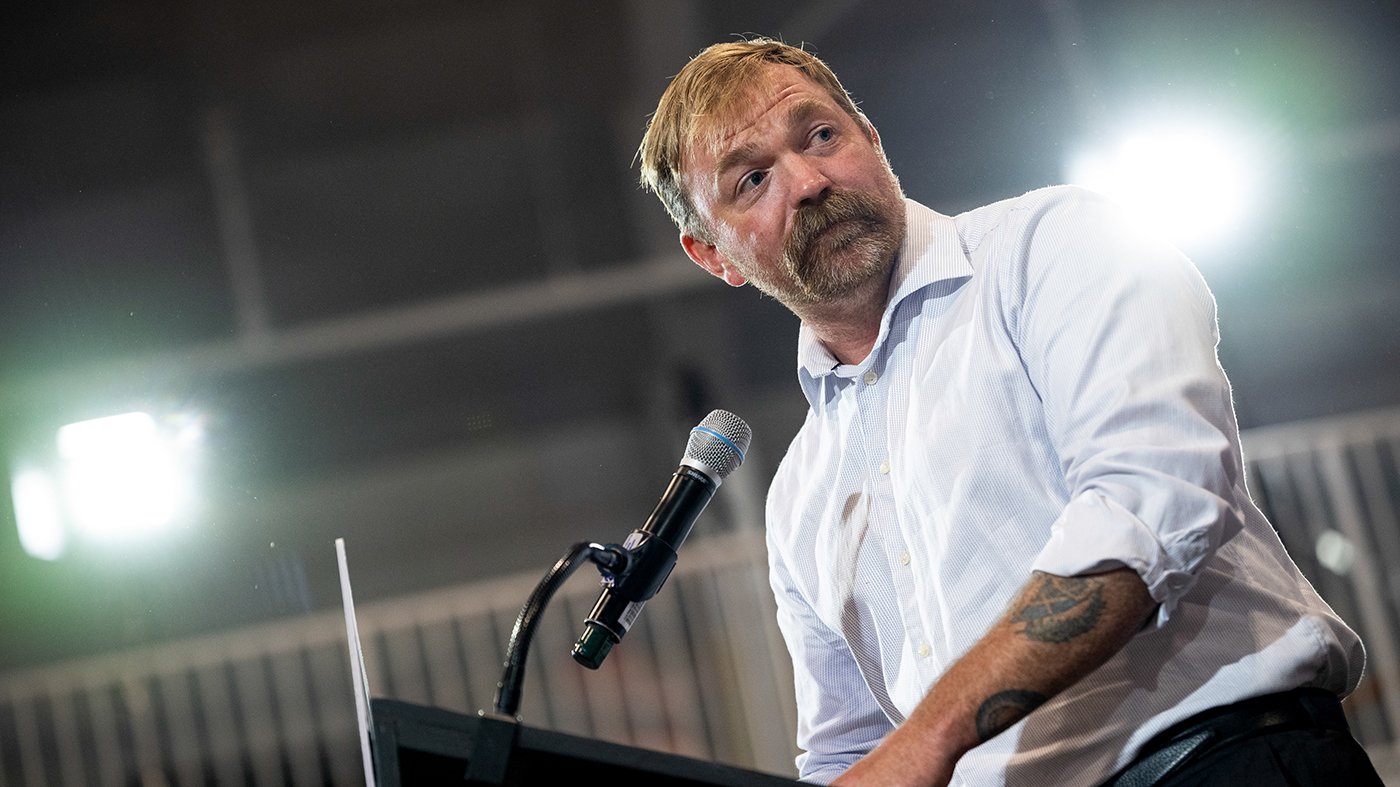
Maine Democrats are in crisis mode, working frantically to salvage what was once a promising Senate race after candidate Graham Platner was hit with a new rape allegation that has all but collapsed his campaign. The party now faces a tight deadline to find a replacement before the July 13 withdrawal cutoff, or risk losing a prime opportunity to unseat Republican Senator Susan Collins.
Platner, an oyster farmer and political newcomer, has denied the allegation from Jenny Racicot, who told Politico and CNN that he raped her in 2021 while both were intoxicated. He posted a video calling the claims “troubling, serious, and false,” but acknowledged his campaign is “taking time to reflect on the best path forward.” Despite his refusal to exit, support is evaporating. His most prominent backer, Senator Bernie Sanders, eventually called on him to withdraw, though he was slower than other Democrats to do so.

Party strategists warn that Platner’s continued presence on the ballot could have national consequences. “He’s not only endangering our winning Collins’s seat,” said Peggy Schaffer, a former Maine Democratic Party vice chair who backed Governor Janet Mills in the primary. “If he doesn’t get out, Republicans will shift resources from Maine to Ohio, Alaska, North Carolina, Texas—he’s putting all of them in danger.” The Senate Democratic leadership has made clear they will not invest in the Maine race if Platner remains.
Several potential replacements have emerged, including former Maine CDC director Nirav Shah, former Senate President Troy Jackson, and Jordan Wood, a former chief of staff to Rep. Katie Porter. Shah and Jackson have both run for governor before, while Wood previously sought the Senate seat and later ran for Congress. Other names floated include former Senate candidate Dan Kleban and Maine Secretary of State Shenna Bellows. Congressman Jared Golden has been approached but has shown no interest in switching races.
Democrats have until July 13 to get Platner to drop out so the state party can nominate a replacement by July 27. Veteran strategist Steve Jarding said the timeline is tight but workable. “Find the candidate that best fires people up, that says ‘Different name, same perspective,’” he advised. The party is also leaning on the fact that this cycle is different from 2020, when Democrat Sara Gideon lost to Collins. “That was a COVID year—unprecedented,” said David Farmer, a former deputy chief of staff to Governor John Baldacci. “Now the economy is different, Trump is unpopular in Maine, and the affordability crisis and war with Iran make this a unique election.”
If Platner stays in, Democrats face an uphill battle. As Farmer put it, “It would be very, very difficult to imagine a scenario” where they win. The party is racing against the clock, hoping Platner steps aside before it’s too late.