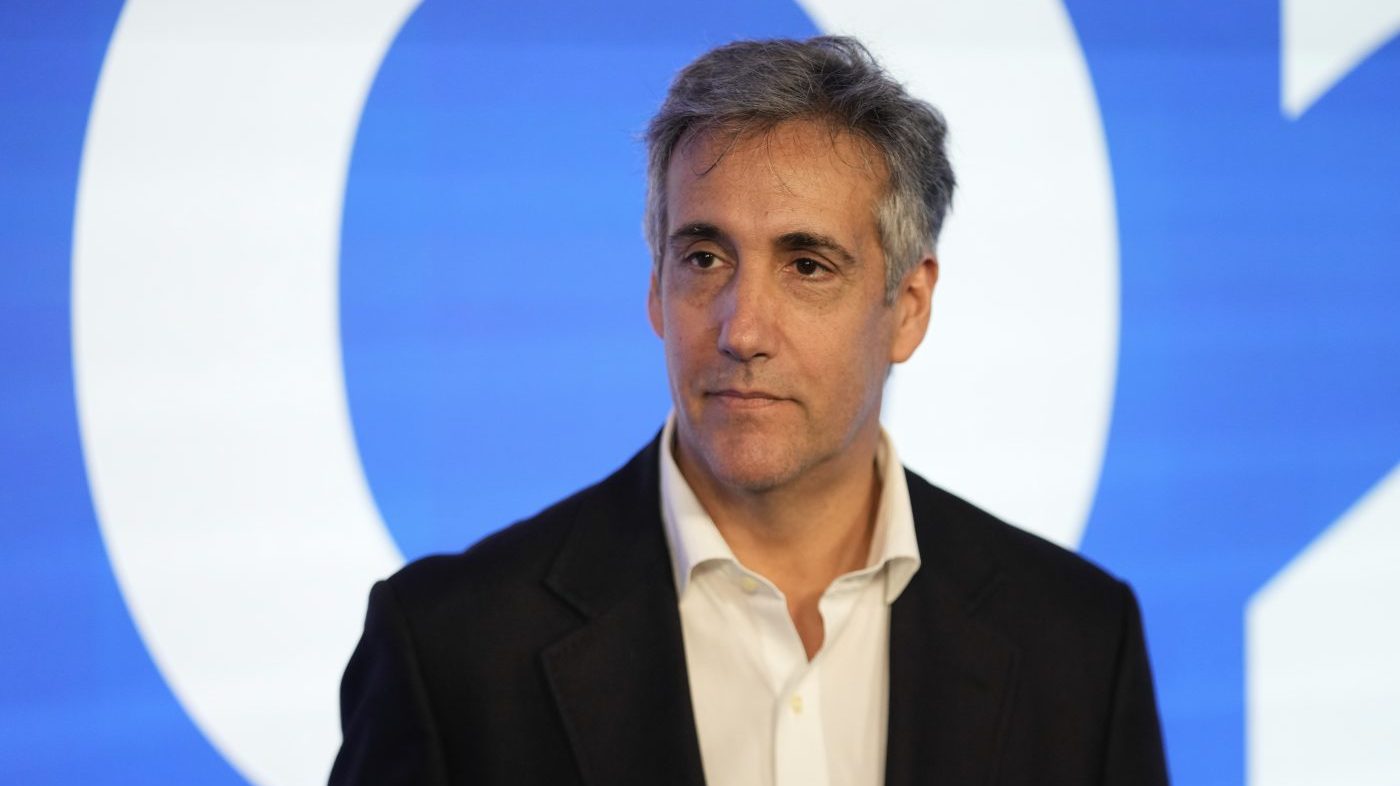
Michael Cohen, President Donald Trump’s former personal attorney and one-time chief antagonist, has disclosed that he and the president have reconciled after a bitter, years-long feud. In an interview set to air Friday on WABC’s “Cats & Cosby Show,” Cohen claimed the “far left” was responsible for bringing them back together roughly six months ago.
Cohen described the moment of détente: while dining with his wife, his phone buzzed with a text from a mutual friend conveying Trump’s “genuine empathy” for the legal and personal turmoil Cohen had endured. “I deeply appreciated that text,” Cohen said. He responded, thanking Trump and expressing hope that “this long, exhausting feud between the two of us could finally end.” According to Cohen, Trump replied “almost immediately,” suggesting they meet. “We both knew the cost of this war,” Cohen said. “In that moment the ice between us, it didn’t just melt, it broke.”
The reconciliation marks a dramatic shift for Cohen, who once testified against Trump in the New York hush money case, pleaded guilty to campaign finance violations and tax evasion, and served prison time. He had previously vowed to leave the country if Trump won a second term, even claiming he was working on obtaining a foreign passport under a different name. Now, Cohen says the left’s embrace of him as “their ultimate weapon against” Trump backfired when he “deviated from their script. The pack, they turned feral.”
Cohen also sought to distance Trump from convicted sex offender Jeffrey Epstein, with whom Trump had a prior relationship. “I never once witnessed, I never heard of, I never saw, I never communicated, never saw in the office Jeffrey Epstein,” Cohen stated. “Never saw him speak to him … Those two things shattered [the left’s] narrative. The far left, they literally went on this absolute warpath against me.”
Cohen’s legal troubles stem from his role as Trump’s “fixer,” facilitating payments to adult film actress Stormy Daniels to cover up an alleged affair before the 2016 election. He pleaded guilty in 2018 to campaign finance violations and tax evasion, later also to lying to Congress, and was released from house arrest in late 2021. In 2023, he was the key witness in the New York fraud case brought by Attorney General Letitia James, testifying that he “reverse-engineered” Trump’s financial statements.
Trump was convicted on 34 counts of falsifying business records in the Manhattan case brought by District Attorney Alvin Bragg. He has appealed both that conviction and a civil fraud judgment. The reconciliation with Cohen adds a new layer to Trump’s political narrative, as he continues to face legal challenges while campaigning for a return to the White House.
This development echoes other instances where Trump has used personal grievances to reshape alliances. For example, JD Vance’s transformation from critic to enabler mirrors the shifting loyalties within Trump’s orbit. Meanwhile, Trump’s foreign aid cuts have drawn criticism amid global health crises, but his focus remains on domestic political battles. The Cohen reconciliation suggests that even former adversaries can find common ground in the polarized landscape of American politics.