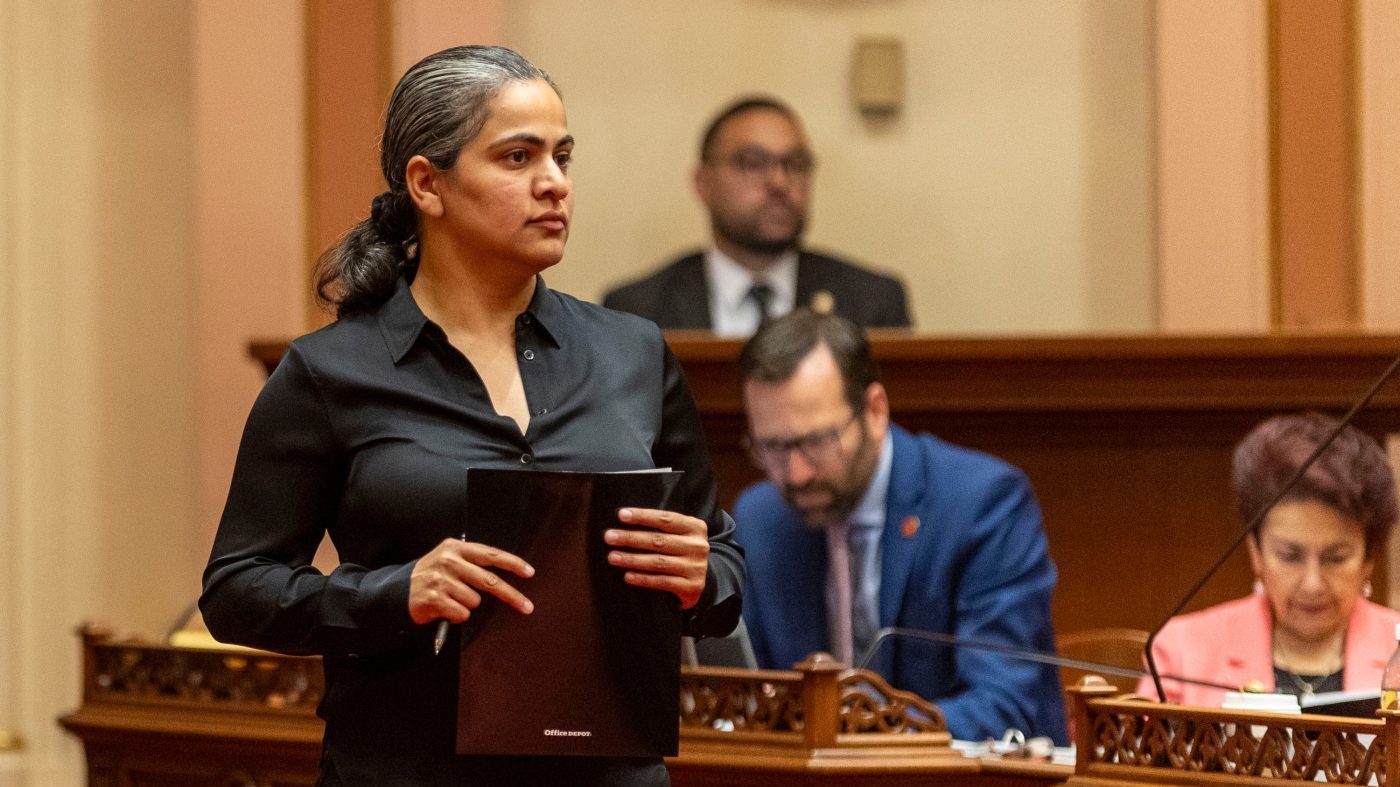
State Sen. Aisha Wahab (D) has won the special election to fill the remainder of former Rep. Eric Swalwell's (D-Calif.) term in California's 14th Congressional District, according to Decision Desk HQ projections. Wahab defeated Bay Area Rapid Transit (BART) Board President Melissa Hernandez, who conceded the race.
The contest came after Swalwell, once considered a leading contender in the California governor's race, dropped out of that race and resigned his House seat amid sexual assault allegations he has denied. Wahab and Hernandez advanced from a June primary, where Wahab held a 26-point lead in the special election contest.
Wahab's victory marks a notable setback for the American Israel Public Affairs Committee's (AIPAC) super PAC, which spent heavily to support Hernandez and oppose Wahab. The United Democracy Project (UDP), AIPAC's super PAC, poured roughly $2.5 million into the race, while Bold America—a group founded by former Congressional Hispanic Caucus members and funded in part by UDP—spent about $1.8 million. Safer Alameda County PAC added nearly $500,000 in independent expenditures.
On the other side, American Priorities and J Street's super PAC each spent just over $100,000 to back Wahab and oppose Hernandez. The race drew outsized outside spending for a reliably Democratic seat, reflecting the national stakes and the ideological battle over U.S. policy toward Israel.
The contest also became a flashpoint over the Israel-Hamas war. Wahab has opposed unconditional aid to Israel and described events in Gaza as a "genocide." Hernandez, during a spring candidate forum, declined to use that term, saying "Israel had the right to defend itself" after the Oct. 7, 2023 Hamas attack, while adding that "the destruction into Gaza has gone too far."
The campaign turned increasingly personal. A Hernandez supporter filed a Federal Election Commission (FEC) complaint alleging Wahab's state Senate committee gave money to the Alameda County Democratic Central Committee, which then spent it on her congressional bid. Wahab told The Hill she had not heard from the FEC and called the complaint "nothing more than a political allegation being pushed by our opponents." The county party said it has been "in compliance with federal election laws."
Wahab's campaign also filed its own FEC complaint over social media posts it called defamatory, seeking to determine whether they were part of a coordinated effort to influence the primary and whether they should be reported as independent expenditures.
Wahab and Hernandez will face each other again in November for the full two-year term. The outcome of that race could shift the political balance in the House, though the district is solidly Democratic. Analysts note that Wahab's victory in the special election may signal progressive momentum in California, even as national polls show a competitive landscape for 2028.
With the special election behind them, both candidates are now turning their attention to the general election, where the same dynamics—outside spending, Israel policy, and personal attacks—are likely to resurface.