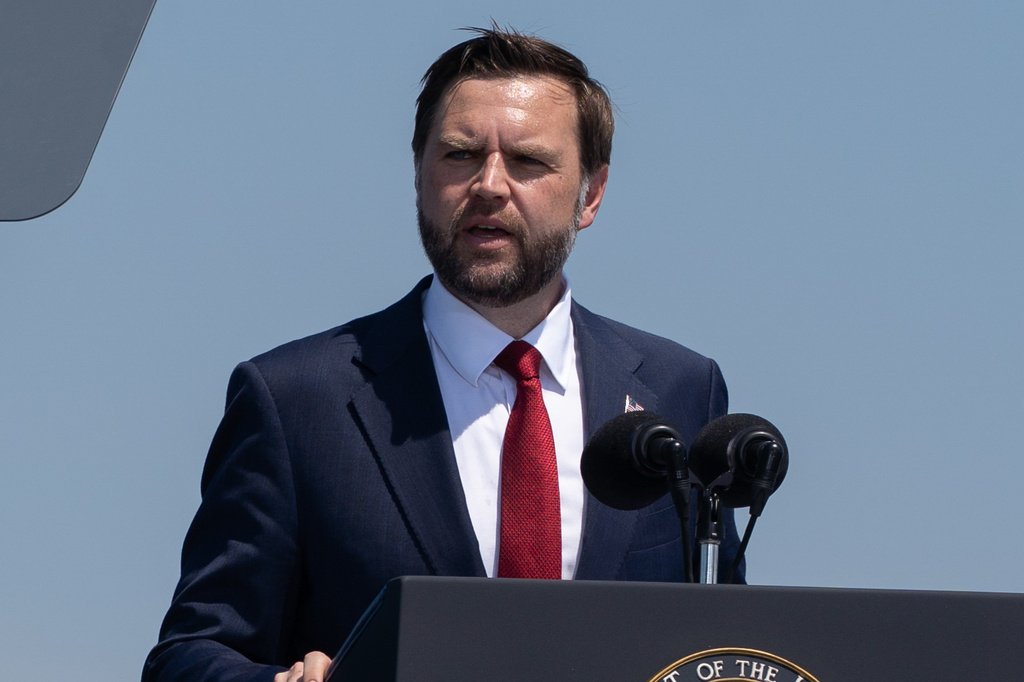
For years, political analysts have struggled to explain Donald Trump's enduring grip on voters—despite two impeachments, a criminal conviction, and multiple indictments. But a recent re-reading of a 2016 Atlantic essay by J.D. Vance offers a startlingly clear diagnosis: Trump's political appeal, Vance argued, is akin to opioid addiction. Now, as Trump's vice president, Vance himself embodies the enabler he once decried.
Vance's piece, republished this week, compares Trump to a drug that offers a quick escape from pain. He wrote that Trump's promises are 'the needle in America's collective vein,' providing a temporary high but no lasting cure. Yet the essay's most striking feature is its author's own evolution—from truth-teller to Trump's most loyal defender.

The original article, titled 'Opioid of the Masses,' described how Trump exploits the desperation of communities left behind by economic decline. 'Trump brings power to those who hate their lack of it,' Vance wrote, calling the message 'tonic to communities that have felt nothing but decline for decades.' He warned that Trump's solutions are phony, much like illegal drugs.
But the essay's real power now lies in what it omits: the role of the enabler. Vance, once a sharp critic, has become Trump's chief cheerleader. He has defended Trump's policies on trade, immigration, and foreign aid—even as Trump's cuts to foreign aid leave the U.S. vulnerable to global crises like Ebola outbreaks in Africa. Vance's transformation mirrors the addiction cycle he described: the user becomes the dealer.
Vance's about-face is particularly stark given his earlier warnings. In 2016, he wrote that 'perhaps the nation will trade the quick high of 'Make America Great Again' for real medicine.' Instead, he has helped administer the drug. His rejection of free-market economics, signaled by his dismissal of Milton Friedman, aligns him with Trump's populist agenda. And his recent warnings to Israel about its global standing were quickly dismissed by Netanyahu, exposing the limits of Vance's influence.
The Atlantic editors republished the essay to let readers judge how well Vance's assessment has aged. But the real question is how Vance, who once saw Trump as a destructive force, could enable him. The answer lies in the enabler's psychology: proximity to power can warp even the sharpest critic.
Vance's journey from Hillbilly Elegy author to vice president is one of the most dramatic political makeovers in recent history. His 2016 essay remains a brilliant critique of Trump's appeal—but it also serves as a cautionary tale about the seduction of power. As Trump eyes policies like Australian-style retirement accounts, Vance's silence on the dangers he once warned about speaks volumes.