North Korea fired a barrage of about 10 short-range ballistic missiles into the sea on Thursday, according to South Korea's military, in a sharp rebuke of President Donald Trump's decision to scale back joint exercises with Seoul in an apparent bid to restart diplomacy.
The launches, which originated from the North Korean capital region around 5 p.m. local time, sent projectiles roughly 300 kilometers (185 miles) eastward into the waters off the Korean Peninsula, the Joint Chiefs of Staff said. South Korea responded by enhancing its surveillance posture and coordinating closely with the United States and Japan. The presidential national security council in Seoul issued a statement urging Pyongyang to halt such launches.
Japan's prime minister's office also reported detecting a suspected missile launch, underscoring the regional alarm triggered by the latest provocation.
The missile tests came just a day after Trump ordered the Pentagon to substantially reduce the Ulchi Freedom Shield exercises, which began Monday. The president cited what he described as a good relationship with North Korean leader Kim Jong Un and Seoul's refusal to support U.S. military action in Iran. On Wednesday, U.S. and South Korean officials confirmed they had shortened the 11-day drills by roughly half and canceled some field training, a move that raised concerns about the allies' joint defense readiness.
Kim Yo Jong, the influential sister of the North Korean leader, dismissed Trump's overture on Wednesday, asserting that "the provocative, aggressive nature of the drills won't change even though their duration and size were reduced." She warned that if Washington believed its gesture would be seen as good faith, "they will not get the desired answer." She also denied Trump's claim that Kim Jong Un had responded to his request for a conversation, though she maintained that personal relations between her brother and Trump remain "still excellent." That suggests Pyongyang is willing to wait for more substantial concessions before returning to talks.
When asked Wednesday whether he would meet with Kim this year, Trump said, "Yeah, I will be." He declined to say whether he and Kim are exchanging letters but reiterated that they get along.
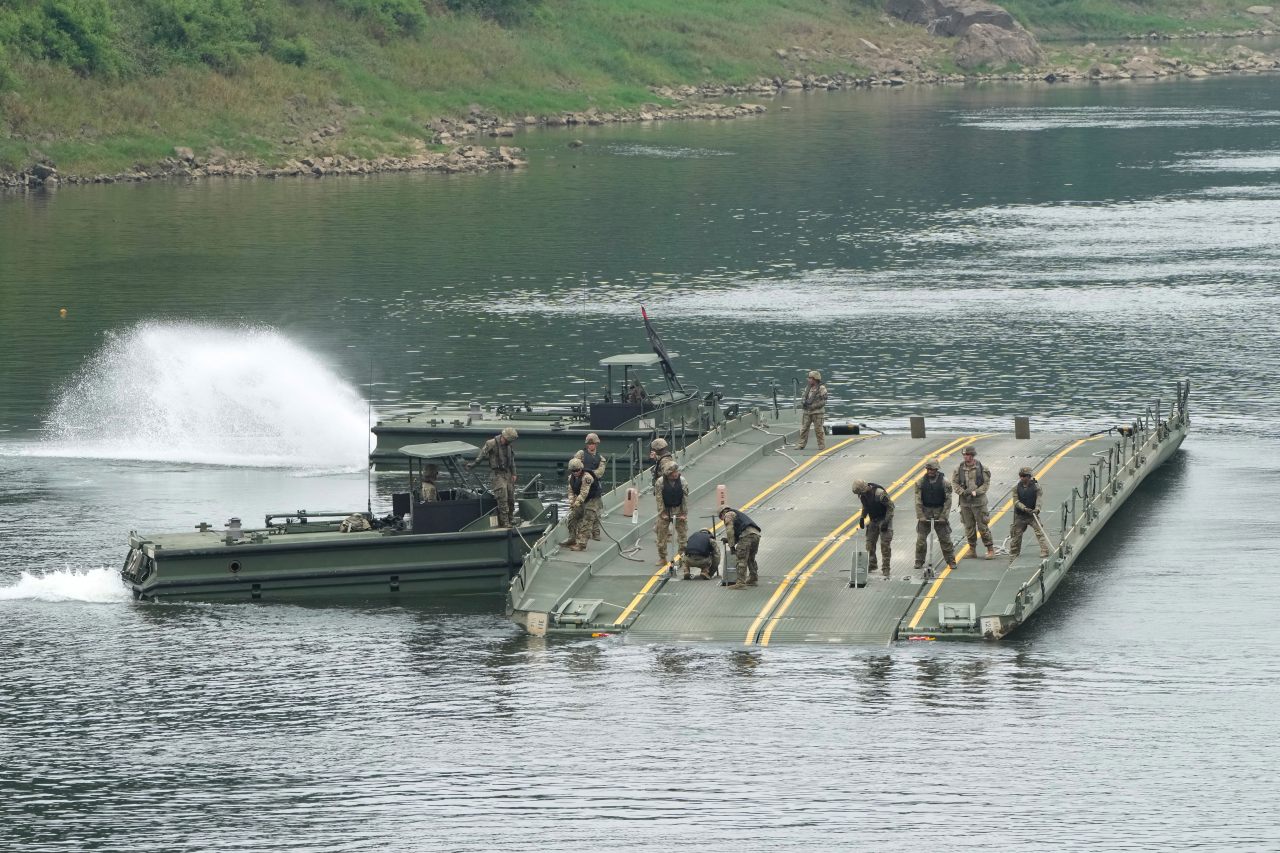
The Ulchi Freedom Shield is one of the principal annual military exercises conducted by the United States and South Korea to bolster their ability to counter potential North Korean aggression. Washington and Seoul describe the drills as defensive, but Pyongyang views them as invasion rehearsals and frequently responds with weapons tests.
Before this month's exercises began, North Korea accused the allies of plotting more provocative maneuvers this summer and vowed to respond with "a new level of a deterrent." Days before the drills started, Pyongyang fired two ballistic missiles into the sea, its first such launches since late June.
Trump's earlier diplomatic engagement with Kim collapsed in 2019 over disagreements on sanctions relief in exchange for dismantling the North's main nuclear complex—a limited denuclearization step. Since then, Kim has avoided talks with Washington, pushed to modernize his weapons arsenal, and expanded cooperation with Russia. He has said he will not put his nuclear program back on the negotiating table.
Experts argue that Kim now holds more leverage than during his first summits with Trump in 2018 and 2019. They believe he likely hopes to eventually win international recognition as a nuclear state and broad sanctions relief while offering only limited steps toward denuclearization. The latest missile launch appears designed to reinforce that position, signaling that Washington's modest drill reductions are far from sufficient to draw Pyongyang back into dialogue.