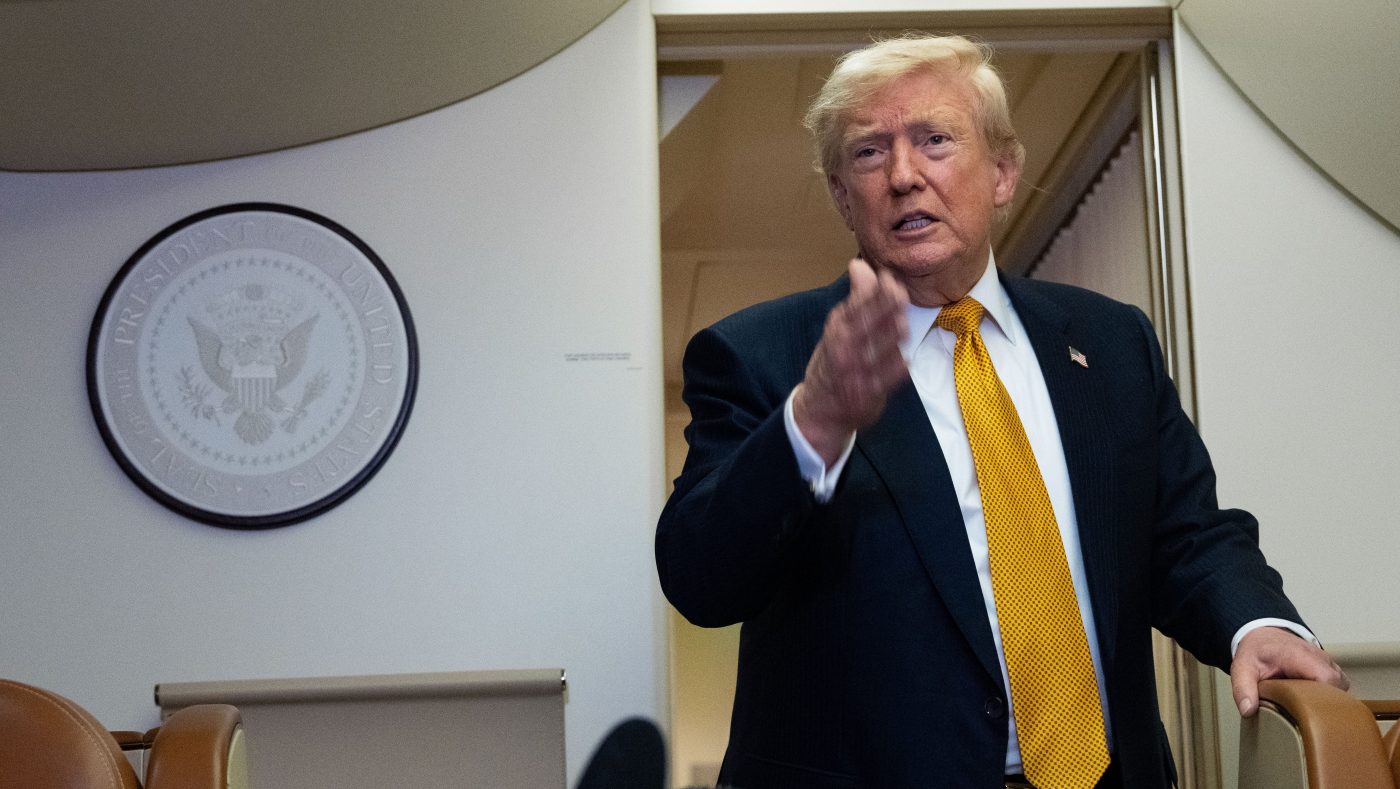
President Donald Trump returned to Washington overnight Thursday from Turkey, traveling on an older Air Force One aircraft for the first leg of his journey after the Secret Service raised security concerns about the newly refurbished Qatari jet he used last week. The switch has intensified scrutiny of the plane's safety protocols, coming amid a sharp uptick in military confrontations with Iran.
The decision to use the older plane underscores the heightened threat environment. On Wednesday, Trump declared the 60-day ceasefire with Iran effectively over, after the U.S. and Iranian militaries exchanged heavy strikes. U.S. Central Command reported that American forces hit roughly 90 Iranian military targets late Wednesday, while the president also referenced Iranian attempts on his life.

The collapse of the truce carries significant political risks for Trump at home. It disrupts lawmakers' legislative plans and has pushed oil prices higher, creating a fresh headache for Republicans as the midterm election cycle intensifies. The escalating conflict could shift voter focus onto national security and economic stability, issues where the administration faces scrutiny.
In a related development, Maine Democrats are now searching for a replacement candidate to challenge incumbent Senator Susan Collins (R) after Graham Platner abruptly exited the race Wednesday night. Platner's departure, linked to a sexual assault allegation, has thrown the contest into uncertainty. State Senate President Troy Jackson has already entered the race, aiming to consolidate party support against Collins in a state that has trended Democratic in recent years.
Trump's schedule Thursday includes an intelligence briefing and two policy meetings in the afternoon. Meanwhile, in Palm Beach, the Palm Beach International Airport is set to be officially renamed Donald J. Trump International Airport, a symbolic move that local officials say honors the president's ties to the region.
The Iran crisis is also reverberating through Congress, where defense and foreign policy bills now face uncertain paths. The collapsing ceasefire is threatening the Senate's defense agenda, as lawmakers grapple with the implications of renewed hostilities and potential troop deployments. The administration has not indicated whether it will seek congressional authorization for further strikes, a move that could ignite a debate over war powers.
Oil markets reacted swiftly to the breakdown in diplomacy, with crude prices jumping on fears of supply disruptions in the Strait of Hormuz. This economic pressure could test GOP unity, as lawmakers from energy-producing states push for a more aggressive stance while others warn of recession risks.
On the diplomatic front, Trump's trip to Turkey earlier this week included discussions on sanctions and F-35 sales, issues that have already sparked clashes on Capitol Hill. The president's pledge to impose sanctions on Turkey over its S-400 missile system has divided lawmakers, with some arguing it undermines NATO unity.
As the day unfolds, the White House is expected to release further details on the intelligence briefing and potential next steps in the Iran confrontation. For now, the president's return on an older Air Force One serves as a stark reminder of the security threats he faces—both from foreign adversaries and at home.