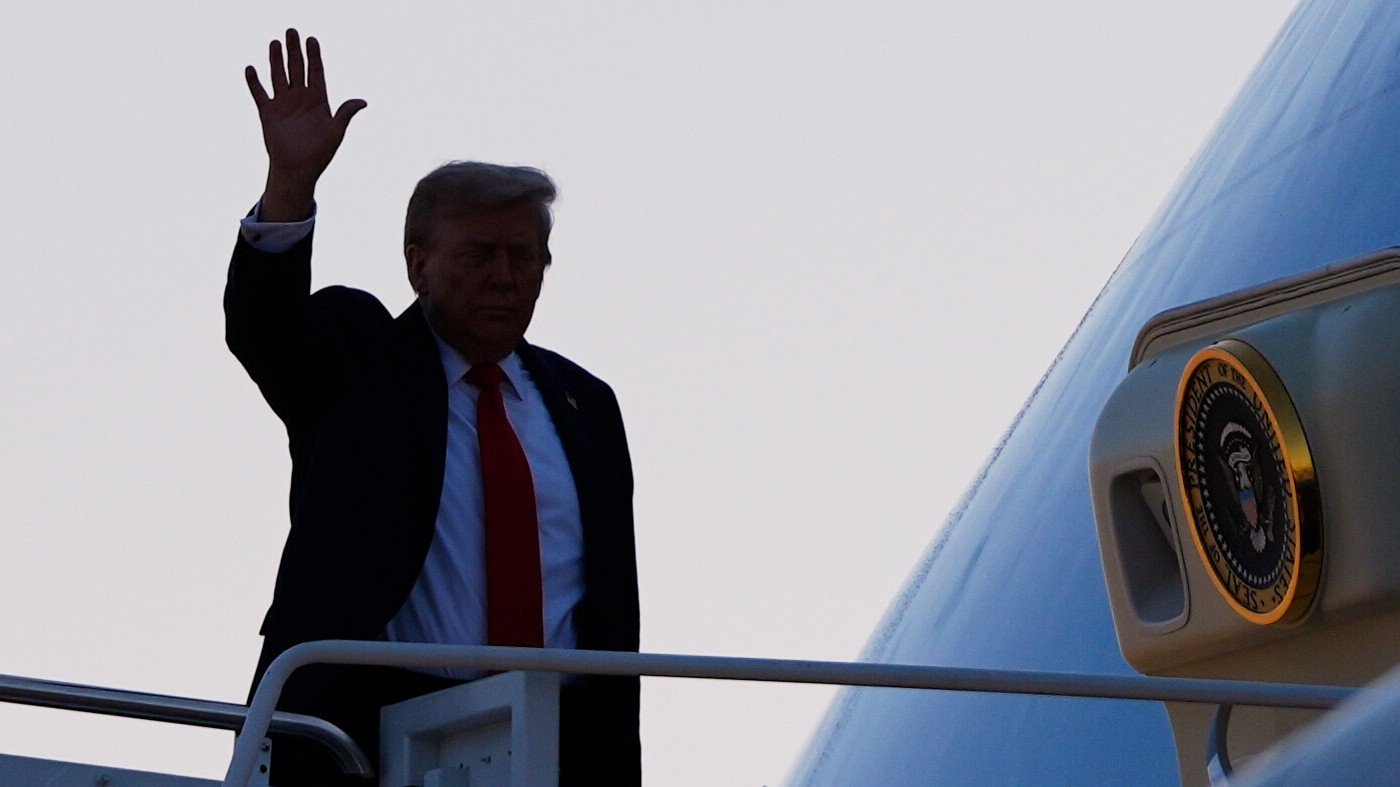
President Donald Trump made an unscheduled stop in the United Kingdom on Wednesday to transfer from the legacy Air Force One to a newer, Qatari-gifted aircraft for the final leg of his return from the NATO summit in Turkey. The move came as Iran escalated its rhetoric, warning it has “no red lines” in defending itself—a statement that fueled speculation about potential security concerns.
When pressed by CNN’s Alayna Treene on whether a credible Iranian threat prompted the switch, Trump deflected with characteristic bravado. “I have a threat all the time. I’m number one on their list, before you,” he said, adding, “But if I go, you go, right? Perhaps someday you want to change professions.”
The new plane, a modified Boeing 747-8, is an interim luxury jet gifted by Qatar. Unlike the heavily fortified Air Force One, it lacks midair refueling capability and advanced missile detection or countermeasure systems. The president’s team ordered reporters to lower their window shades during the flight, a directive Trump justified by saying the journey was “probably … dangerous because of the sleazebags that we have to deal with.”
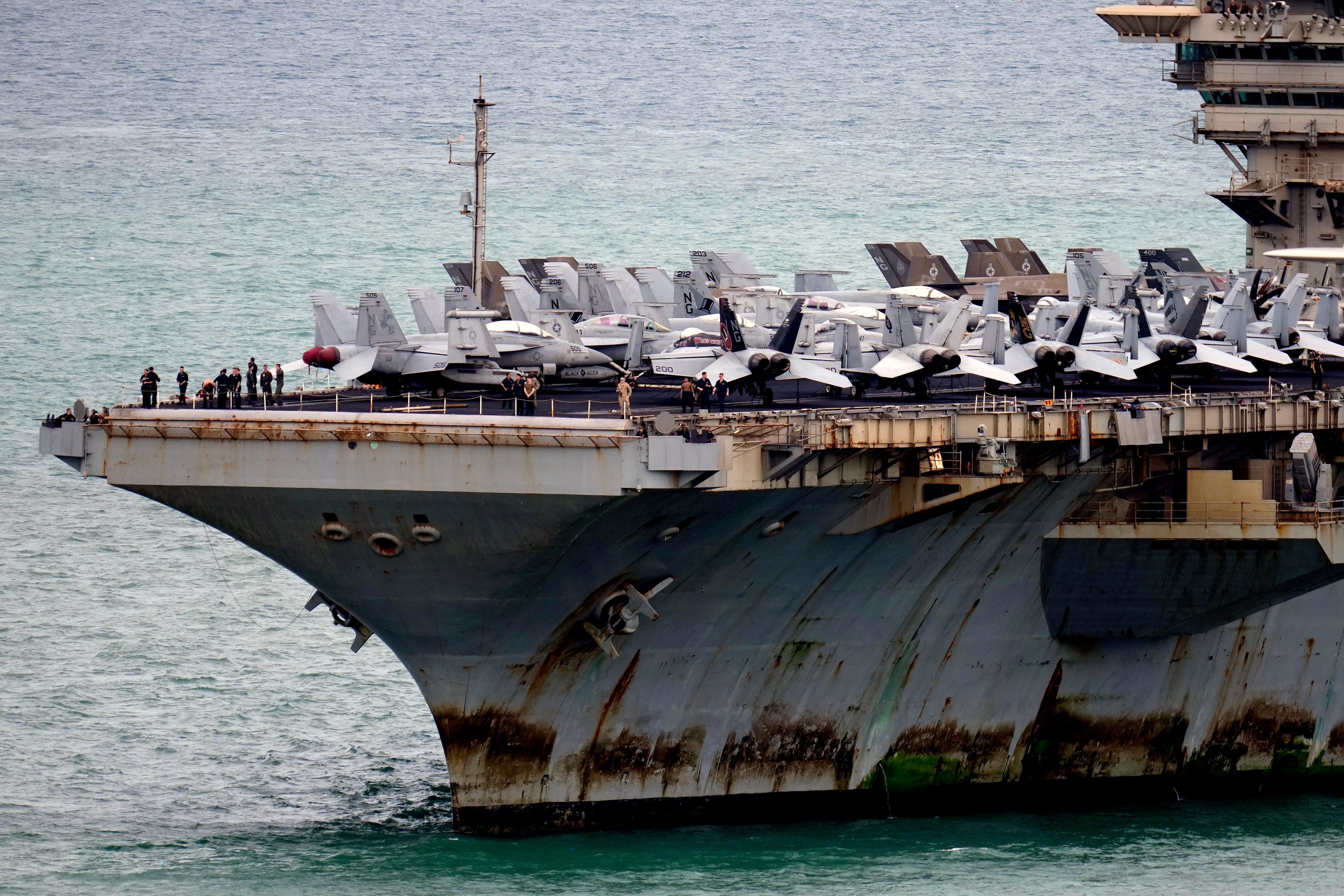
The backdrop to this plane swap is a sharp escalation in U.S. military operations against Iran. On Tuesday, American forces resumed strikes across Iran after attacking three vessels in the Strait of Hormuz, a vital chokepoint for global oil shipments. Tehran’s missile arsenal ranges from 185 to 2,500 miles, easily covering the 1,040-mile distance from the Turkish capital, Ankara, where the NATO summit was held.
Trump’s decision to use the older aircraft for the initial leg from Turkey to the UK—and then transfer to the Qatari jet—raised eyebrows among security analysts. The older Air Force One is equipped with state-of-the-art defensive systems, while the interim plane offers more comfort but less protection. The president insisted the new vessel was merely on display for European soldiers to admire before he picked it up at Mildenhall Air Force Base in Holywell Row, England.
The renewed U.S. strikes mark a significant escalation after a brief ceasefire, with the Strait of Hormuz crisis threatening to disrupt global energy markets. Trump has framed the operations as a response to Iranian aggression, while Tehran warns its neighbors of no limits in its defense posture. The juxtaposition of a casual plane transfer with a looming military confrontation underscores the high stakes of the president’s travel logistics.
Throughout his presidency, Trump has frequently downplayed personal security risks, often using dark humor to address them. His quip about Treene’s profession highlighted the casual tone he adopts even as tensions with Iran approach a boiling point. The oil markets have reacted sharply to the renewed hostilities, with crude prices surging on fears of supply disruptions through the Hormuz chokepoint.
For now, the president is back in Washington, having completed a summit that also saw him greenlight Patriot missile licenses for Ukraine. But the Iran crisis remains front and center, and Trump’s choice of aircraft—and his offhand remarks—will likely fuel further debate about the administration’s threat assessment and the safety of its commander-in-chief.