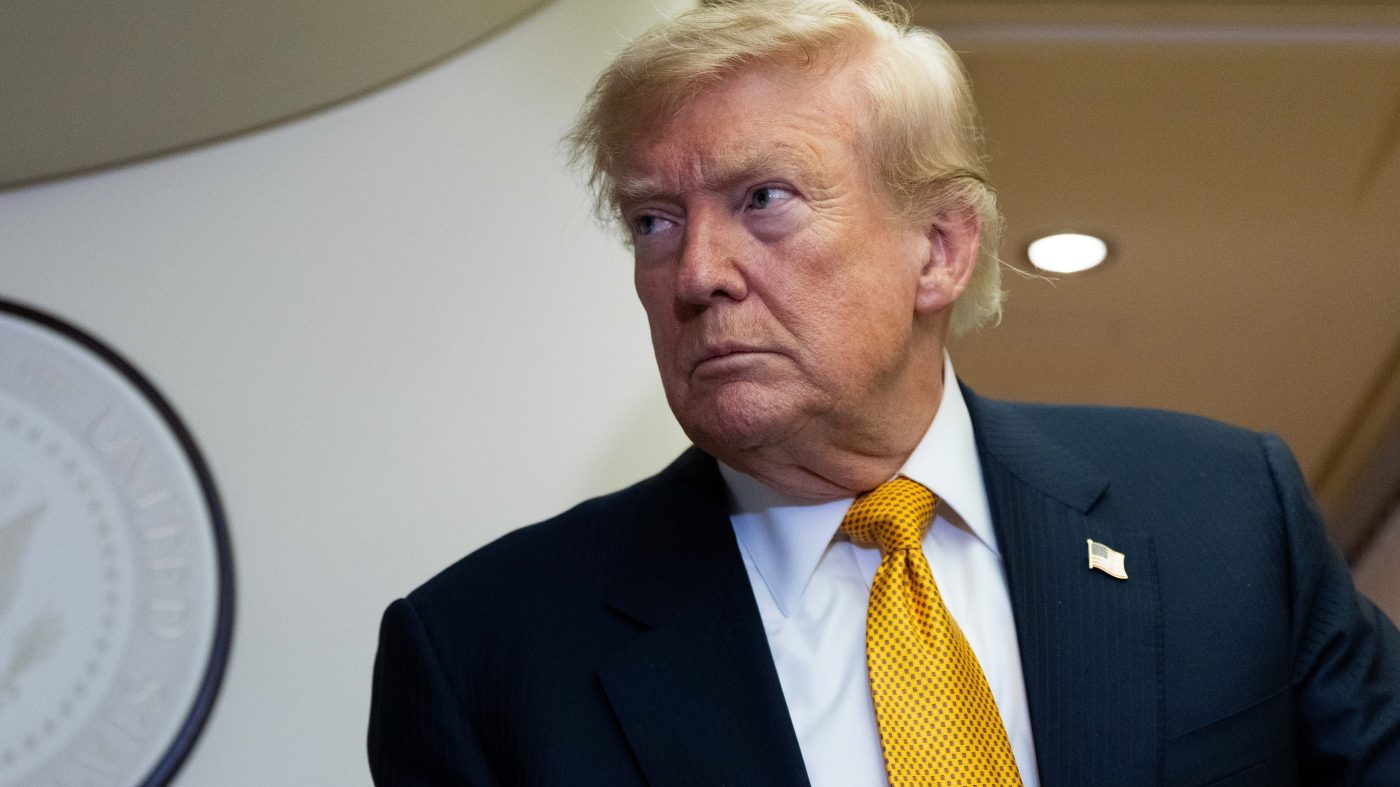
President Trump declared Wednesday that he will formally ask the Supreme Court to reconsider its decision blocking his executive order restricting birthright citizenship, a move that came just days after the justices ruled against his administration in a major constitutional showdown.
In a post on his Truth Social platform, Trump wrote, “I will be asking for a Rehearing by the United States Supreme Court, IMMEDIATELY. This miscarriage of justice will destroy America if they don’t change their absolutely insane decision.” The president’s order, issued on his first day in office, required that at least one parent of a child born on U.S. soil be a citizen or a permanent legal resident for the child to receive automatic citizenship.

The Supreme Court struck down the policy on the final day of its term last week, with Chief Justice John Roberts writing for a 5-4 majority that the 14th Amendment guarantees citizenship to nearly all children born in the United States. “Citizenship, then and now, was the right to have rights — to freely participate in our political community,” Roberts wrote in his 26-page opinion, adding that “the Framers of the Fourteenth Amendment extended that promise to ‘every free-born person in this land.’”
Roberts was joined by conservative Justice Amy Coney Barrett and liberal Justices Sonia Sotomayor, Elena Kagan, and Ketanji Brown Jackson. Justice Brett Kavanaugh, while disagreeing with the majority’s constitutional reasoning, voted to block the order under federal law that mirrors the 14th Amendment’s language. Justices Clarence Thomas, Samuel Alito, and Neil Gorsuch dissented. In a lengthy 39-page dissent, Alito argued the court “made a serious mistake” in upholding birthright citizenship.
Legal experts note that while losing parties can petition for a rehearing, the Supreme Court almost never grants such requests. Steve Vladeck, a professor at Georgetown University Law Center, observed in 2024 that the high court has not agreed to a rehearing of a ruling in an argued case since 1965 and has not held a plenary rehearing since 1956. “Instead, the principal significance of rehearing petitions with respect to merits rulings today is how they affect the timing of the remand to lower courts,” Vladeck wrote on his “One First” Substack.
Under federal law, a losing party must file a petition for rehearing within 25 days of the court’s judgment, unless the court or a justice shortens or extends that period. The statute explicitly states that “the time for filing a petition for the rehearing of an order denying a petition for a writ of certiorari or extraordinary writ will not be extended.”
The decision has broader political implications, as Trump has made immigration enforcement a centerpiece of his agenda. His administration has also faced scrutiny over other policies, including a pledge to sanction Turkey that sparked a clash on Capitol Hill over F-35s and a collapsing Iran ceasefire that threatens the Senate’s defense bill agenda. The birthright citizenship ruling marks a significant legal setback for the president, who has long argued that the 14th Amendment’s guarantee does not apply to children of undocumented immigrants.
Observers expect the administration’s rehearing petition to face long odds, but the move keeps the issue alive politically. Trump’s allies have seized on the ruling to rally his base, while opponents warn that any further attempt to restrict birthright citizenship could inflame constitutional tensions.