President Donald Trump rattled European allies at the NATO summit with sharp criticism over defense spending and threats to halt trade with Spain, but by the end of the gathering, he had shifted to a notably more accommodating stance.
Trump's early remarks targeted Spain for rejecting the alliance's 5 percent defense spending target and criticizing the U.S.-Israeli Operation Epic Fury. He ordered an immediate trade halt with Madrid, though such a move likely requires congressional approval. He also reiterated his desire to acquire Greenland from Denmark and threatened to withdraw U.S. troops from Europe.
Yet as the summit concluded, Trump abandoned those threats. He made no mention of leaving NATO, seizing Greenland by force, or pulling troops from the continent. In fact, Poland's defense minister reported that the Trump administration had ended a suspension on rotating an additional 4,000 troops to Poland—a move Trump did not deny. He also thanked Lithuanian President Gitanas Nauseda for Vilnius's willingness to host American troops permanently.
The final communique reaffirmed the alliance's "ironclad commitment" to collective defense under Article 5 and stressed that an attack on one member is an attack on all. It also declared that "Iran must never have a nuclear weapon" and called for freedom of navigation in the Strait of Hormuz, a key Trump priority.
NATO Secretary General Mark Rutte highlighted that most European members are on track to meet the 5 percent defense spending target by 2035. Trump accepted the objective but urged faster action, warning that Russia could rebuild its military capacity more quickly than European allies after the war in Ukraine.
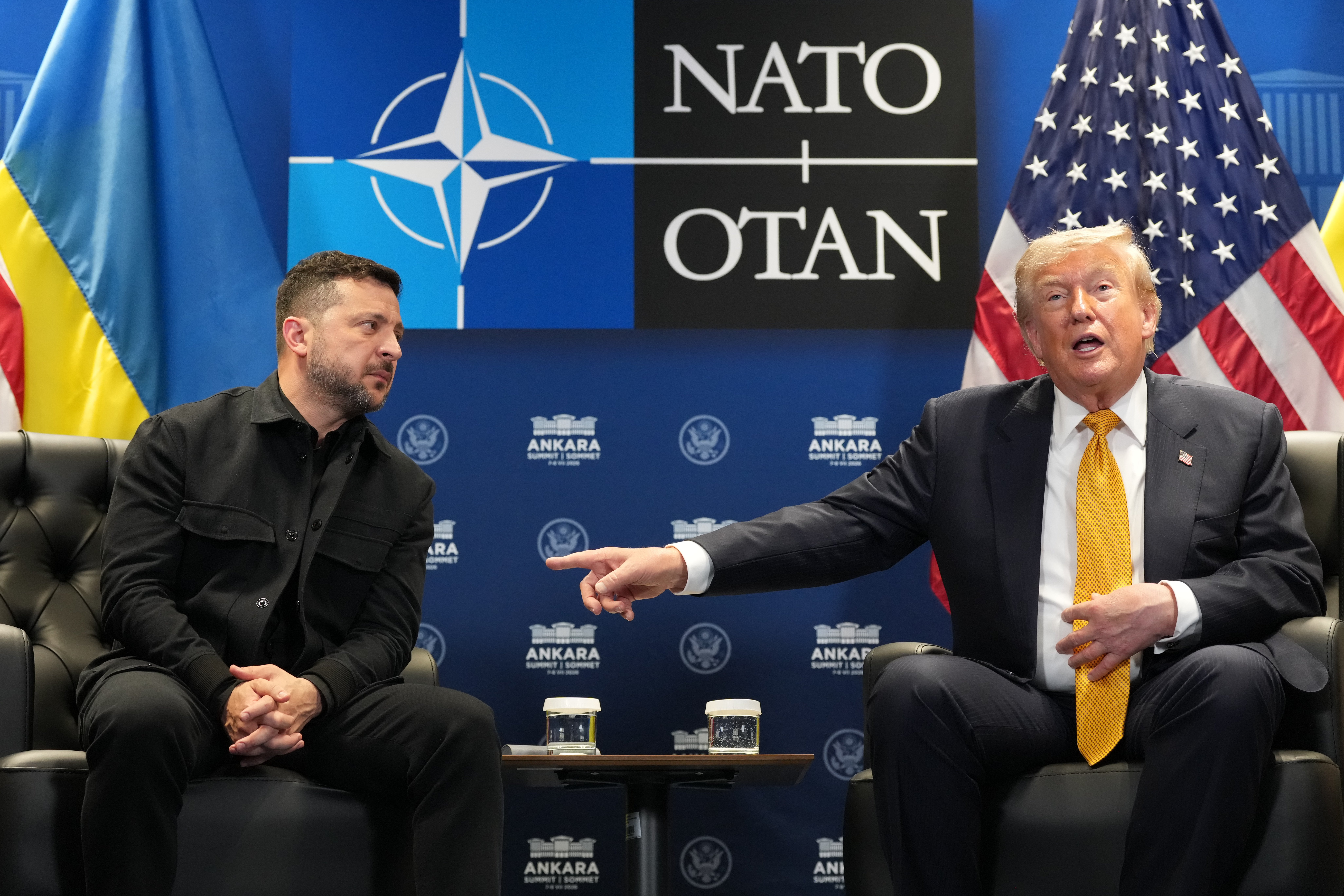
On Ukraine, the communique praised Kyiv's contribution to transatlantic security and expressed unwavering support for its sovereignty and territorial integrity. Unlike last year's tense Oval Office meeting, Trump and Ukrainian President Volodymyr Zelensky appeared at ease during a joint press conference. Trump marveled at Ukraine's resilience after nearly five years of war and backed Kyiv building Patriot air defense systems under license, arguing Ukraine could deploy them faster than experts predict. He also voiced support for Ukraine's long-range strikes into Russia and sympathized with Zelensky's refusal to meet Putin in Moscow.
Trump did not commit the U.S. to additional direct aid, but his positive remarks on Ukraine signal a shift that should trouble the Kremlin. He also floated lifting sanctions on Turkey's participation in F-35 production and acquisition, blocked by Congress unless Ankara relinquishes Russian S-400 systems. Any transfer of those systems would likely require Putin's approval, which seems improbable given Russia's interest in keeping a NATO member weakened.
In his final press conference, Trump spoke warmly of the "love" and "unification" at the summit, though his hyperbole masked lingering tensions. Allies may not share his rosy view, but they breathed a sigh of relief that he did not upend the alliance—at least for now.