Russia's foreign ministry on Monday issued an urgent call for foreign nationals to evacuate Kyiv, hours after Russian forces pummeled the Ukrainian capital with a massive barrage of missiles and drones. The warning, which explicitly included diplomatic personnel and international organization staff, signals Moscow's intent to sustain intense strikes on what it claims are Ukrainian defense industry targets within the city.
In a statement, the ministry described the strikes as “consistent and systemic” attacks on enterprises involved in designing, manufacturing, and programming drones, as well as other military facilities. It accused Ukrainian forces of launching an attack on a Russian university on Friday, though it provided no evidence. The ministry added that future strikes would target “decision-making centers and command posts,” and urged Kyiv residents to stay away from military and government buildings.
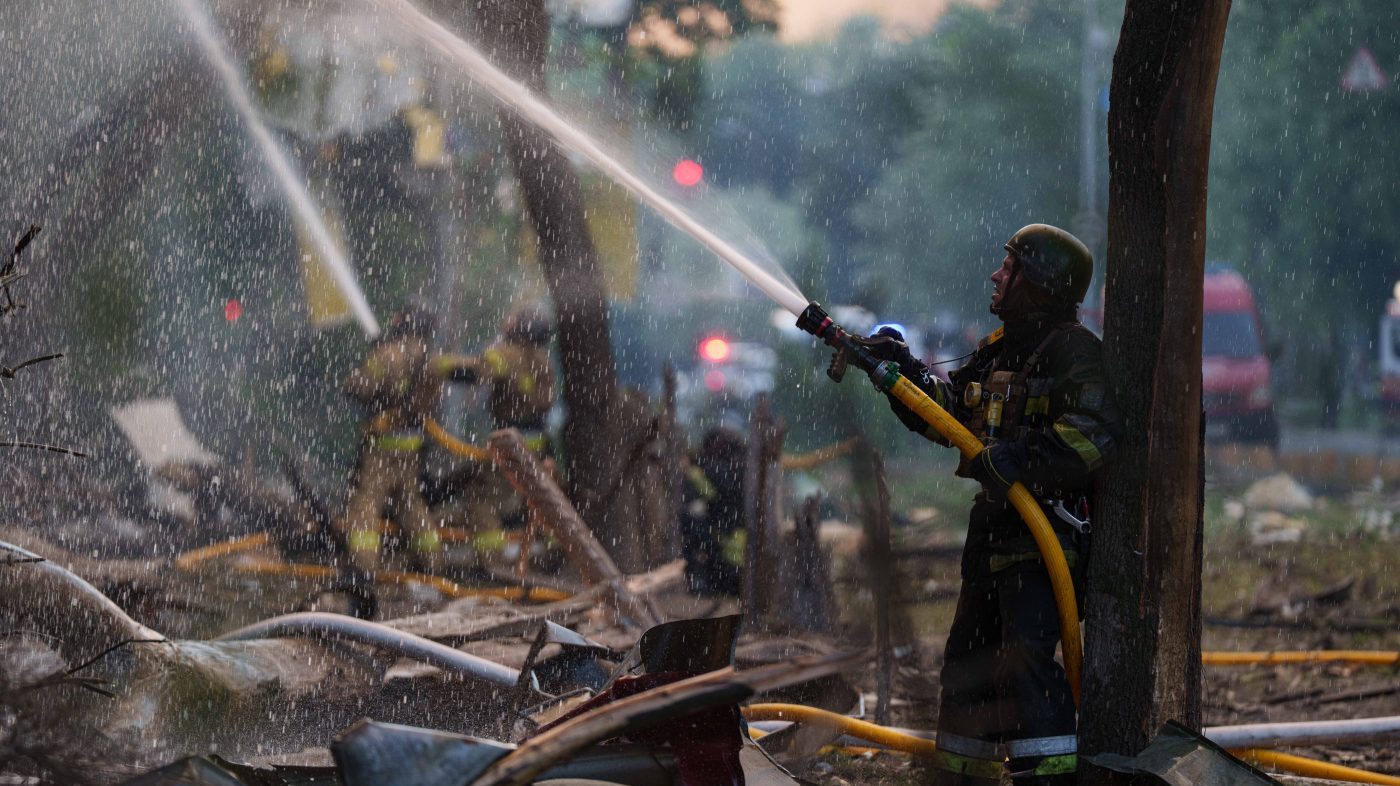
Ukrainian President Volodymyr Zelensky reported that the overnight assault included 90 missiles of various types—36 of them ballistic—along with 600 drones. Among the weapons used was the Oreshnik intermediate-range ballistic missile, capable of carrying multiple warheads at hypersonic speed, according to the Center for Strategic and International Studies. Zelensky said the strikes hit a water supply facility, burned down a market, damaged dozens of residential buildings, and struck several schools. At least 83 people were injured, and fatalities were confirmed, though exact numbers were not immediately available.
The attack drew swift condemnation from European leaders. European Commission President Ursula von der Leyen called it a display of “brutality and disregard for both human life and peace negotiations,” vowing further support for Ukraine's air defense systems. French President Emmanuel Macron denounced the use of the Oreshnik missile as a sign of “headlong rush and the impasse of Russia's war of aggression,” and pledged continued backing for a just and lasting peace.
Zelensky said his administration is working with partners to strengthen Ukraine's air defense, including accelerating the development of anti-ballistic missiles in Europe. He noted frustration with slow progress from the United States on expanding production of such capabilities, but expressed hope for new diplomatic engagements with the incoming Trump administration.
The warning from Moscow echoes previous evacuation calls that preceded major escalations. As the fifth year of Russia's invasion grinds on, the Kremlin shows no sign of relenting, instead intensifying attacks on civilian infrastructure while claiming to target military assets. The international community remains divided on how to respond, with some leaders urging stronger sanctions and others calling for renewed negotiations.
For context, the Trump administration's foreign policy approach has drawn scrutiny in recent weeks, with some Republicans warning that internal feuds could undermine the party's agenda. Meanwhile, the ongoing war continues to reshape global alliances and energy markets, as Europe scrambles to reduce dependence on Russian gas.