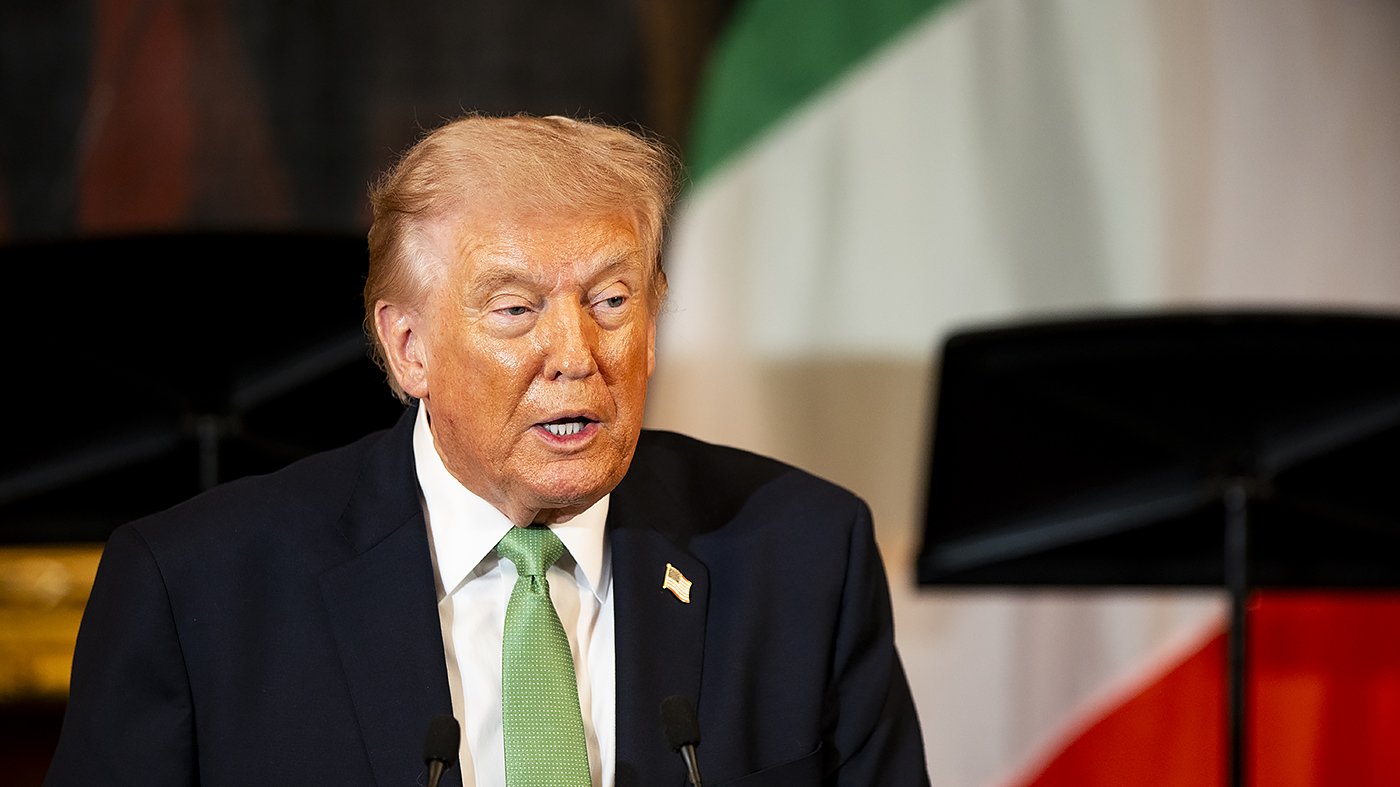
President Donald Trump issued a stark warning Friday that the United States is prepared to launch renewed military strikes against Iran if high-stakes peace negotiations in Islamabad fail to produce an agreement. In an interview with the New York Post, Trump stated U.S. naval assets are being mobilized with what he described as superior weaponry, signaling a potential return to hostilities.
“We have a reset going. We’re loading up the ships with the best ammunition, the best weapons ever made — even better than what we did previously,” Trump said. He added that without a deal, these weapons would be used “very effectively.” The president framed the moment as a decisive test, claiming “we’re going to find out in about 24 hours” whether diplomacy would succeed.
Vance Leads Delegation Amid Tense Ceasefire
The ultimatum comes as Vice President J.D. Vance, accompanied by special envoy Steve Witkoff and senior advisor Jared Kushner, travels to Pakistan to attempt to finalize an agreement with Iranian officials. This follows a two-week ceasefire brokered earlier this week, though the White House confirmed substantive discussions are scheduled to begin Saturday local time.
Before departing, Vance told reporters he was operating under “pretty clear guidelines” from the president but expressed hope for a “positive” outcome. “If the Iranians are willing to negotiate in good faith, we’re certainly willing to extend the open hand,” Vance stated. “If they’re going to try to play us, then they’re going to find the negotiating team is not that receptive.”
Deep Distrust and Divergent Demands
Trump’s combative rhetoric underscores profound mutual distrust. On his Truth Social platform, he criticized Iranian leadership, accusing them of having “no cards other than a short term extortion of the World by using International Waterways.” In his interview, he questioned their reliability. “You’re dealing against people that we don’t know whether or not they tell the truth,” Trump said, alleging Tehran sends contradictory messages on nuclear enrichment.
The Iranian delegation, led by Parliament Speaker Mohammad Bagher Qalibaf and Foreign Minister Abbas Araghchi, has maintained a defiant posture. The ceasefire itself is already on shaky ground due to a dispute over its scope. Iran insists it includes an end to strikes on Lebanon, a position the U.S. and Israel reject. This fundamental disagreement threatens to derail talks before they formally begin.
Further complicating the diplomacy, Qalibaf publicly declared Friday that negotiations cannot proceed without a Lebanon ceasefire and the release of frozen Iranian assets, setting a firm precondition. This stance aligns with warnings from some foreign policy observers; for instance, former National Security Advisor John Bolton has cautioned that Iran perceives Trump as weak and will push for major concessions.
The president’s threats have ignited a fierce domestic political reaction. Congressional Democrats have escalated their calls for Trump’s removal, labeling his warnings “unhinged” and a danger to national security. The administration’s approach also continues to strain international alliances, contributing to a broader erosion of transatlantic trust as European nations grow increasingly fearful of U.S. abandonment.
With naval forces reportedly on standby and a diplomatic team en route, the next 24 hours will determine whether the U.S. and Iran can salvage a fragile peace or plunge back into a cycle of military confrontation. The outcome will have significant ramifications for regional stability and global energy markets.