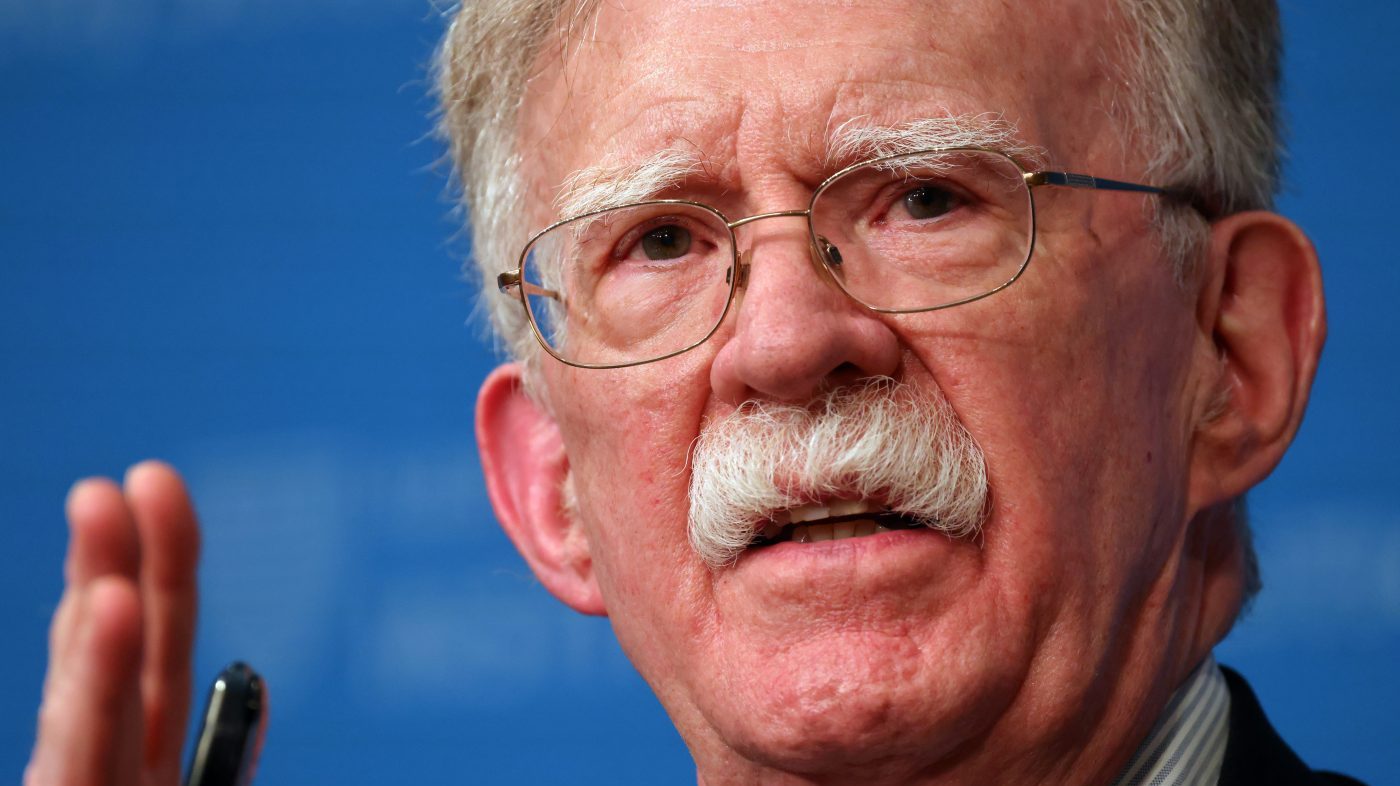
Former National Security Adviser John Bolton issued a stark warning Thursday, asserting that Iran perceives strategic weakness in the Trump administration and will intensify pressure to extract concessions without reciprocal moves. The assessment comes as a U.S. delegation prepares for high-stakes negotiations with Iranian officials in Islamabad, Pakistan.
Perception of Weakness
In an interview with CNN, Bolton stated that President Trump's evident desire to de-escalate current tensions has signaled vulnerability to Tehran. "I think Iran senses weakness," Bolton told Anderson Cooper. "And it's going to push and push until it sees how far it can get." He predicted that ahead of the face-to-face talks scheduled for Saturday, Iran would test how much it could gain by forcing Trump to make unilateral concessions.
Bolton characterized a pattern of behavior he termed "TACO," or "Trump Always Chickens Out," suggesting that adversaries view the President's threats as bluster and simply wait for him to retreat. "They watch what he does, and he thinks he's bargaining and they think he's just blustering, so they wait for him to bluster away and then see if they can move him down into some other position without having to give anything up," he explained.
Fragile Ceasefire and Escalating Demands
The negotiations follow a tenuous ceasefire agreement reached Tuesday, which both sides have already accused the other of violating. The situation was further complicated when Israel conducted strikes in Lebanon, prompting Iran's Speaker of Parliament, Mohammad-Bagher Ghalibaf, to declare that talks cannot proceed without a ceasefire in Lebanon and the lifting of asset freezes on Iran. These conditions, according to Ghalibaf, were part of the original agreement but remain unimplemented.
Iranian Foreign Minister Abbas Araghchi reinforced this hardline position on social media, stating, "The Iran–U.S. Ceasefire terms are clear and explicit: the U.S. must choose—ceasefire or continued war via Israel. It cannot have both." He added, "The ball is in the U.S. court, and the world is watching whether it will act on its commitments." This stance puts the U.S. in a difficult position, given its close alliance with Israel. The Trump administration and Israeli Prime Minister Benjamin Netanyahu have denied that Lebanese ceasefire terms were part of the U.S.-Iran deal, a claim contradicted by Pakistani Prime Minister Shehbaz Sharif, who insisted they were.
The ceasefire initially saw Iran reopen the vital Strait of Hormuz and submit a ten-point peace proposal. However, Iran subsequently closed the strait again in response to the Israeli attacks, demonstrating how quickly the agreement has unraveled. This development highlights the growing international scrutiny of Israel's military actions and their impact on broader diplomacy.
Delegation Dynamics and Trump's Threats
The U.S. delegation will be led by Vice President Vance, accompanied by special envoy Steve Witkoff and the President's son-in-law, Jared Kushner. Bolton noted that the composition of the team itself is a concession, stating, "They wanted Vance to lead the delegation, and they got him." He described the upcoming talks as "a very interesting test" for the Vice President.
Amid the diplomatic maneuvering, President Trump issued a new threat on Friday, warning via the New York Post that the U.S. would resume strikes on Iran if the Islamabad talks fail. He claimed the military was "loading up the ships with the best weapons ever made, even at a higher level than we use to do a complete decimation." This rhetoric mirrors the increasingly combative tone Trump has adopted toward critics of his Iran policy, both outside and within his former circle.
Meanwhile, Netanyahu announced that Israel and Lebanon would engage in their own negotiations focused on "disarming Hezbollah and establishing peace," even as Israeli strikes continued. This parallel process adds another layer of complexity to an already volatile regional equation.
Bolton's critique underscores a fundamental challenge for the administration: projecting resolve while seeking a diplomatic off-ramp. As the Islamabad talks approach, the administration must navigate Iranian demands, maintain alliance cohesion, and manage the perception of its bargaining strategy—a task made more difficult by internal dissent and public criticism from former officials. The outcome will likely influence not only Middle East stability but also the credibility of U.S. deterrence, a concern that extends to other domains like national security investigations into emerging technologies.