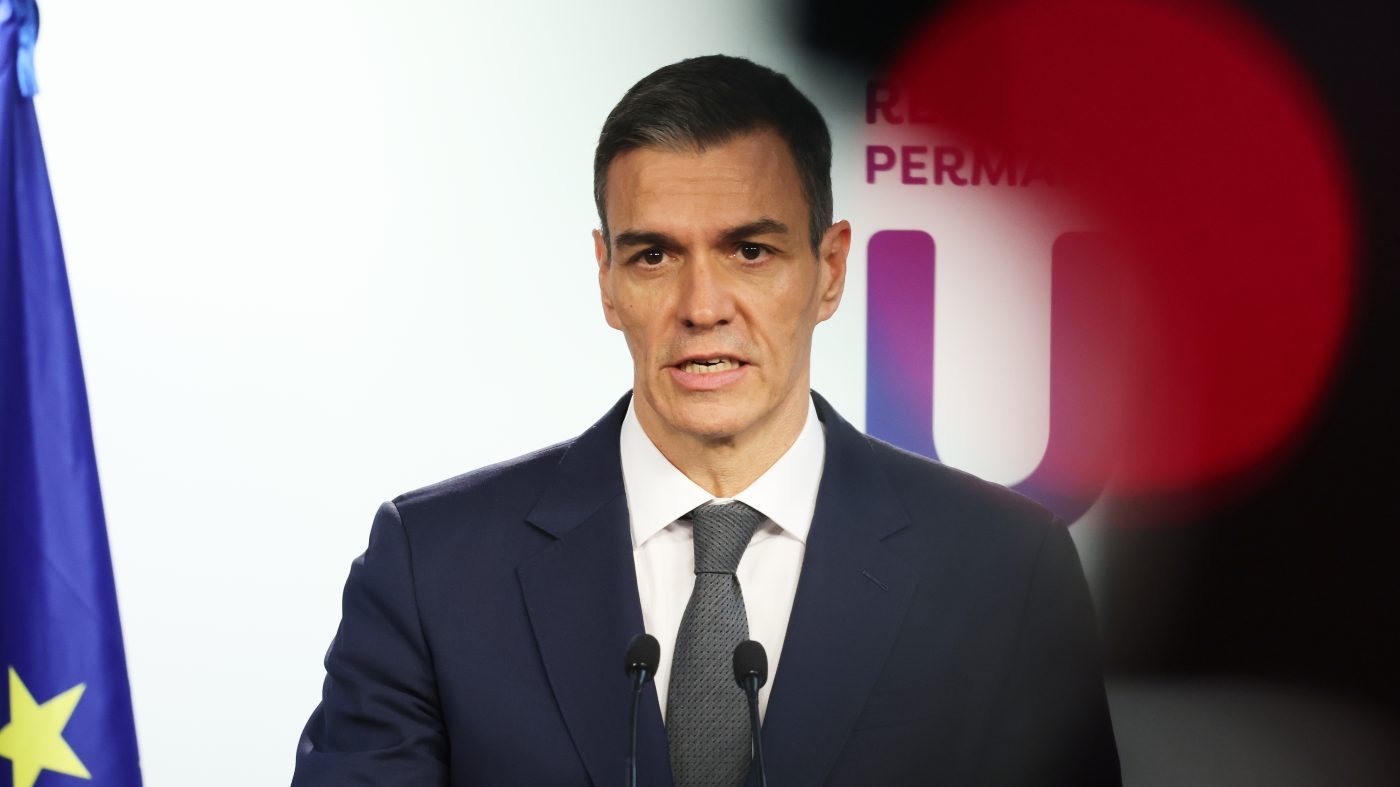
The Spanish government has issued a forceful condemnation of Israel's military campaign in Lebanon, formally accusing the Netanyahu administration of violating international law and undermining a temporary ceasefire brokered between the United States and Iran. Foreign Minister José Manuel Albares told parliament that the strikes represent a profound assault on the foundational principles of international order.
"We are confronting a grave assault on the civilization constructed upon humanist ideals—reason, peace, and universal law—by those who would substitute brute force and arbitrariness," Albares stated, according to reports. The condemnation follows Israel's largest coordinated attack against Hezbollah this week, which targeted over 100 sites linked to the Iranian-backed group across Beirut, the Beqaa Valley, and southern Lebanon.
Israeli airstrikes on Wednesday resulted in significant casualties, with reports indicating at least 200 killed and 1,150 wounded during a concentrated ten-minute assault. Some strikes hit central Beirut in broad daylight, marking a severe escalation. In response, Spanish Prime Minister Pedro Sánchez called for concrete European Union action, urging the bloc to suspend its association treaty with Israel.
Writing on social media, Sánchez declared that Israeli Prime Minister Benjamin Netanyahu's "disregard for life and international law is intolerable." He demanded accountability, stating, "The international community must condemn this new violation, and there must be no impunity for these criminal acts." Sánchez has been among the most consistent European critics of the joint U.S.-Israeli military posture toward Iran, repeatedly warning of humanitarian and economic fallout since the conflict began in February.
The Spanish rebuke adds to growing international pressure as the strikes threaten to unravel the fragile two-week truce agreed between Washington and Tehran. Confusion persists over whether the ceasefire covered Lebanon, with the U.S. and Israel asserting it did not, while Iran and other regional actors insisted it did. This diplomatic friction is detailed in a formal complaint filed by Lebanon with the United Nations.
Regional tensions spiked further when Iran retaliated by closing the Strait of Hormuz on Wednesday, a critical global oil chokepoint. European leaders, including Sánchez, swiftly called for diplomacy to "avert a severe global energy crisis" and protect civilians. They jointly insisted Lebanon must be included in any ceasefire agreement.
Amid the crisis, Netanyahu announced he had directed his cabinet to initiate direct negotiations with the Lebanese government "as soon as possible." The move comes as the United States applies its own pressure. Former President Donald Trump confirmed he advised Netanyahu to de-escalate the campaign in Lebanon, a sentiment echoed by Vice President Vance, who suggested Israel "may check themselves a little bit." The situation highlights the precarious state of the U.S.-Iran ceasefire, which Tehran has warned is meaningless if Israeli operations continue.
Prime Minister Sánchez, while acknowledging the temporary truce, cautioned that it "cannot make us forget the chaos, destruction, and the lives lost." In a pointed metaphor, he added, "The Government of Spain will not applaud those who set the world on fire just because they show up with a bucket." The standoff follows previous friction between Madrid and Washington, after Spain blocked U.S. military use of its bases and airspace for strikes on Iran last month, prompting a trade threat from Trump.