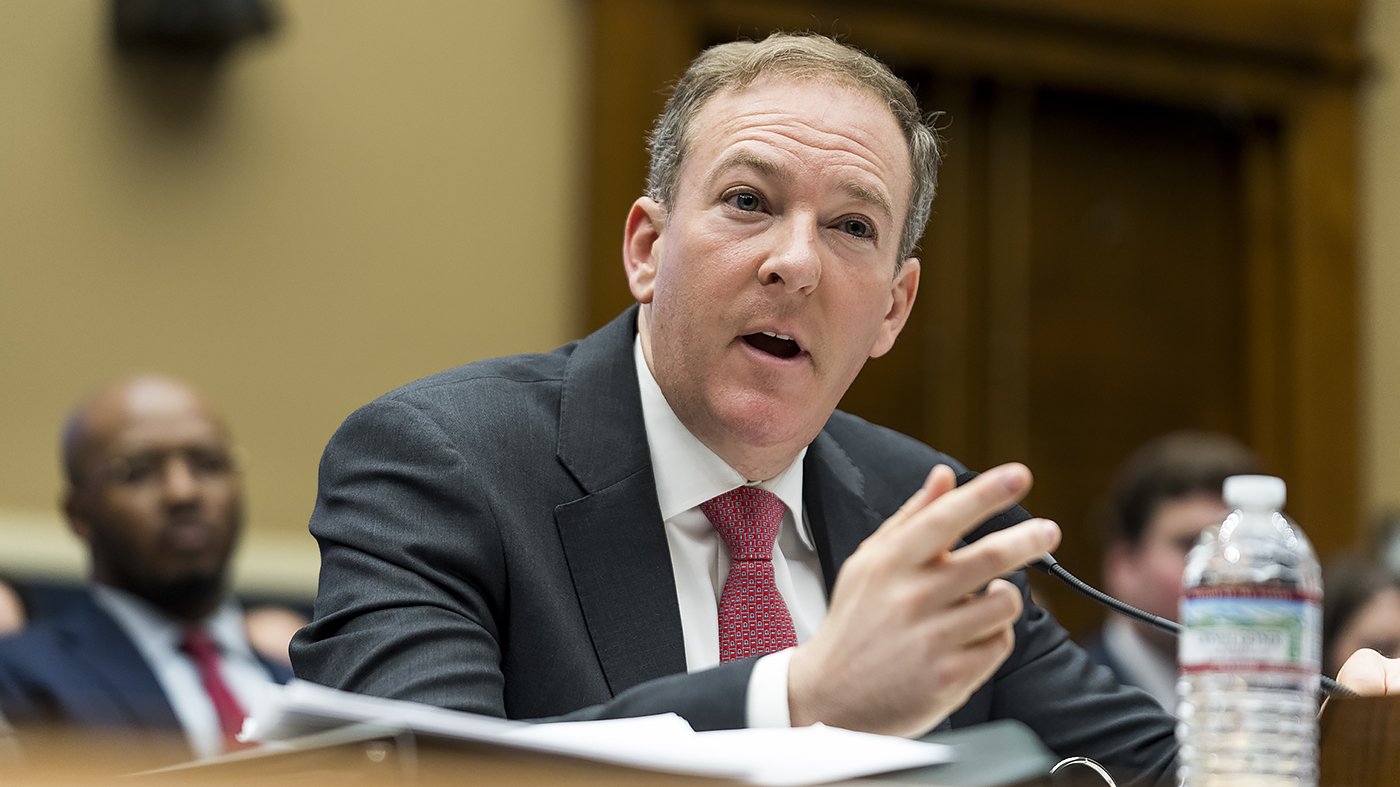
Environmental Protection Agency (EPA) Administrator Lee Zeldin defended the Trump administration’s decision to relax restrictions on super-polluting refrigerants used in commercial refrigeration, arguing the move provides much-needed flexibility for businesses while still adhering to a bipartisan law.
Speaking on CNN’s “State of the Union” on Sunday, Zeldin said the new rule, announced Wednesday, allows supermarkets to continue using hydrofluorocarbons (HFCs)—which can be up to 1,400 times more potent than carbon dioxide—until 2032. The rule also eases limits for cold storage warehouses, semiconductor manufacturing, and refrigerated transportation.

Zeldin framed the change as a correction to what he called an overly aggressive timetable set by the Biden administration. “The last administration went with a very aggressive timetable, more aggressive than what the law had required and after members of Congress had debated, deliberated on what would be the right phase-out,” he told host Jake Tapper.
The EPA’s focus, Zeldin said, is on implementing the American Innovation and Manufacturing (AIM) Act, a bipartisan law signed by President Trump in 2020 that mandates a gradual phase-down of HFCs. Under the previous EPA rule, certain sectors were limited to refrigerants with a global warming potential no more than 150, 300, or 700 times that of CO2. The new rule scrapes those tighter thresholds.
Zeldin argued that the earlier restrictions drove up costs for smaller groceries, especially when they needed to repair broken equipment. “If you have a part that goes down, if you need something serviced, if you need a supply, we believe that you should just be able to fix that part, rather than being required to get a whole new system,” he said. “That’s really been the main economic impact that we have been concerned with.”
The EPA estimates the new rule will save businesses roughly $2.4 billion, savings the agency says will “flow directly to consumers.” The administration has touted the potential for lower grocery bills as a key benefit.
But not everyone is convinced. Stephen Yurek, president and CEO of the Air-Conditioning, Heating and Refrigeration Institute, warned that the rule could backfire. “By extending the compliance deadline, the EPA is maintaining and even increasing demand in the market for existing refrigerants while supply continues to fall under the AIM Act. So, instead of falling, refrigerant prices are likely to rise, resulting in higher service costs, and higher costs for consumers,” Yurek said in a written statement Wednesday.
Environmental groups have also criticized the move, noting that HFCs are a significant contributor to climate change. The Biden-era rule had aimed to accelerate the transition to less harmful alternatives, but the Trump administration’s rollback prioritizes short-term cost relief over long-term environmental goals.
The debate underscores the tension between regulatory flexibility and climate action, as the EPA navigates its statutory obligations under the AIM Act while responding to industry concerns about compliance costs.