As the Senate considers the Combating Organized Retail Crime Act—already passed by the House with strong bipartisan support—proponents are pushing back against what they call a wave of misinformation aimed at derailing the legislation. The bill, designed to bolster coordination among federal, state, and local law enforcement, targets organized retail crime rings that steal and resell goods across state and national borders.
David Johnston, vice president of asset protection and retail operations at the National Retail Federation, wrote in a recent piece that critics have mischaracterized the bill as an expansion of surveillance or a federalization of shoplifting. He argued that the legislation is narrowly focused on large-scale criminal networks, not individual acts of petty theft or desperation-driven shoplifting.
“Organized retail crime is not a teenager stealing a t-shirt or an individual acting out of desperation,” Johnston wrote. “Retailers and law enforcement have long handled local shoplifting through existing partnerships.” The bill, he emphasized, does not even contain the words “petty theft” or “shoplifting.”
A key provision of the legislation is the creation of an Organized Retail and Supply Chain Crime Coordination Center within Homeland Security Investigations (HSI). Johnston explained that the center would facilitate information sharing among law enforcement and private sector entities to identify patterns and connect cases that currently fall through jurisdictional cracks. He stressed that this is not a surveillance tool but a coordination mechanism to help investigators see the full scope of organized theft operations.
Critics have also raised concerns about placing the center under HSI, which is part of Immigration and Customs Enforcement (ICE). Johnston countered that HSI is already the lead federal agency for crimes tied to organized retail theft, including international cargo theft, money laundering, and trafficking of stolen goods. “It does not create a new mission for the Department of Homeland Security,” he wrote. “Instead, it enhances the government’s ability to address a growing form of organized crime.”
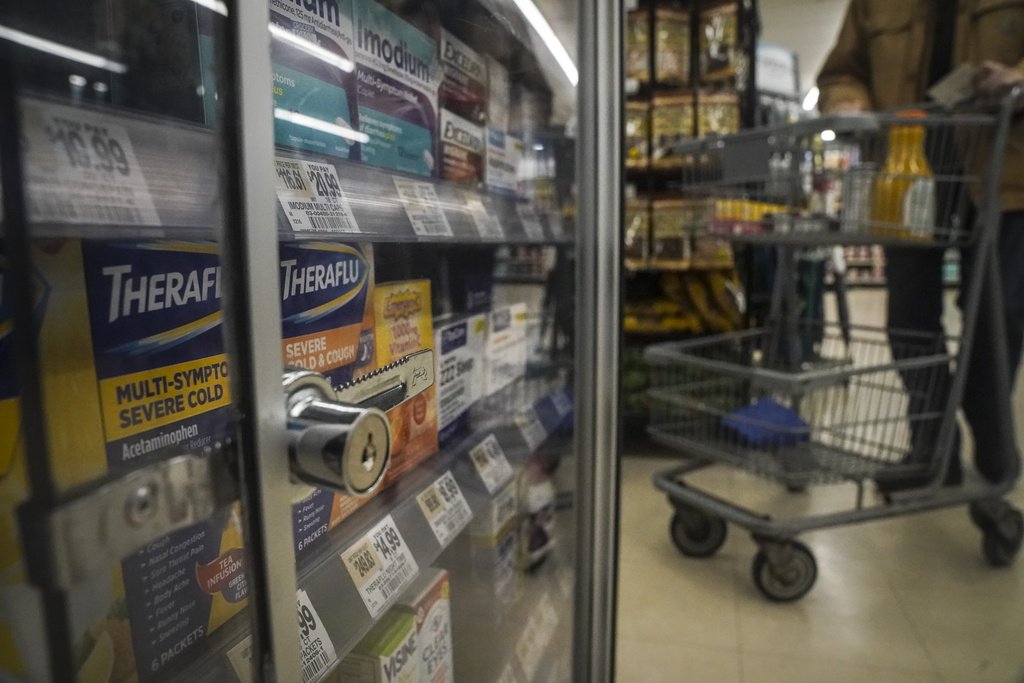
Organized retail crime has become a visible issue in many communities, with high-value merchandise often locked behind glass and brazen “smash-and-grab” thefts making headlines. The National Retail Federation estimates that organized retail crime costs retailers billions annually, affecting prices, worker safety, and consumer access. The bill aims to close the coordination gap that these networks exploit by operating across multiple jurisdictions.
Johnston urged the Senate to follow the House’s lead and pass the bill based on facts, not fear. “Organized retail crime is not ordinary shoplifting and it cannot be effectively addressed through isolated local investigations alone,” he wrote. “The bill provides the coordination tools needed to identify, disrupt, and dismantle organized criminal networks.”
The debate comes amid broader concerns about retail theft and public safety, with some cities experimenting with curfews and other measures to curb crime. The Senate’s decision on the bill will be closely watched by retailers, law enforcement, and policy analysts alike.