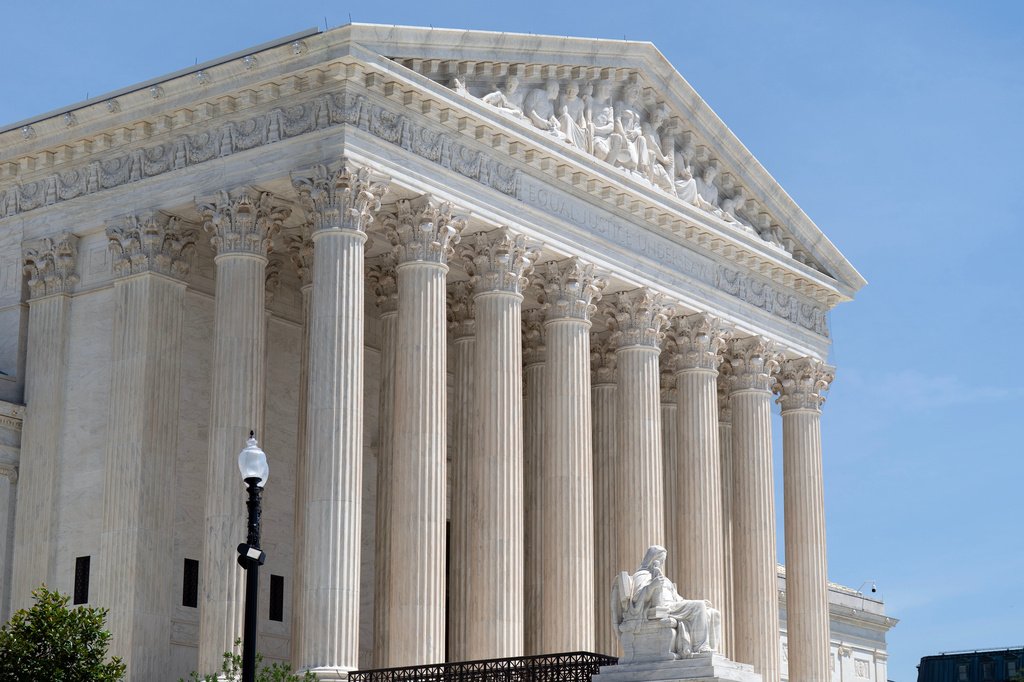
The Supreme Court's ruling in National Republican Senatorial Committee v. FEC this week has drawn the usual cries of alarm: another campaign finance guardrail gone, more money flooding elections, another step toward corruption. But that reaction misses the point. For the first time in two decades, the law moved to empower political parties rather than the outside groups that have eclipsed them. If you've spent those years worried about dark money and unaccountable mega-donors, this is the decision you should have been cheering for.
How Parties Got So Weak
The coordinated-spending caps the court struck down date to the post-Watergate reforms of 1974, limiting what a party committee could spend in direct coordination with its own nominee. The 2002 McCain-Feingold Act dealt a more devastating blow by banning soft money—the unlimited funds that had been parties' lifeblood. Then Citizens United and SpeechNow v. FEC birthed the super PAC, an entity that could raise and spend without limit as long as it stayed nominally independent of any candidate.
The Lopsided System
The result was a system where a billionaire's super PAC could drop $20 million into a Senate race, while a 501(c)(4) could spend millions more without disclosing a single donor. Meanwhile, the political party—the permanent, accountable, transparent institution that recruits the candidate, vets her, and answers to voters—was stuck with a coordinated-spending limit that looked like a rounding error. We built a system that systematically defunded accountable institutions and handed the advantage to those designed to avoid accountability.
What the Court Did
Writing for a 6-3 majority, Justice Brett Kavanaugh held that the coordinated-expenditure caps violate the First Amendment. The effect is simple: a national or state party committee may now spend without limit in direct coordination with its candidates. And here's the key difference from super PACs: coordination is exactly what a super PAC is forbidden to do. The party can now sit in the room with its nominee, plan ads, mail, field programs, and data operations—and pay for it. The super PAC has to guess from the outside. Overnight, the party holds a tool its better-funded rivals structurally lack.
A Network, Not a Single Actor
But the caps falling is only half the story. Federal law already allows party committees to transfer hard money among themselves without limit. Stack that on this ruling, and the party becomes a network. In a battleground Senate race, the national committee can raise money and move it to the state party in the seat that will decide control of the chamber. That state committee can then spend it in full, uncapped coordination with the nominee. The party is no longer a junior partner forced to watch while outside groups run the air war—it can be the air war.
This case arose from a real problem: JD Vance, then a first-time Senate candidate with thin fundraising, wanted to lean on his party's deeper pockets and found the law standing in the way. Parties exist to recruit and stand behind candidates who can't self-fund and haven't built a national donor list. For the first time in a generation, a party can put real, coordinated money behind its own recruiting judgment.
What Hasn't Changed
This is not the return of soft money. Every dollar a party spends in coordination must still be hard money—raised within federal contribution limits, from permissible donors, with no corporate or union treasury funds, no foreign money, and disclosed to the penny. Party money is the most traceable money in American politics. Strengthening parties relative to anonymous 501(c)(4) networks is, if you care about transparency, the pro-disclosure outcome. Reformers spent 20 years inadvertently driving money toward the darkest corners of the system; this decision pulls some of it back toward the light.
What Comes Next
Two dominoes remain. The first is limits on what donors may give to parties; if the court takes its own logic seriously, those caps are a natural target. The second is McCain-Feingold's soft money ban. Knock those down, and parties don't just recover—they return to the center of American politics, displacing the super PACs and dark-money groups that filled the vacuum the law created.
After a long, slow defunding of the American political party, the institutions built to be accountable to voters may finally be allowed to compete with those that answer to no one. That's not a step toward corruption. For anyone who still believes parties should matter, it's the parties' best day at the court in more than two decades.
James E. Tyrrell III is an attorney in the Political Law and Campaign Finance practice at Dickinson Wright PLLC in Washington.