President Donald Trump escalated his rhetoric against Tehran on Wednesday, threatening a fresh round of military strikes and warning that the U.S. Navy could reinstate its blockade in the Strait of Hormuz. The comments came less than a day after American forces launched a large-scale bombardment of Iranian positions in retaliation for attacks on commercial shipping.
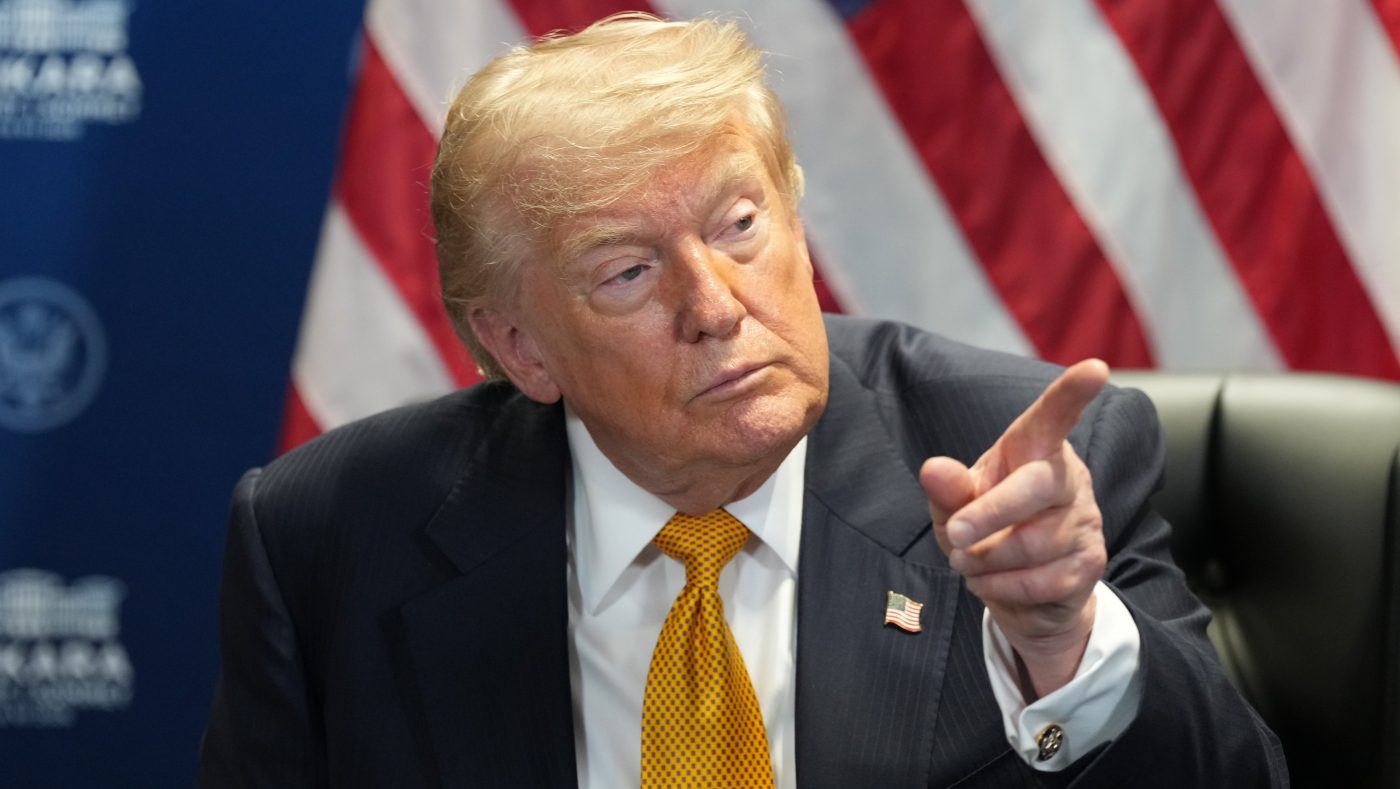
Speaking in Ankara, Turkey, Trump told reporters that another “big attack” was likely imminent. “You know, normally I wouldn’t tell you, but you know what, there’s not a thing they can do about it,” he said. “So, the answer is probably.” He added, “I’ll give them a little warning: we’re going to hit them hard tonight, but we’ll see how it all works out.”
The president made clear his displeasure with Iran’s leadership, stating he is not “happy” with the regime. He also floated the possibility of reimposing a naval blockade that was lifted last month after a memorandum of understanding ended the previous round of hostilities. Under that blockade, U.S. forces diverted 142 commercial vessels and disabled nine that ignored warnings.
“We may put down the blockade, we may put it back to blockade, and it’ll only be a blockade for Iran,” Trump said, signaling a potential return to the high-pressure tactic.
Defense Secretary Pete Hegseth backed the president’s threat, saying the Pentagon is prepared to strike Iran “even more and even deeper” if given the order. The comments follow Tuesday evening’s strikes, which the U.S. Central Command said hit over 80 targets with precision munitions, including air defense systems, command-and-control networks, coastal radar, anti-ship missile capabilities, and more than 60 Islamic Revolutionary Guard Corps small boats operating near the Strait of Hormuz.
The U.S. military action was a direct response to Iranian attacks on three commercial vessels transiting the vital waterway in recent days. The strait is a critical chokepoint for global oil shipments, and tensions there have rattled energy markets. Oil prices surged to $78 a barrel after Trump scrapped the ceasefire and denounced Tehran as “scum.”
Trump also raised the possibility of targeting Iran’s desalination plants but said he would “hate to do that.” He confirmed that U.S. forces struck Kharg Island, though they spared its oil infrastructure, which handles roughly 90 percent of Iran’s crude exports. The president mused about the U.S. potentially taking over the island, located in the Persian Gulf.
The latest escalation marks a sharp reversal from the interim deal that had briefly calmed the region. Trump declared that deal “dead” after the clashes, and the administration has signaled it will maintain military pressure. The confrontation comes as the president prepares to address NATO allies amid disputes over defense spending and the Turkey F-35 program.
Analysts warn that a renewed blockade and continued strikes could further destabilize the Middle East and disrupt global energy supplies. With no diplomatic off-ramp in sight, the region braces for what Trump has promised will be a sustained campaign against Iranian military capabilities.