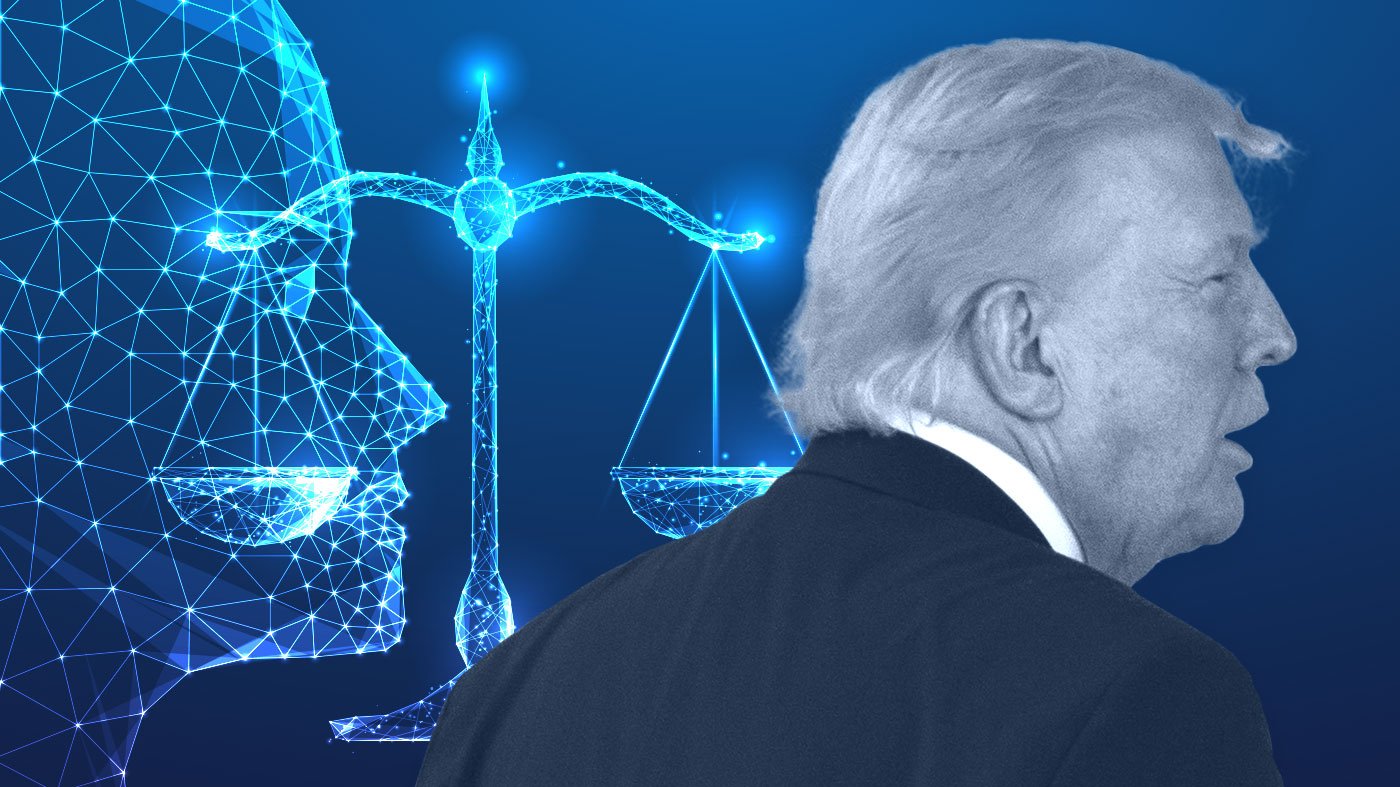
President Trump's sudden reversal on an executive order governing artificial intelligence testing has laid bare the internal conflict within his administration over how to regulate the technology without stalling its progress.
After inviting top tech executives to the White House for a signing ceremony on Thursday, Trump's eleventh-hour decision to withdraw the order highlighted the administration's difficulty in forging a unified AI policy, as Silicon Valley heavyweights maintain significant sway at the highest levels.
Trump told reporters that he “didn’t like certain aspects” of the directive, fearing it could hamper the United States in its competition with China to lead AI development. The president reversed course after discussions with industry figures, including former White House AI and cryptocurrency czar David Sacks, who advocates a hands-off approach. Elon Musk and Meta CEO Mark Zuckerberg also reportedly spoke with Trump on Thursday, though Musk and a Meta spokesperson later denied the calls occurred before the announcement.
“I think [the executive order] gets in the way of … we’re leading China, we’re leading everybody, and I don’t want to do anything that’s gonna get in the way of that lead,” Trump said. “I really thought it could’ve been a blocker.”
The draft order, obtained by The Hill, would have established a voluntary process for AI companies to submit their models for government testing for up to 90 days before public release. But the cancellation, just hours before the ceremony, caught invited firms off guard.
The White House has been sending mixed signals on AI for weeks, as advanced models like Anthropic’s Mythos raised safety concerns. National Economic Council Director Kevin Hassett floated the idea of an “FDA-like” review process, but chief of staff Susie Wiles quickly pushed back, stating the administration is “not in the business of picking winners and losers.”
The draft order explicitly stated it would not create a mandatory licensing or preclearance regime, but that failed to reassure skeptics. “Despite it being a ‘voluntary’ process, what is to say it stays that way?” a former Trump White House official told The Hill.
Tech policy analysts see the episode as evidence of Silicon Valley’s enduring influence. “This is a sign of the continuing influence of Silicon Valley with the Trump administration,” said Andrew Lokay of Beacon Policy Advisors, adding that Sacks “seems to have the ear of the president on this topic.”
The move also mirrors broader tensions between technology optimists and AI safety advocates. While some praised Trump for pulling the order, safety groups argued it was a win for Big Tech. As Dean Ball, a co-author of the White House AI Action Plan, wrote on X: “If you needed yet more evidence that the burden of frontier AI governance is going to rest principally on the private sector, you got it yesterday.”