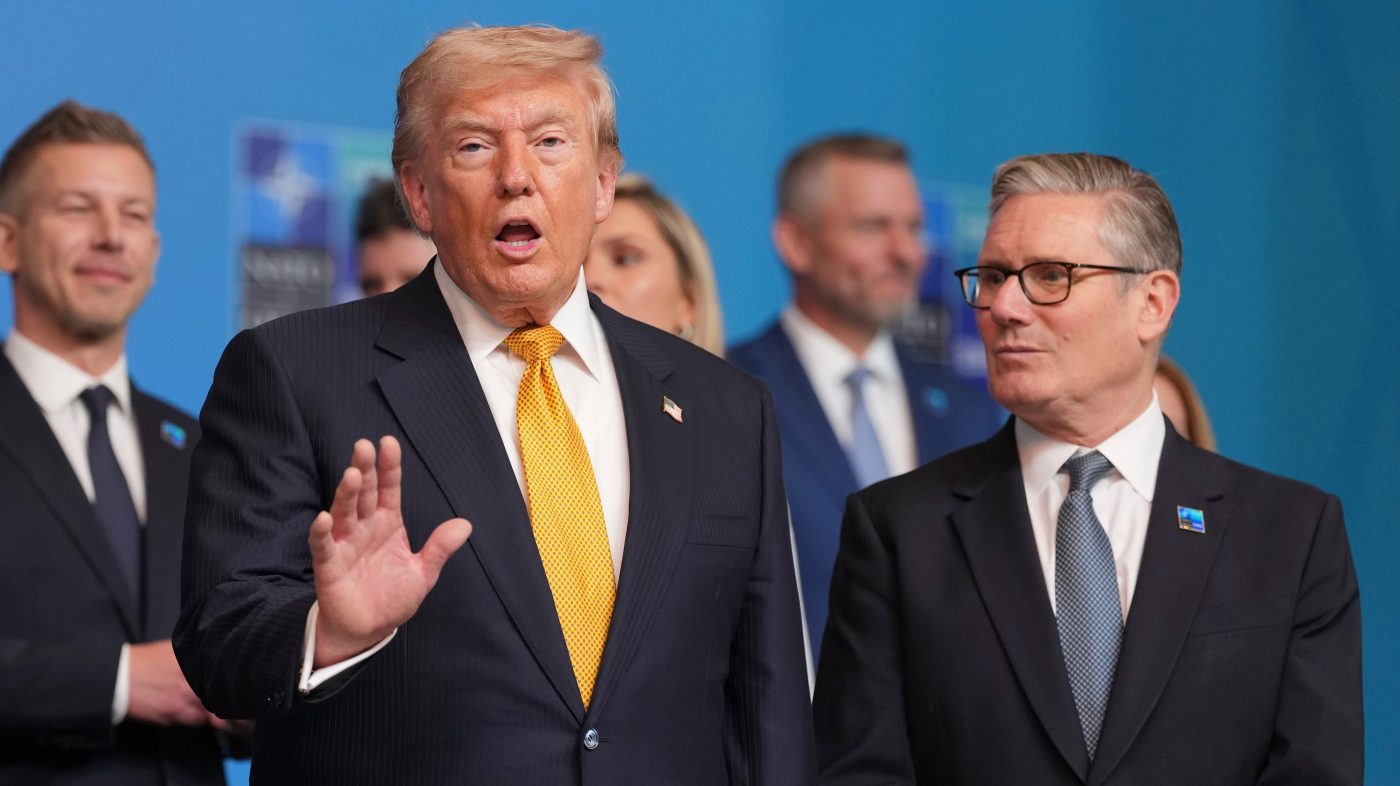
President Trump said early Wednesday that the ceasefire with Iran is effectively dead, telling reporters he doesn't 'want to deal with them anymore' after both sides launched strikes overnight. Speaking from the NATO summit in Ankara, Turkey, Trump also confirmed the United States has revoked a sanctions waiver that allowed Tehran to sell oil and petrochemicals—a move that further escalates tensions between the two countries.
The president's remarks come just hours after U.S. and Iranian forces exchanged fire, marking the most serious direct confrontation since the interim ceasefire was agreed upon earlier this year. Trump, who is scheduled to hold a press conference at 9:15 a.m. EDT after meetings with NATO Secretary General Mark Rutte, Ukrainian President Volodymyr Zelensky, and Syrian President Ahmed al-Sharaa, made clear that diplomatic channels with Tehran are now closed.
'The ceasefire is over,' Trump said. 'I don't want to deal with them anymore.' The declaration effectively buries hopes for a final nuclear deal, which had been expected to resume following the funeral of Iran's late supreme leader, Ayatollah Ali Khamenei, who was killed on February 28 in the opening moments of the war. Khamenei is set to be buried Thursday.
The NATO summit itself is fraught with flash points. Trump's confrontational posture toward allies—including his demand for a total trade cutoff with Spain—has put the alliance on edge. Five key flashpoints are driving tensions, from defense spending disputes to the administration's unilateral approach to Iran.
Back in Washington, the political landscape is shifting rapidly. All eyes are on Maine, where Democratic Senate nominee Graham Platner is under intense pressure to exit the race over a sexual assault allegation. Party leaders are scrambling to find a replacement candidate in what is considered a must-win seat if Democrats hope to flip the Senate this fall. The allegation has thrown the primary process into chaos, with operatives privately acknowledging that Platner's continued candidacy could jeopardize the party's chances in a closely divided state.
Meanwhile, Trump's decision to revoke the oil sanctions waiver is expected to send shockwaves through global energy markets. The waiver had allowed Iran to sell limited quantities of crude and petrochemical products, providing a lifeline to its struggling economy. Its removal is likely to tighten supply and push prices higher, a move that could have political repercussions for the president as he heads into the 2026 midterm elections.
In a related development, the administration has also moved to declare the interim Iran deal 'dead' following the clashes, signaling that no renewed negotiations are on the horizon. The decision aligns with the president's long-standing hostility toward the 2015 nuclear agreement, which he withdrew from in his first term.
As the day unfolds, reporters are bracing for a combative press conference from Trump, who is expected to field questions on Iran, the NATO alliance, and the unfolding scandal in Maine. The president's refusal to engage diplomatically with Tehran, combined with the domestic political turmoil, sets the stage for a volatile period ahead.