The FBI is moving beyond surveillance and into active case-building against covert networks funding mass protests, signaling a shift in how the government tackles the murky intersection of money, ideology, and public demonstrations. Chris Raia, the bureau's co-deputy director, told Fox News that the Joint Mission Center has identified subjects and traced funding from nefarious sources, though securing indictments remains a challenge. “We found funding from nefarious sources,” Raia said. “We have subjects identified.” But he added that proving the case in court is “a little bit different story right now.”
The difficulty, Raia explained, lies in the money's path: it “goes through some very legitimate hoops” and gets “commingled with very legitimate money.” Untangling that web takes time, a problem that a simple disclosure requirement could sidestep. The Joint Mission Center was established under National Security Presidential Memorandum 7, signed by former President Trump in September, which directed agencies to disrupt funding behind political violence. The Treasury and IRS were ordered to “follow the money,” but the process remains cumbersome.
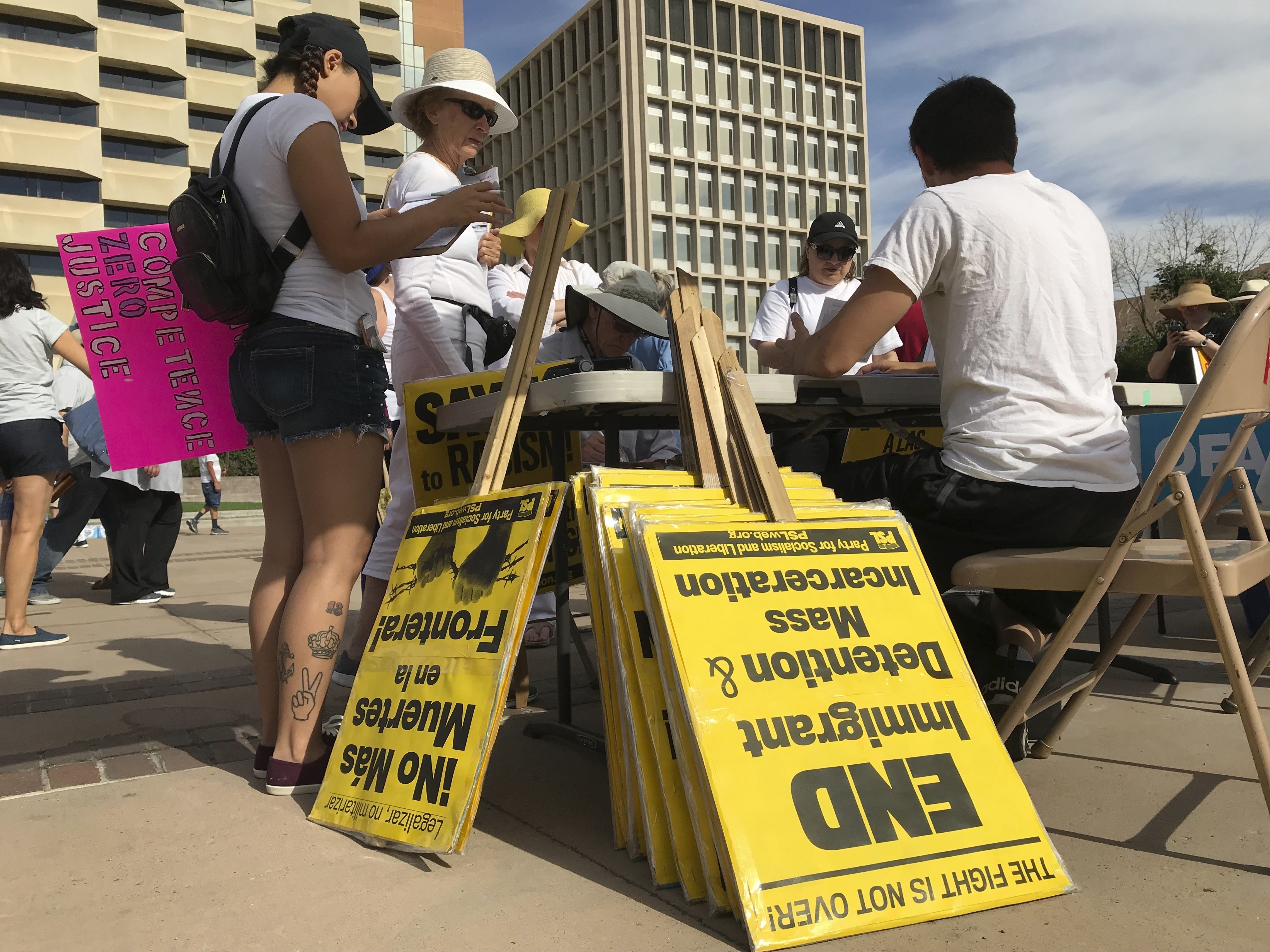
For years, advocates have pushed for a Protest Transparency Act modeled on the Lobbying Disclosure Act of 1995, which would require organizations paying more than $3,500 per quarter to coordinate demonstrations to register with the Justice Department. Congress has not acted, but the executive branch is forging ahead. Raia described the problem as a “hybrid threat,” blending ideology, logistics, and money in ways that defy traditional counterterrorism structures. “The violent protester that shows up in Portland will be a violent protester that shows up at Delaney Hall (in Newark) and vice versa,” he said, noting that agitators “invade and infiltrate” citizens legitimately exercising their right to assembly.
The case drawing the most scrutiny involves Neville Roy Singham, a U.S. citizen based in China who has allegedly moved “hundreds of millions of dollars” since 2017 through a nonprofit network to far-left groups. Republican members of the House Oversight Committee wrote to Singham in June, expressing concern that he may be acting on behalf of the Chinese Communist Party. The Washington Times has reported that a federal grand jury in Manhattan is investigating. Separately, federal prosecutors in Alabama are pursuing the Southern Poverty Law Center on charges of bank fraud, wire fraud, and money laundering, alleging that executives paid an informant who helped coordinate logistics for the 2017 “Unite the Right” rally in Charlottesville—a white supremacist event that led to the death of Heather Heyer.
The government's focus on these cases validates that the disclosure gap between registered lobbyists and paid protest organizers was never about principle. It was a matter of oversight—and a convenient one for those exploiting it. As the GOP’s Planned Parenthood defunding expires, igniting fury among anti-abortion activists, the need for transparency across all funding sources becomes more urgent. A disclosure statute would cost no more than a filing clerk's salary, while the Joint Mission Center pulls agents from four divisions plus Treasury and IRS specialists, chasing what a registration form could have disclosed for free.
Raia acknowledged that indictments are not guaranteed and timelines remain fluid. “Better to get it right than to be fast,” he said. But the current approach is inefficient. When investigators need a presidential memorandum and a multi-agency task force to do what a statute could accomplish with a simple filing requirement, it's time for Congress to act. Apply a disclosure requirement to every funding source, regardless of ideology, and let the next presidential memorandum go unwritten. The law should not target peaceful protest but the paid infrastructure that bad actors use to hijack it.