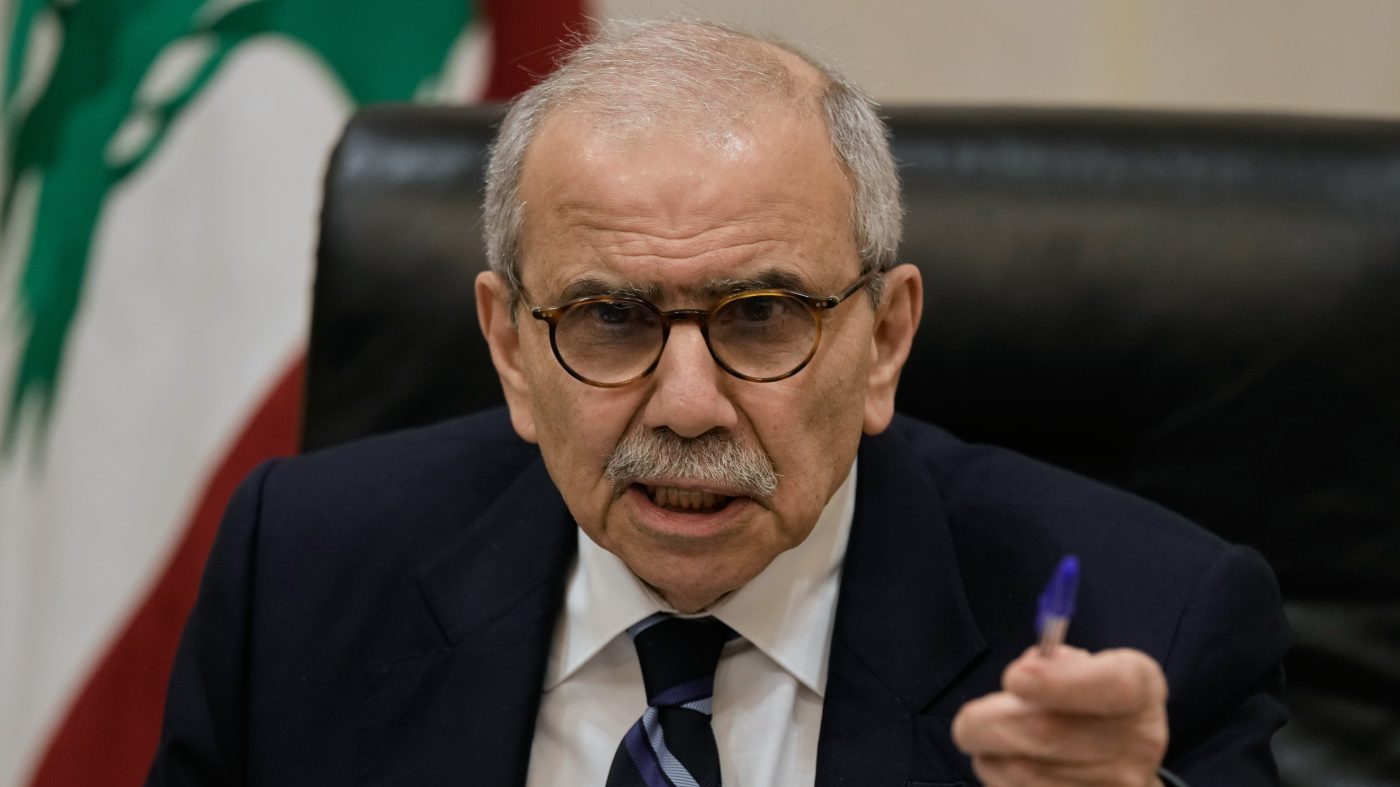
Lebanon will formally petition the United Nations Security Council to condemn Israel's latest military campaign, Prime Minister Nawaf Salam announced Thursday, following a series of devastating airstrikes that have killed hundreds of civilians and brought the country's fragile stability to a breaking point.
The cabinet voted to submit the complaint after Israeli Defense Forces (IDF) strikes on Wednesday resulted in what the Lebanese civil defense described as at least 254 fatalities and over 1,165 injuries. Salam also directed the Lebanese military and security services to bolster defensive measures around the capital, Beirut, signaling heightened alert.
Ceasefire Ambiguity Fuels Regional Crisis
The Israeli offensive, which targeted approximately 100 Hezbollah positions across Lebanon according to IDF spokesperson Lt. Col. Nadav Shoshani, directly challenges the two-week ceasefire between the United States and Iran announced just days prior. The strikes have exposed a critical fault line in the agreement: whether it encompasses the long-running conflict between Israel and the Iran-backed Hezbollah in Lebanon.
Israeli Prime Minister Benjamin Netanyahu explicitly stated the truce "does not include Lebanon," a position echoed by U.S. Vice President JD Vance. Vance, speaking from Hungary, attributed the escalating violence to a "legitimate misunderstanding," claiming the U.S. "never indicated" the ceasefire applied to Israeli operations against Hezbollah. This interpretation is vehemently rejected by Tehran.
Iranian President Masoud Pezeshkian condemned Israel's "repeated aggression" as a "flagrant violation of the initial ceasefire agreement," warning that continued strikes "will render negotiations meaningless." He pledged that Iran "will never abandon its Lebanese brothers and sisters," a clear threat that the wider U.S.-Iran ceasefire is rapidly unraveling. In a tangible retaliation, Iran has maintained restrictions on commercial shipping through the critical Strait of Hormuz.
Humanitarian Catastrophe and Diplomatic Manuevers
Wednesday's bombardment marked the deadliest single day in Lebanon since Israel resumed strikes last month. Heba Morayef of Amnesty International noted that even prior to this latest operation—which the IDF dubbed 'Eternal Darkness'—the conflict had already claimed more than 1,500 lives and displaced over a million people.
The diplomatic fallout is intensifying. Pakistani Prime Minister Shehbaz Sharif, who mediated the U.S.-Iran talks, asserted that "allies" of both nations had agreed to the ceasefire with respect to Lebanon, contradicting the U.S. and Israeli stance. In an attempt to salvage the situation, Vice President Vance, U.S. envoy Steve Witkoff, and Jared Kushner are scheduled to travel to Islamabad this weekend for direct talks with Iranian officials.
Despite the military escalation, Netanyahu's office indicated on Thursday a willingness to open negotiations with the Lebanese government, a potential off-ramp that remains clouded by the ongoing violence and the fundamental dispute over Hezbollah's role. The situation leaves the region in a precarious state, where a broader ceasefire designed to de-escalate tensions is instead becoming a new flashpoint, with Lebanon's civilian population bearing the brunt of the conflict.