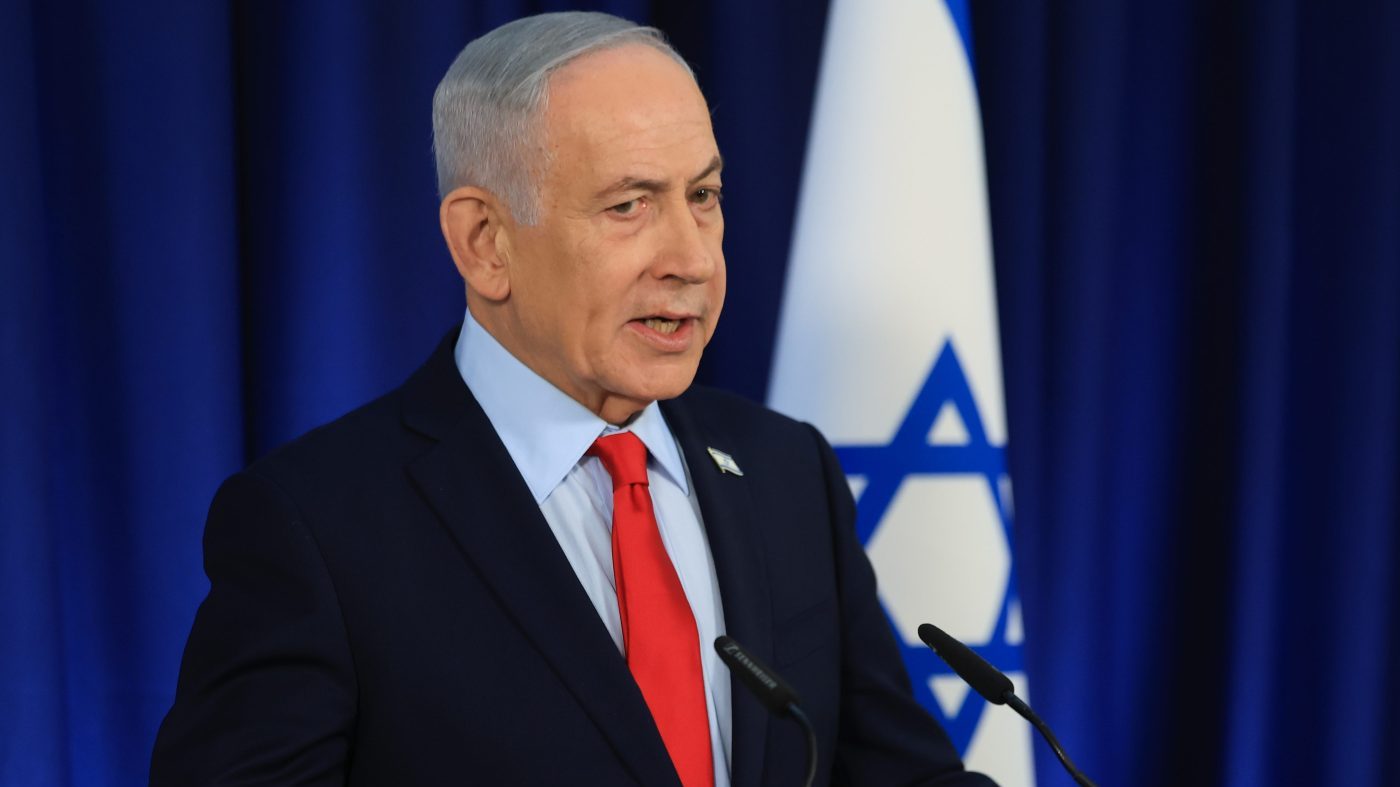
Israeli Prime Minister Benjamin Netanyahu on Sunday threw his support behind President Trump’s proposed memorandum of understanding with Iran, but made clear that the final agreement must address the core issue of Tehran’s nuclear ambitions.
Netanyahu revealed he spoke with Trump on Saturday about the tentative deal, which would extend the current ceasefire for 60 days and reopen the strategic Strait of Hormuz. However, the proposal as outlined does not address the fate of Iran’s nuclear program or its stockpile of highly enriched uranium.
“President Trump and I agreed that any final agreement with Iran must eliminate the nuclear danger,” Netanyahu wrote on X. “That means dismantling Iran’s nuclear enrichment sites and removing its enriched nuclear material from its territory. President Trump also reaffirmed Israel’s right to defend itself against threats on every front, including Lebanon.”
The Israeli leader added that the U.S.-Israeli position “remains unchanged: Iran will not have nuclear weapons.”
Trump characterized his conversation with Netanyahu as productive, posting on Truth Social that “final aspects of the deal are currently being discussed, and will be announced shortly.” The president also said he spoke with leaders from Saudi Arabia, the United Arab Emirates, Qatar, Egypt, Jordan, Bahrain, Pakistan, and Türkiye regarding the Iran understanding.
The emerging deal has already sparked pushback from Republican hawks on Capitol Hill. Senator Lindsey Graham (R-S.C.) expressed skepticism that Iran could be prevented from again threatening global oil supply by blocking the Strait of Hormuz. The White House has faced growing GOP backlash, with some lawmakers urging Trump to scrap the deal altogether—a dynamic that mirrors earlier fissures over the administration’s approach to Tehran. Senator Rand Paul has defended the deal, arguing that diplomacy remains the best path forward, even as other conservatives warn the framework is too weak.
Iran’s state-run Fars news agency on Sunday described the agreement as allowing Tehran to manage the Strait of Hormuz, through which roughly 20 percent of the world’s oil passes. But Fars dismissed Trump’s claim that the deal would guarantee free passage for cargo vessels, calling it “inconsistent with reality.” The agency also noted the deal makes no commitments regarding Iran’s nuclear file.
Trump has urged U.S. officials to “not rush the deal,” though it remains unclear whether this was a response to the growing criticism. He insisted the arrangement would not resemble the Obama-era nuclear agreement, which he condemned as “one of the worst deals ever made by our Country.”
“Both sides must take their time and get it right,” Trump wrote. “There can be no mistakes! Our relationship with Iran is becoming a much more professional and productive one. They must understand, however, that they cannot develop or procure a Nuclear Weapon or Bomb.”
The administration’s push for a deal comes amid broader security concerns, including a recent White House shooting that reignited fears about security vulnerabilities. Meanwhile, the president’s team continues to weigh military options against diplomatic engagement as the crisis over the Strait of Hormuz deepens.
For now, the framework remains a work in progress, with both U.S. and Israeli leaders signaling that the nuclear question cannot be left unanswered. Whether the final text will satisfy Netanyahu’s demands—and quiet GOP critics—remains an open question as negotiations enter their final stretch.