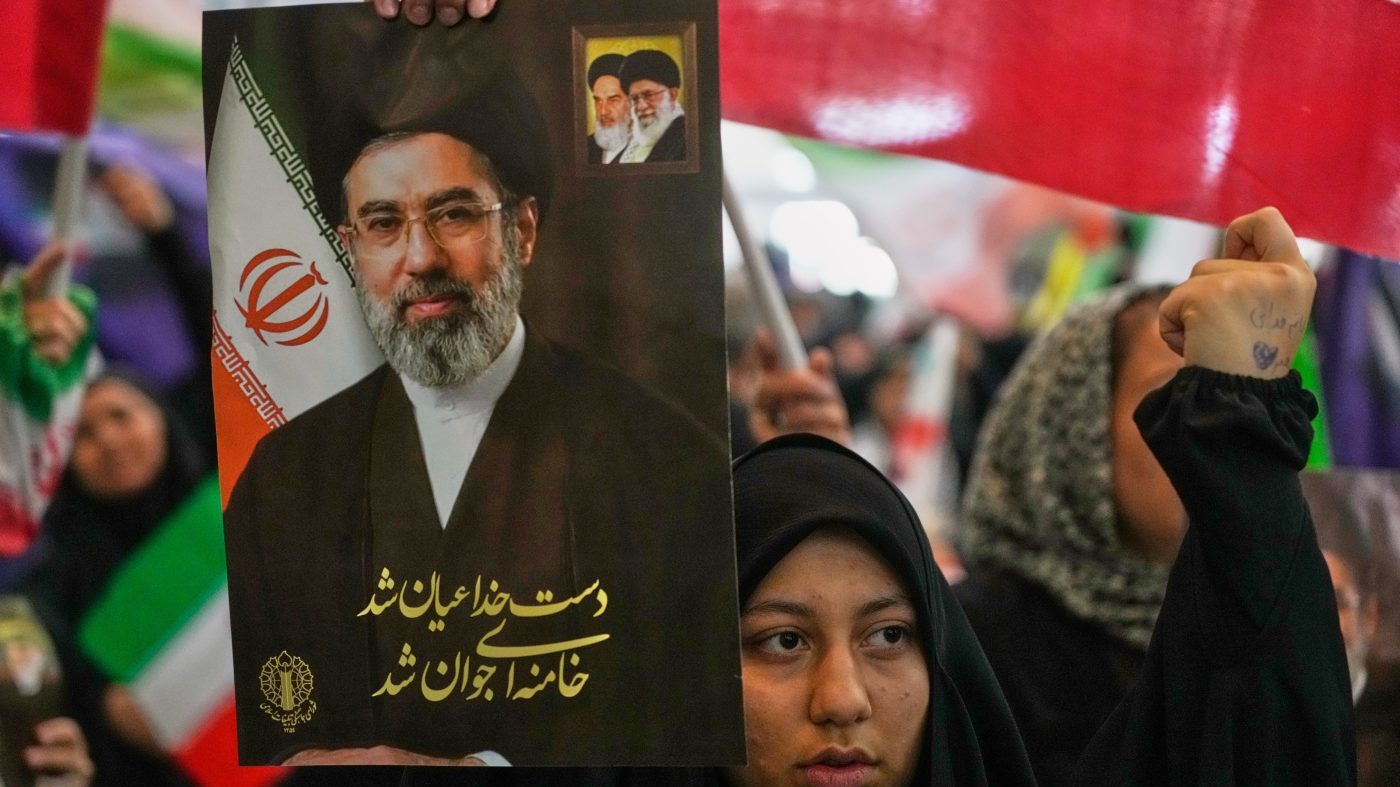
Peace negotiations between the Trump administration and Iran hit a rough patch Tuesday after the Islamic Republic's supreme leader declared that U.S. military bases in the Middle East are no longer safe. Ayatollah Mojtaba Khamenei issued the warning in a statement marking the start of Hajj, the annual Muslim pilgrimage to Mecca, a day after U.S. forces conducted what they called “defensive strikes” in southern Iran.
“The hands of time do not turn backward, and the nations and lands of the region will no longer serve as shields for American bases,” Khamenei said. The remarks come amid heightened tensions following the U.S. strikes, which targeted missile launch sites and Iranian boats attempting to place mines, according to U.S. Central Command spokesperson Capt. Tim Hawkins.
Iran has repeatedly targeted American bases and energy infrastructure in the region since the strikes began in late February. In March, a drone strike on a makeshift office space in Kuwait killed six U.S. service members. Khamenei added, “America, in addition to no longer having a safe place for aggression and military bases in the region, is moving further away from its former status day by day.”
The U.S. strikes were confirmed by Hawkins in a statement to NewsNation, The Hill's broadcast partner. “U.S. forces conducted self-defense strikes in southern Iran today to protect our troops from threats posed by Iranian forces,” he said. “U.S. Central Command continues to defend our forces while using restraint during the ongoing ceasefire.”
Iran's Foreign Ministry responded Tuesday, calling the strikes “a gross violation” of the temporary truce between the two nations. “Iran holds the U.S. regime responsible for all the consequences resulting from these aggressive and unjustified actions,” the ministry said in a statement.
President Trump said Saturday that a deal with Iran was “largely negotiated,” including reopening the Strait of Hormuz, a major oil trading corridor, and ending hostilities. He has faced pressure to reopen the waterway amid high energy and gas prices, with the average price of regular gas in the U.S. reaching about $4.5 a gallon on Tuesday, according to AAA. For more on the stakes, see how state and local leaders can shield Americans from Iran war energy price spikes.
Secretary of State Marco Rubio said Tuesday that negotiations are continuing with Qatar as mediator. “I think there's strong alignment and agreement on what a preliminary draft should look like,” Rubio told reporters in Jaipur, India. “It's going to take a couple days to settle on even down to the disagreements over a word, a sentence. It's either going to be a good deal or there isn't going to be one.” For context on the broader diplomatic landscape, see how Trump weighs military action vs. diplomacy as the Hormuz crisis deepens.
The Trump administration has defended the proposed deal against criticism, with both Trump and Rubio pushing back on skeptics. The latest strikes have further complicated the path to an agreement, as Iran's supreme leader signals that U.S. bases in the region will no longer be tolerated. For more on the criticism, see Bolton's condemnation of the talks as a strategic error.