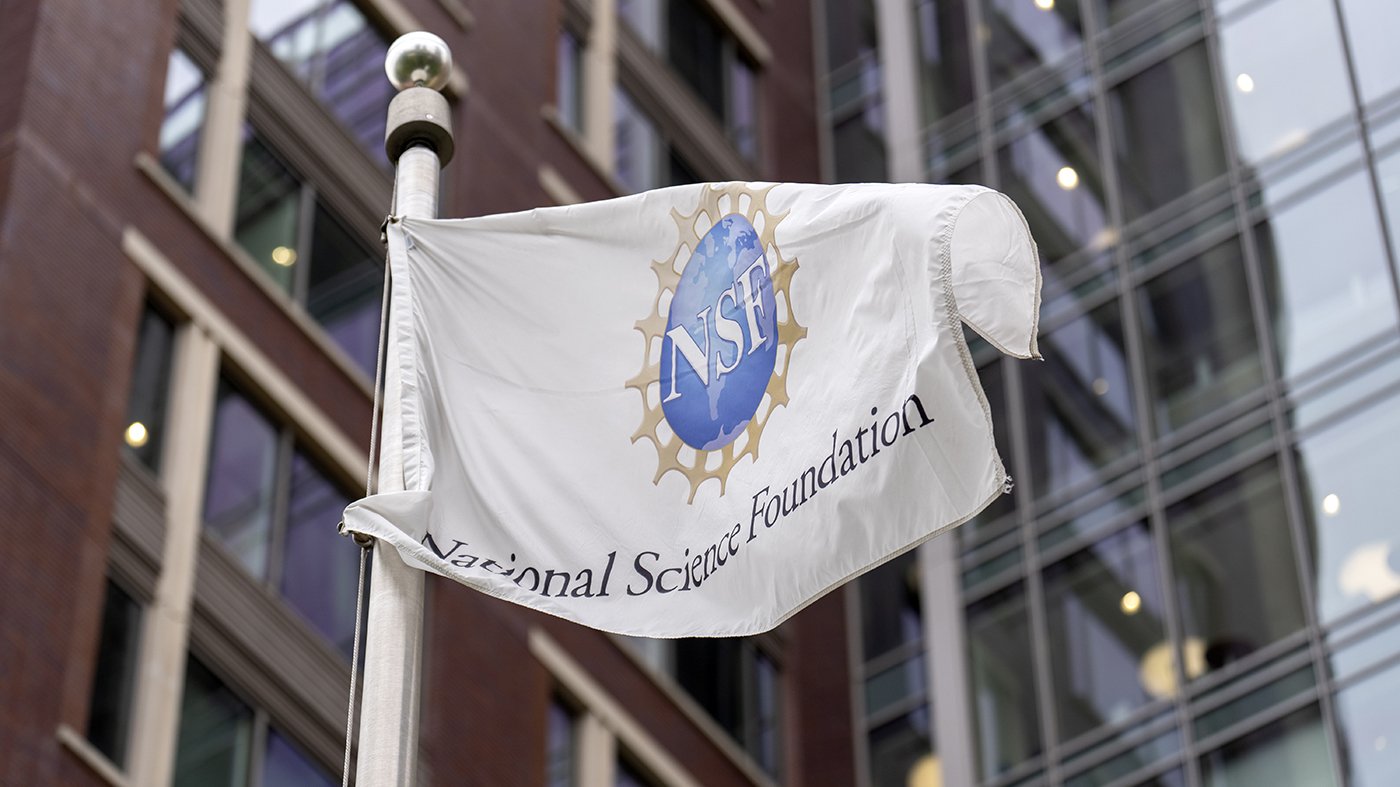
Agency in Crisis
The National Science Foundation, a primary engine for fundamental scientific research in the United States, is confronting an existential threat. The Trump administration's latest budget proposal seeks to slash the agency's funding by more than half, compounding a series of internal disruptions that have left it without a permanent director for nearly a year and with a drastically reduced workforce.
Budget Axe and Frozen Grants
President Trump's fiscal 2027 budget request aims to cut NSF funding by over 50%, following a pattern of aggressive reductions. Since the administration's return to power, it has canceled or suspended approximately 1,400 agency grants, redirecting funds in line with new policy directives. An NSF spokesperson characterized the cuts as a "strategic alignment of resources in a constrained fiscal environment." However, this retrenchment has created a massive bottleneck. Despite Congress appropriating nearly $8 billion for the current fiscal year, the NSF has committed only about $500 million, leaving billions in research capital stranded.

The administration's broader fiscal strategy, detailed in Trump's 2027 budget plan, emphasizes deficit reduction, often at the expense of established institutions. Previous grant cancellations have frequently targeted programs related to diversity, equity, and inclusion, as well as research on misinformation, which officials stated did not align with agency priorities.
Staffing Collapse and Operational Paralysis
Parallel to the financial constriction is a human capital crisis. Staffing levels have plummeted by 35% in the past year, leaving roughly 1,300 employees—a figure the agency's own chief management officer has labeled "too low." This exodus, initiated by last year's 10% cut from the now-disbanded Department of Government Efficiency, has crippled core functions. "There is theoretically funding in law for a lot of these programs, but getting that funding actually out the door is currently being bottlenecked because of the fact that these agencies are so down on personnel," said Peter Harsha of the Computing Research Association.
The erosion has transformed the agency's culture. "We're constantly hearing about how burnt out these people are, how frustrated they are," said Colette Delawalla of Stand Up for Science. "Folks are just trying to stay in their positions so that the agency doesn't go underwater." The physical institution is also in flux, having vacated its longtime Virginia headquarters earlier this year with most staff working remotely indefinitely.
Leadership Void and a Diminished Mission
The NSF has been without a Senate-confirmed director since Sethuraman Panchanathan resigned in April 2025 amid the administration's cuts. Trump's nominee, former HHS Deputy Secretary Jim O'Neill, awaits confirmation in a Senate committee, leaving the agency adrift. "There's no one to call," one observer noted, highlighting the operational paralysis.
This leadership vacuum exacerbates what former directors call a fundamental dismantling. "The Trump administration, as far as I'm concerned, destroyed the old NSF and tried to create a new organization," said Neal Lane, who led the agency in the 1990s. "It's unrecognizable." The NSF's historic role in funding high-risk, basic science—which yielded breakthroughs like the internet, GPS, and mRNA vaccines—is now in jeopardy. "One never knows if an investment today whose outcome is unknown will lead to a tool everyone can benefit from... or an industry of the future," said former Director France Córdova. "That's why it is so important to invest in basic research."
Broader Political Context and Warnings
The assault on the NSF occurs within a wider pattern of the administration reshaping federal institutions and priorities, a approach that has drawn sharp criticism from political opponents. Minnesota Governor Tim Walz has accused Trump of 'fascist-curious' actions that threaten democratic norms. Meanwhile, the administration remains focused on other fronts, including renewed tensions with Iran over the Strait of Hormuz.
Science advocates warn that the cumulative damage will cede American innovation to global competitors. "I worry about losing that next generation of researchers just because everything's so uncertain," said Sarah Spreitzer of the American Council on Education. With grant reviews stalled, personnel depleted, and its future mission unclear, the agency once hailed as the "crown jewel" of U.S. science faces a profound identity crisis with long-term consequences for the nation's technological and economic leadership.