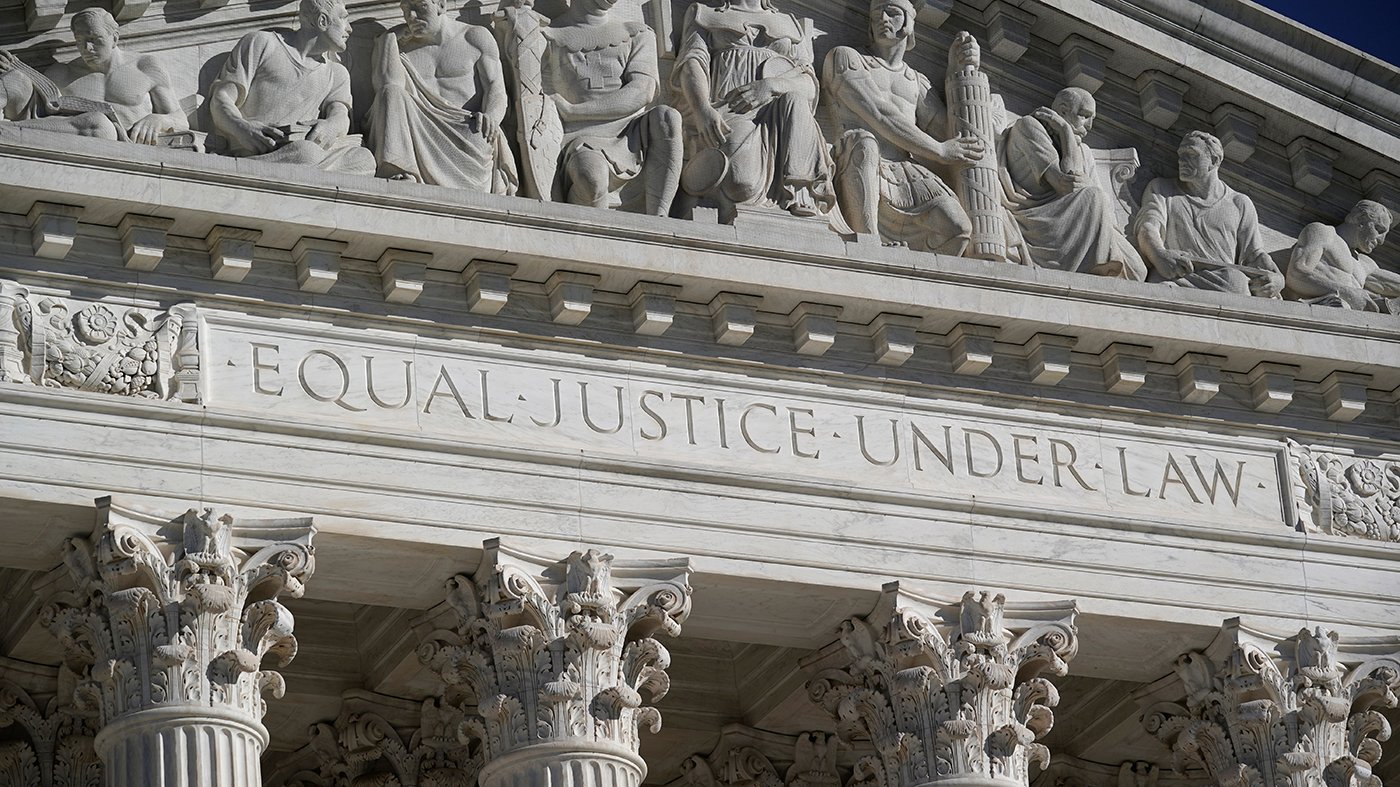
The Supreme Court on Tuesday issued an emergency order that lets Alabama Republicans move forward with a congressional map that eliminates the state's second majority-Black district, handing the GOP a potential pickup opportunity in the midterms. The unsigned ruling, which split 6-3 along ideological lines, effectively blocks a lower court's decision that had halted the map on grounds of intentional racial discrimination.
Alabama officials had urged the justices to intervene, arguing that the lower court overstepped by keeping their map blocked after the Supreme Court narrowed the Voting Rights Act earlier this year. That spring ruling, in a case involving Louisiana, limited how race can be considered in redistricting—a shift the state says justifies its new design.
The order allows the Republican-drawn map to take effect despite objections from Black voters and civil rights groups, who contend it dilutes their political power. The challengers argued that the Supreme Court should not step in, noting that Alabama itself had admitted the timeline for switching maps was too tight. “Because even Hercules himself could not complete the requisite task in that time, it is simply too late for Alabama to switch congressional map,” one group of plaintiffs wrote.
The Court's three liberal justices dissented publicly. Justice Sonia Sotomayor, joined by Justices Elena Kagan and Ketanji Brown Jackson, wrote: “Now the Court is squarely faced with a record of the turmoil it has caused and the harm it has wrought. Yet just as Alabama doubled down on racial discrimination, the Court today doubles down on chaos. Because I choose to defend the rule of law and the right of all Alabamians to participate equally in democracy, I respectfully dissent.”
The ruling has immediate consequences for control of the House, where both parties are fiercely contesting every seat ahead of a midterm cycle that analysts compare to the anti-Trump wave of 2018. The district at stake is currently held by Rep. Shomari Figures (D-Ala.), who represents a southern swath of the state stretching from east to west, including Montgomery. Under the GOP map, Figures’s seat would be redrawn to reduce Black voting strength, giving Republicans a clear path to flip it.
Alabama has been at the center of Voting Rights Act litigation since 2023, when the Supreme Court struck down an earlier map that contained only one majority-Black district. That ruling forced a court-supervised process that ultimately created the second Black-majority seat Figures now holds. Republicans have since sought to return to a map they proposed after the 2023 decision—one that does not create a second such district—arguing that the high court's recent Louisiana ruling gives them cover.
Lower courts, however, found that the new GOP map still intentionally discriminated against Black voters, in violation of the Constitution, and that the Supreme Court's Louisiana decision did not change that analysis. Alabama countered in its emergency appeal: “Alabama, no different than Louisiana, may stick to its neutral political and policy goals. That’s not intentional racial discrimination.”
The broader implications extend beyond Alabama. The decision signals that other southern states may feel emboldened to draw maps that reduce minority-majority districts, following the Supreme Court's narrowing of the Voting Rights Act. A similar fight is playing out in Louisiana, where Republicans have already redrawn the state's House map to eliminate a Black-majority district after the high court's ruling. That development, covered by The World Signal, underscores the growing legal and political chaos around redistricting ahead of the midterms.
For now, Alabama Republicans have secured a tactical victory, but the legal battle is far from over. The challengers may pursue further litigation, and the Supreme Court's order does not address the merits of the intentional discrimination claim. As the midterms approach, the fight over Figures's district remains a stark example of how redistricting and the Voting Rights Act continue to shape the battle for the House majority.