House Republican leaders are pushing a $95 billion budget reconciliation package that includes $73 billion to fund escalating military operations against Iran and $10 billion for election reforms—but the plan is running into a wall of opposition from Senate Republicans, who see little chance of it passing their chamber.
The proposal, crafted by House GOP leadership with input from White House staff during a weekend retreat at Camp David, has drawn fire from multiple factions within the Senate Republican conference. Fiscal conservatives demand spending offsets to avoid adding to the deficit, appropriators resent being bypassed, and at least one senator threatens to use procedural tactics to block any bill that would force states to overhaul voting rules just months before the midterm election.
Sen. John Cornyn (R-Texas), an adviser to Senate GOP leadership, dismissed the House blueprint as wishful thinking. “I’m dubious about any reconciliation. I think the House is wishful thinking. Just talk to the appropriators over here. They don’t like reconciliation because it bypasses appropriations. I’d be shocked if it’s possible,” Cornyn said.
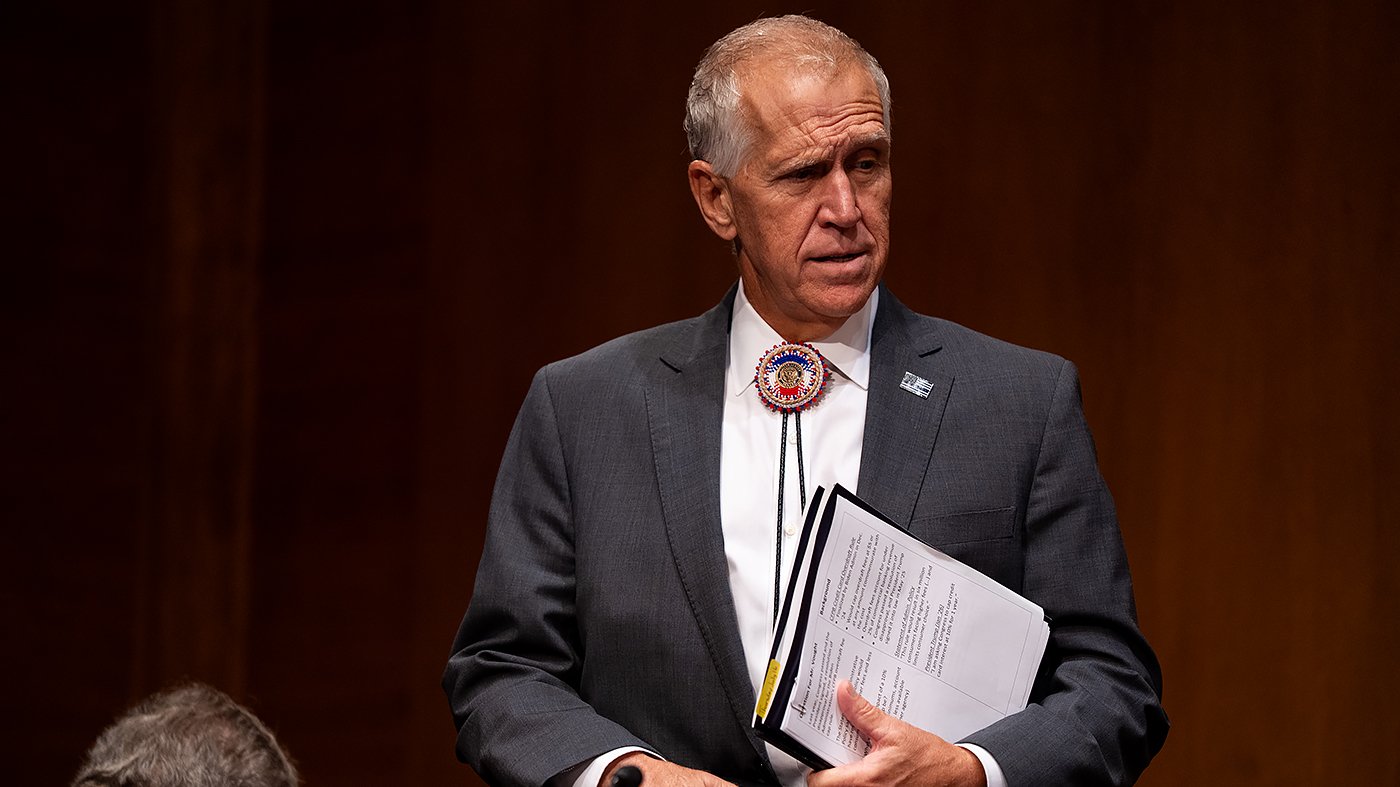
Sen. Thom Tillis (R-N.C.) went further, vowing on the Senate floor to deploy every procedural tool at his disposal to stall any reconciliation bill that attempts to change voter registration, photo ID, or mail-in ballot requirements. “If I see a reconciliation bill come from the House with another failed attempt to confuse this election, I will use every device I have available to slow down the wheels of government until people cop a clue and do the math,” Tillis declared. He called the inclusion of elements from the Safeguard American Voter Eligibility (SAVE America) Act—President Trump’s top legislative priority—a “charade” and a “distraction,” arguing that federal agencies would have less than four months to implement new rules before the Nov. 3 general election.
Senate Majority Leader John Thune (R-S.D.) expressed deep skepticism about moving such a package so close to Election Day, warning that it would force GOP senators into a series of tough votes and open the door to Democratic poison pill amendments. “It’s a risky proposition,” Thune told reporters. “Is the juice worth the squeeze?” He noted that defense hawks want substantially more than the $60 billion allocated for the Pentagon in the House framework, while fiscal hawks insist the package be fully paid for. Thune also highlighted the threat of Democratic amendments aimed at restoring cuts to the Supplemental Nutrition Assistance Program (SNAP) made by last year’s One Big Beautiful Bill Act. “Even if we get 50 to pass it, can we defeat all the poison pill amendments?” he asked.
Fiscal Hawks Demand Offsets
Fiscal conservatives in the Senate—including incoming Senate Budget Committee Chair Ron Johnson (R-Wis.) and Sens. Bill Cassidy (R-La.), Rick Scott (R-Fla.), and Rand Paul (R-Ky.)—are demanding that the cost of the reconciliation package be fully offset with spending cuts. The House framework does not include instructions to committees to find such savings. “Our national debt is a runaway train. The next reconciliation bill should be fully paid for,” Cassidy wrote on social media. Paul voted against Trump’s first reconciliation package a year ago, projecting it would add $500 billion to the debt over five years. Johnson, a vocal critic of rising federal spending, could use his new role as Budget Committee chair to insist on substantial offsets, though finding 51 Republican votes for any cuts this close to the election would be an enormous challenge.
Leadership Coordination Gaps
The path forward was further complicated by the sudden death of Senate Budget Committee Chair Lindsey Graham (R-S.C.) last Saturday night. House Budget Committee Chair Jodey Arrington (R-Texas) said he had been consulting closely with Graham on the “bigger vision” for a reconciliation package, and that they were in full agreement. But Arrington acknowledged he has not yet coordinated with Senate Republican leaders. “I haven’t had any conversations with the leadership of the Senate,” he said. The lack of coordination underscores the deep divisions within the GOP as the party races to finalize its third reconciliation bill amid internal fissures.
Thune summed up the dilemma: “You’re going to have … defense guys who want more, fiscal hawks who want it paid for and then the question on the floor: ‘Can we get 50 [votes] on anything?’” He questioned whether $60 billion in new defense money is worth the political risk of bringing a divisive package to the floor. “Is $60 billion worth the risk of putting something like that on the floor and all the other harm that potentially come from that?” he warned.