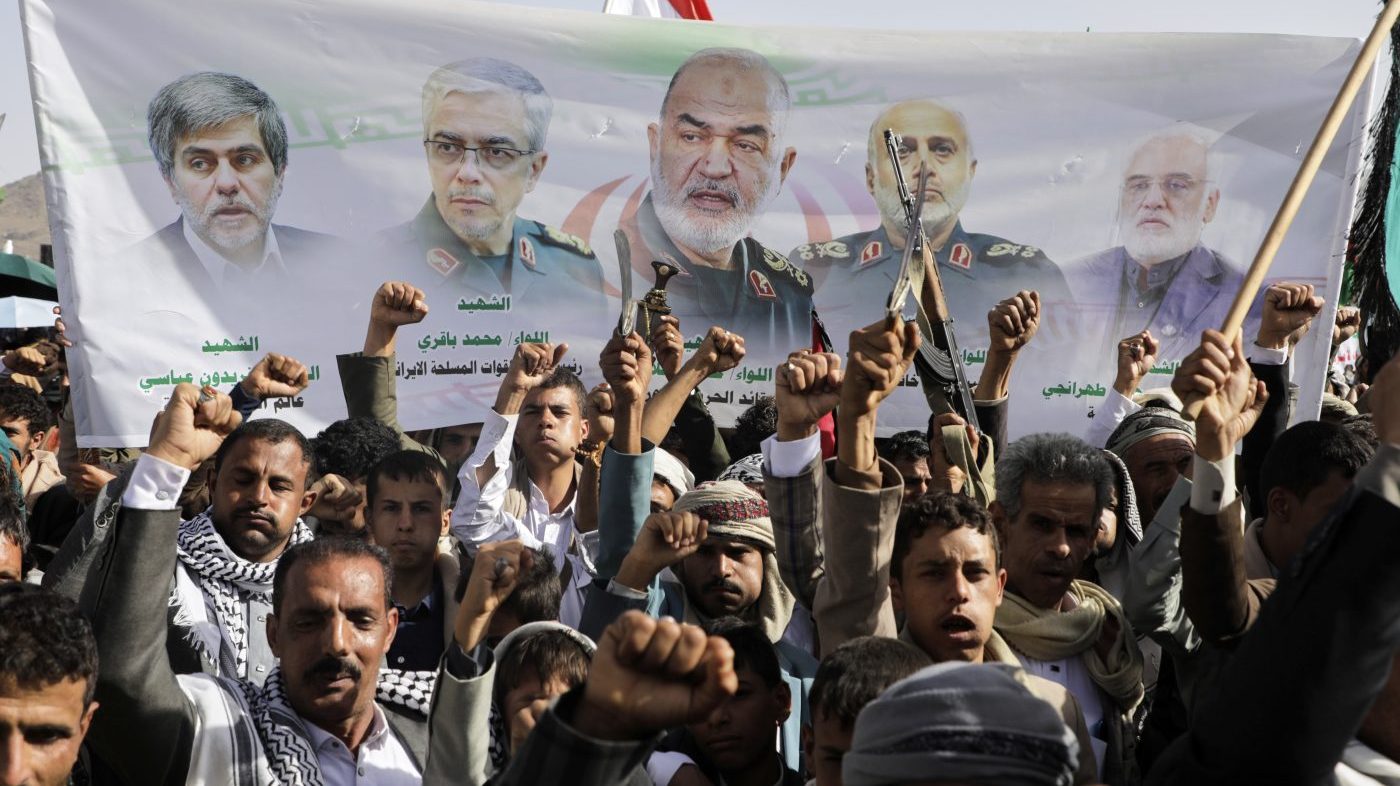
Iranian officials have directed Yemen's Houthi rebels to blockade the Red Sea in the event of US strikes on Iranian energy facilities, according to sources familiar with the matter. The request, relayed through senior Iranian and regional intermediaries, was discussed within Tehran's leadership and communicated to the Houthis, who are now poised to attack shipping near the Bab el-Mandeb Strait.
The Houthis, backed by Iran, are preparing missile and drone strikes on vessels in the strategic waterway, awaiting orders from the Islamic Revolutionary Guard Corps (IRGC) representatives in Yemen, per Reuters. This escalation threatens to choke off two of the Middle East's primary oil export routes, compounding disruptions already caused by the ongoing US-Iran confrontation that has effectively closed the Strait of Hormuz.

Global Energy Routes at Risk
The Red Sea carries approximately 7% of the world's energy supply, but much of the Gulf's oil has been rerouted through Saudi Arabia's pipelines to avoid the Strait of Hormuz. Saudi Arabia now diverts 70% of its energy exports through the Red Sea, making any disruption there a critical blow to global energy markets. Regional sources close to Riyadh told Reuters that Saudi officials are taking the threats from Iran and the Houthis seriously, noting that Tehran's clerics aim to pressure Washington by raising the economic stakes of the conflict.
The potential blockade comes amid renewed US airstrikes on Iranian military targets after a fragile ceasefire collapsed earlier this week. US Central Command reported hitting command centers, air defense sites, missile and drone capabilities, and coastal surveillance facilities to "further degrade Iran's ability to threaten innocent mariners crewing commercial vessels transiting the Strait of Hormuz."
Houthi Threats and Past Attacks
The Houthis have not yet formally entered the US-Iran conflict, but they warned in March that they would intervene if three red lines were crossed: Arab countries aligning with the US and Israel, the Red Sea being used for attacks against Iran, or continued escalation against the Islamic Republic and its allied resistance axis. The group stated, "We affirm that our military operations only target the Israeli and American enemy to thwart the Zionist scheme and do not target any Muslim people."
This is not the first time the Houthis have targeted Red Sea shipping. Last July, their attacks on civilian cargo vessels—the MV Eternity C and MV Magic Seas—resulted in three deaths and multiple injuries, with the latter ship lost to damage. The group's capabilities have since expanded, with Iranian-supplied drones and missiles enabling more sophisticated strikes.
The US and Iran have resumed tit-for-tat strikes after a brief lull for negotiations. The fourth wave of US strikes near the Strait of Hormuz underscores Washington's determination to protect maritime traffic, while Iran's gambit with the Houthis aims to widen the conflict's economic impact. The Pentagon has also blocked a GAO report on the F-35 program amid readiness concerns, though that appears unrelated to the immediate crisis.
The situation remains fluid, with global energy markets on edge as the risk of a broader regional war grows. Analysts warn that a prolonged Red Sea blockade could trigger supply shortages and price spikes, particularly if Saudi exports are disrupted. For now, the Houthis wait for the order to strike, and the world watches the Bab el-Mandeb Strait.